
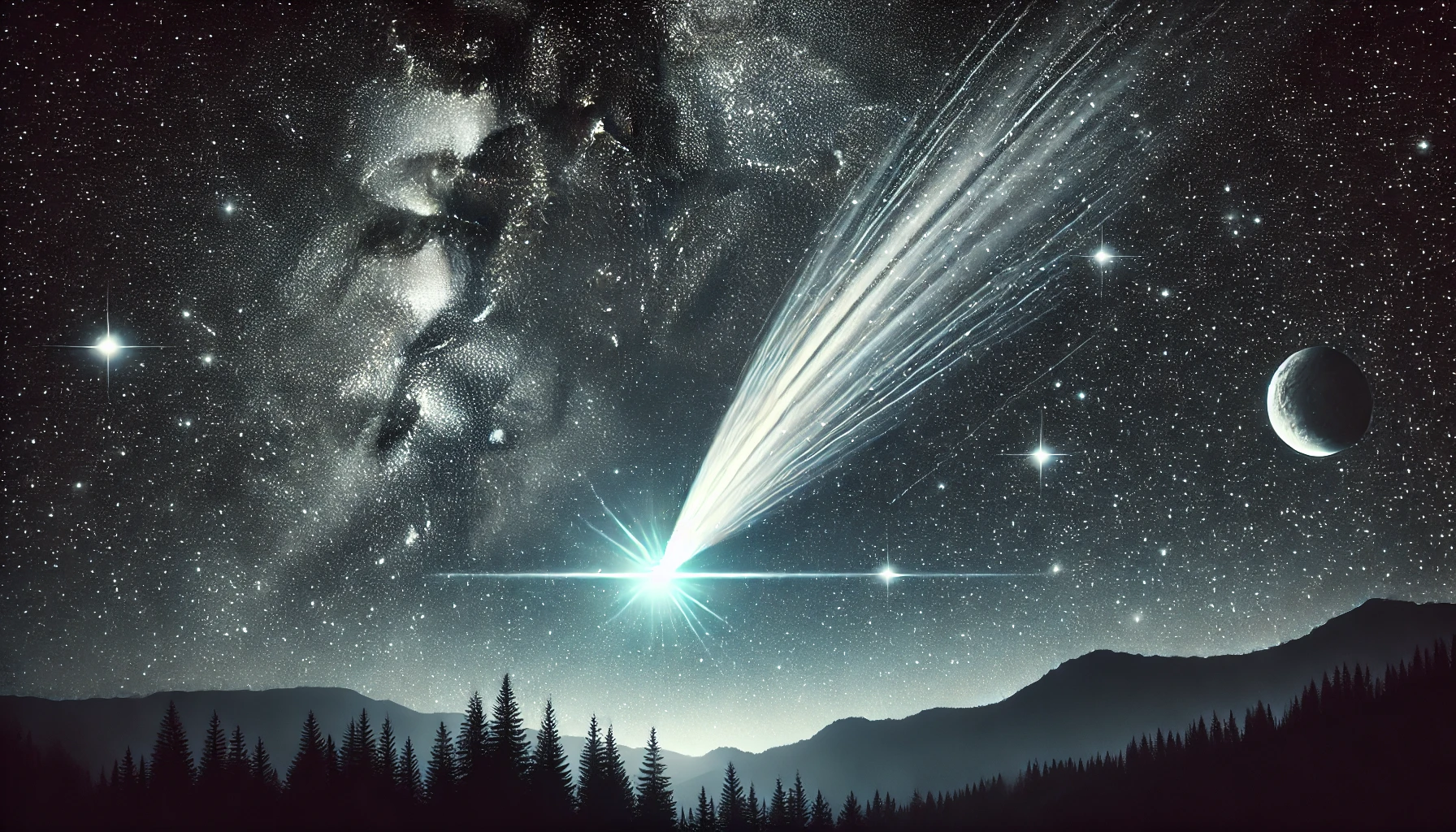
Art begins the show by welcoming listeners to Dreamland and providing a brief overview of the evening’s agenda, including updates on animal mutilations and crop circles from Philadelphia. Linda Moulton Howe reports on the discovery of a bright object beyond Jupiter, known as Hale-Bopp. She highlights its visibility with small telescopes despite being far from the sun and its potential size of over a thousand miles across. This object could become a major astronomical event by 1997. There is also speculation about unusual light fluctuations. The story continues with discussions about its potential impact and visibility. Art emphasizes the seriousness of the discovery and its coverage in respected forums.
Art and Linda discuss the ongoing updates and reports they will provide about Hale-Bopp until the spring of 1997. Linda mentions planning an interview with Brian Morrison at Harvard for more insights. She recounts a recent sighting of a brilliant fireball in the UK, believed to be part of a comet or asteroid. Nancy Talbot in Massachusetts has received numerous reports of unusual lights over crop circle fields in England. Linda also shares news of a new crop formation in California, a 150-foot equilateral triangle in a horse pasture, which emerged around Easter but was only reported recently. This formation’s steep hillside location makes it difficult to attribute to a hoax.
Linda touches on various reports of non-human encounters and the ongoing debate about the Roswell autopsy film. She shares an anonymous Florida man’s vivid description of his encounters with small “drones” and larger, sickly-looking beings.
Art and Linda discuss the characteristics of the aliens described by the Florida man, noting their distinctive features like larger heads, leathery skin, and unusual fingers. The conversation touches on the possibility of these beings creating worker clones from Earth materials, possibly explaining animal mutilations and hybrid theories. Linda provides her contact information for further inquiries. Art transitions to Glen Campbell, an expert on Area 51, introducing him as a key figure in bringing mainstream attention to the secretive military base. Campbell’s research and media appearances have highlighted the mysterious activities at Area 51, sparking widespread interest. Art and Glen discuss the challenges and experiences of living near such a controversial location.
Glen Campbell describes his experience living in Rachel, Nevada, near Area 51. He rented a mobile home and focused on investigating the base rather than just looking for UFOs. Campbell emphasizes the importance of gathering data and understanding the local geography. He notes that the locals in Rachel, largely disconnected from the base, became aware of its activities mostly through outsiders and Las Vegas workers. Despite some sightings of stealth fighters, most intriguing stories come from those claiming to have worked within the restricted zone.
Art and Glen then discuss Bob Lazar, whose 1989 claims of working with alien craft at a site near Area 51 ignited widespread interest. Lazar detailed the operation of extraterrestrial disks, leading many to Rachel to search for flying saucers. Glen acknowledges that many visitors report seeing UFOs, but he attributes these sightings to military activities.
Glen Campbell explains his method for identifying lights near Area 51 as military-related, particularly magnesium flares used in exercises. He highlights the extensive military activities in the Nellis Range surrounding Area 51, comparing its restricted airspace to flying over the White House unauthorized. Civilian aircraft straying into the area face severe consequences but aren’t shot down. Campbell discusses the issue of government accountability, emphasizing the secrecy around Area 51, visible in Russian satellite photos but unacknowledged by the U.S. government.
They consider the development of advanced aircraft like the F-117 and speculate on current projects at Area 51, noting the ongoing high traffic of workers to the base. Campbell suggests that Area 51 likely focuses on conventional weapons development, while more secretive activities, possibly involving UFOs, might occur in areas like S4, south of Area 51. This location is heavily restricted and well-suited for clandestine operations.
Glen Campbell elaborates on the possible existence of a secret site, S4, where Bob Lazar claimed to have worked with alien technology. Some former workers hinted at mysterious projects in this area. Glen shares his approach to investigating these stories by collecting and connecting various accounts to build a coherent narrative rather than verifying each detail individually. When pressed, Glen admits he neither fully believes nor disbelieves in the existence of extraterrestrial craft at Area 51 but finds the mystery worth pursuing.
Art asks Glen if he believes in the presence of extraterrestrial crafts, to which Glen responds that he thinks they are real and have been in contact with the government but aren’t a significant threat. He introduces Glen’s “Area 51 Viewers Guide” and discusses the challenges of observing activities at the base. Art shares a personal experience of seeing a large, silent, triangular craft floating above him and his wife near their home, emphasizing its eerie quietness and distinctive lights.
Art shares a personal experience of seeing a large, silent, triangular craft floating above him and his wife. Despite the Air Force’s explanation that it was a low-flying C-130, Art insists the craft he saw was unlike any known aircraft. Glen acknowledges the Air Force’s response sounds like a cover story, suggesting a link to military involvement. Art’s experience reinforces Glen’s interest in how humanity reacts to such phenomena, rather than the objects themselves. Glen believes that understanding these reactions is key to uncovering the truth and assessing humanity’s readiness to integrate such knowledge into our worldview.
Glen then discusses his “Area 51 Viewers Guide,” highlighting the closure of Freedom Ridge and White Sides, previously popular viewing spots for observing the base. Trespassers now face a $600 fine and potential arrest. He recounts his numerous visits to the area, noting that while he hasn’t seen anything extraordinary, Area 51 hosts various secretive projects, including testing of unmanned aerial vehicles, advanced reconnaissance systems, and stealth aircraft like the B-2.
Glen Campbell describes alternative viewing points for Area 51, like Tikaboo Peak, which offers distant but clear views of the base. Climbing such peaks requires effort, and the base often suspends secret operations when observers are detected. Glen explains the significance of the black mailbox on Highway 375, a gathering spot for UFO enthusiasts, but he advises against expecting to see UFOs there.
Art and Glen discuss security measures at Area 51, noting the presence of camouflaged guards without identification, likely working for a government contractor like AT&T. Trespassers face severe consequences, including being detained and fined. Glen also touches on monitoring Area 51’s communications via scanners, though frequencies change frequently when published. Art and Glen emphasize the mystery and security surrounding Area 51, reflecting on the broader implications of its secretive activities.
Glen Campbell discusses the Area 51 Research Center and his role in networking and collecting information. He emphasizes the importance of the internet in sharing data, directing people to search for “desert rat” to find his website. Glen mentions his “Area 51 Viewers Guide,” a self-published book available for purchase, providing detailed information on the base and how to safely explore the area without getting arrested.
Art opens the phone lines for listener questions, highlighting Glen’s Desert Rat Online Newsletter. A caller from Honolulu asks about Jarod, an alleged worker like Bob Lazar. Glen provides his contact information for acquiring the guide and describes it as a comprehensive resource for understanding Area 51, though not guaranteeing UFO sightings. Art inquires about the range of people Glen has met through his research, hinting at the varying credibility of their accounts.
Glen Campbell talks about the varied credibility of people who report UFO sightings and experiences, noting that while some seem unreliable, others provide credible and detailed accounts. He mentions “Jarod,” a former government worker who claims to have worked on a simulator to train pilots for flying disks reproduced from alien technology. Jarod’s story aligns with Bob Lazar’s but offers additional details.
Glen evaluates these accounts based on the individuals’ human qualities and technical abilities rather than strictly verifying credentials. He views collecting these stories as assembling folklore, seeking to understand and correlate the details. Jarod claims the government recovered hardware and bodies from UFO crashes and made contact with live aliens. Despite the potential for disinformation, Glen maintains a cautious yet open-minded approach, focusing on the coherence and richness of these narratives.
Glen Campbell talks about the difficulties that arise when people like Bob Lazar come forward with their stories, as the media attention can drastically change their lives. He asserts that the true issue within the UFO community isn’t government disinformation but rather the believers themselves muddying the waters. A listener calls in to ask about the hypersonic aircraft “Aurora,” which Glen discusses, expressing skepticism about its existence due to the immense costs and lack of concrete evidence.
Art and Glen then discuss the need for accountability in military spending, referencing a GAO report that criticized the B-2 bomber’s performance. Glen emphasizes the importance of balancing secrecy for national security with transparency for taxpayer accountability. Another caller recounts an experience of observing activities at Area 51 from Freedom Ridge and asks about potential underground experiments at the base. Glen acknowledges the delicate balance between national security and the public’s right to know, highlighting his role in advocating for greater openness.
Art and Glen discuss Bob Lazar’s practical and straightforward approach to his UFO experiences, emphasizing that Lazar only talks about what he has directly experienced and avoids speculation. This practical stance lends credibility to his accounts. They explore the notion that many UFO enthusiasts muddy the waters by adding their interpretations and beliefs to the facts, sometimes treating the subject almost as a religion.
Glen reflects on how Area 51 has revealed a spectrum of believers, from skeptics to true believers who accept any UFO-related information. He acknowledges the presence of cult-like figures within the UFO community, driven by the followers’ willingness to believe. Glen emphasizes the need to separate evidence from interpretation to maintain clarity in the investigation.
Art opens the phone lines for listener questions. A caller from Denver asks about sightings in other areas like Tonopah, where another secretive base exists. Glen explains that Tonopah, like Area 51, is involved in testing top-secret aircraft, but substantial facts are scarce. Another caller from Scottsdale mentions working on a model of the S4 UFO, indicating ongoing interest and curiosity about Lazar’s claims.
Glen Campbell elaborates on the compartmentalized nature of top-secret projects, where even having top-secret clearance doesn’t grant access to all information. He discusses J-Rod, another source claiming to have seen the navigation system in the turret of a flying disk, which aligns with Bob Lazar’s accounts but provides additional details. Glen uses a logical method to piece together information, identifying inconsistencies to determine the truth.
A caller suggests that UFOs could be advanced military aircraft, either American or Russian. Glen confirms that distinguishing credible sightings from false ones is challenging. Another caller from Nevada asks about current UFO activity in the state. Glen acknowledges many sightings in Nevada but notes that sightings occur nationwide.
When asked about the legality of observing Area 51, Glen explains that while observing from distant mountaintops is legal, using a hot air balloon or small plane near restricted airspace would be challenging due to stability issues. Lastly, a caller questions Phil Klass’s skepticism about government UFO cover-ups, implying Klass might be a government tool to discredit UFO theories. Glen acknowledges the caller’s point and reflects on the varied perspectives within the UFO community.
Glen Campbell categorizes Philip Klass as a “cult of nonbelievers,” emphasizing that Klass’s skepticism is based on a dismissal of human testimony. Glen finds Klass’s objections intellectually valid but notes that his stance excludes human experiences. They briefly mention Carl Sagan, whom Glen views as less personally known but similarly skeptical.
A caller from Minnesota asks about Townsend Brown, a physicist who allegedly developed a gravity-defying capacitor. Glen acknowledges the similarity to Bob Lazar’s explanations involving electrical fields and gravity manipulation. He mentions that while such ideas shouldn’t be dismissed outright, they remain complex and speculative. Bob Lazar’s claim about element 115, a hypothetical element critical to his theories, is discussed, highlighting the scientific challenges and energy requirements for producing such elements.
Another caller inquires about government experiments on crossbreeding animals and humans. Glen dismisses this as beyond his investigative focus, preferring to concentrate on more tangible UFO-related evidence. He reiterates his methodical approach to collecting and verifying information.
A caller from Oklahoma City shares a story about their father seeing a cigar-shaped UFO in South Africa and mentions witnessing a green fireball. Glen Campbell explains that the color of meteorites, including green, depends on their composition, such as copper. He stresses the importance of distinguishing natural phenomena from other sightings and acknowledges the challenge of validating lights in the sky.
Art clarifies his policy on the show, stating that while religion can be discussed, quoting scripture is not allowed. He also provides information about Linda Moulton Howe’s books and videos on various unexplained phenomena. Another caller from Vermont asks about the cyclical nature of UFO reports. Glen observes that media interest in UFOs naturally fluctuates, driven by the coverage of large media organizations and public interest.
A caller from Oklahoma City comments on the statistical likelihood of extraterrestrial life given the vast number of stars in the universe. They find the existence of UFOs plausible and discuss technological advancements, suggesting that future discoveries could further validate these phenomena.
A caller from Oklahoma City shares that his father, a dentist, once saw a cigar-shaped UFO in South Africa, and the caller recently saw a green fireball. Glen Campbell explains that meteorites can appear in various colors, including green if they contain copper, and emphasizes the importance of distinguishing natural phenomena from UFOs.
Art clarifies his policy on scripture quoting on the show, allowing discussions of religion but not direct quotes. He provides information about Linda Moulton Howe’s books and her work on unexplained phenomena. A caller from Vermont notes the cyclical nature of UFO reports, to which Glen attributes media interest and public fascination as naturally fluctuating.
A caller from Oklahoma City discusses the statistical likelihood of extraterrestrial life given the vast number of stars, which Glen and Art agree with in principle. Another caller expresses skepticism about aliens, suggesting a malevolent intelligence at work instead. Glen acknowledges this viewpoint but prefers to focus on tangible evidence. He reiterates his approach to UFO research, relying on observable, verifiable data.
Art and Glen discuss the influence of George Knapp and John Lear on the public’s awareness of Area 51. John Lear, in particular, believes that aliens may be evil entities, a view Glen does not share as he prefers to stick to observable facts without making moral judgments.
A caller from Columbia, Missouri, mentions crop circles and expresses skepticism, attributing them to pranksters. Glen defers to Linda Moulton Howe, an expert on crop circles, for more detailed discussions. The caller also suggests that the increased number of UFO sightings might be due to better communication and a more open society, making people feel more comfortable sharing their experiences.
Glen is asked about his website, the “Groom Lake Desert Rat,” and provides details on how to find it online by searching for “UFOs” or “desert rat.” He also offers to send a free catalog by mail for those not on the internet. A caller inquires about a security manual for the Area 51 guards, known as “cammo dudes,” which had been placed on the internet. Glen suggests the caller email him for further assistance.
Glen Campbell advises a caller to search for any UFO page to eventually find his “Desert Rat” site, which includes the Area 51 security manual and other resources. He refrains from discussing individuals in the UFO community to avoid slinging mud, acknowledging that rivalries and disagreements are common in any field without a solid base of agreement.
As the show wraps up, Glen reflects on the inevitable human nature of arguing and the lack of consensus on UFOs. Art Bell thanks Glen for his insights and participation, mentioning the publication of fascinating content in their newsletter and providing subscription details.