
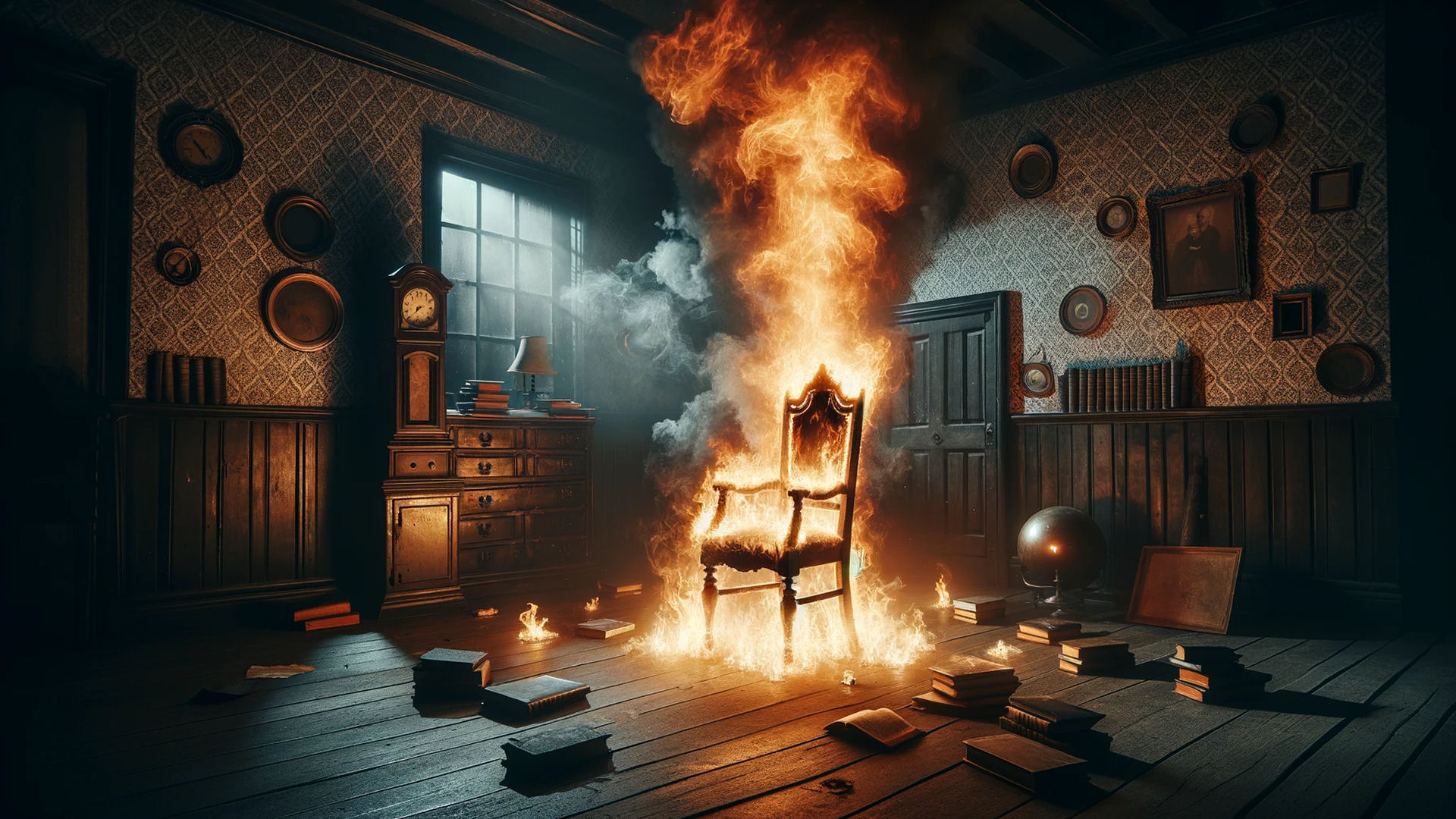
Art begins by discussing the show’s commitment to exploring phenomena that lurk on the fringes of perception, challenging the boundaries of what is known and understood. He shares an amusing anecdote about interacting with a viewer through a video call, highlighting the show’s engagement with its audience. The episode then shifts to an interview with Larry Arnold, who discusses his book on the enigmatic subject of spontaneous human combustion. Art teases the audience with the promise of exclusive visual content to accompany the discussion. The narrative transitions to Linda Howe, an Emmy award-winning journalist, who provides updates on mysterious animal mutilations and the Chupacabra mystery in Puerto Rico and Mexico.
The discussion delves deeper into the mysterious phenomena of animal mutilations and strange deaths, extending beyond Puerto Rico to Mexico. Farmers and eyewitnesses are baffled by the peculiar circumstances under which animals are found dead, displaying neat puncture wounds without any signs of struggle or consumption by the attacker. Linda Howe shares insights from her investigations, highlighting similar unexplained events across different locations. The narrative explores the perplexing details of these incidents, such as the absence of blood, the presence of heat or burn marks on the tissues, and the inexplicable damage to cages and enclosures. These baffling cases raise more questions than answers, with no clear understanding of the perpetrators or their motives, leaving the communities in fear and confusion.
Art introduces Larry Arnold, an expert on SHC, who has dedicated two decades to researching this enigmatic phenomenon. Arnold’s book, “Ablaze,” delves into hundreds of cases, ranging from the 14th century to the present, involving individuals who reportedly burst into flames without an apparent external source of ignition. The segment details some of the factors that Arnold suggests could contribute to SHC, including exposure to television radiation, alcohol, smoking, inactivity, and emotional states like anger. The discussion also highlights the challenges and skepticism faced by researchers in this field due to the mainstream scientific community’s dismissal of SHC as impossible.
The conversation delves into theories and anecdotes surrounding spontaneous human combustion (SHC). Art reads an email from a listener proposing two theories for SHC: one involving a catalytic chemical process within the body and another likening the body to a candlewick. Larry Arnold discusses these theories, suggesting that an aberrant electrical discharge within the body could be a cause, and he also considers the possibility of a chemical imbalance causing rapid thermogenesis.
Art challenges the common explanation that SHC victims, often smokers, ignite themselves accidentally. He shares a personal anecdote to illustrate his skepticism about this theory. The discussion then shifts to a detailed recounting of Dr. John Irving Bentley’s case, a retired physician who mysteriously combusted in 1966. The recount provides a vivid description of the scene discovered by a meter reader, emphasizing the puzzling aspects of SHC, where victims are reduced to ashes while their surroundings remain largely intact.
The discussion on spontaneous human combustion (SHC) intensifies with a focus on Dr. John Irving Bentley’s case, which exemplifies the perplexing nature of SHC. Despite being mostly water, the human body’s capacity to burn so intensely that it reduces to ashes while leaving the surroundings almost unaffected continues to baffle experts. Larry Arnold emphasizes the insufficiency of the human candlewick or cigarette theory to explain such phenomena, highlighting that even the intense heat that incinerated Dr. Bentley did not affect the nearby bathtub’s enamel paint.
Arnold and Art explore the possibility that psychological factors, such as deep depression or a strong desire to die, might trigger a bioelectrical or biochemical reaction leading to SHC. They discuss the need for an investigative approach that goes beyond traditional forensic science, as no accelerants are found at SHC scenes, and even the remaining body parts are completely dehydrated, lacking any moisture content.
In this segment, the conversation continues to explore the baffling nature of spontaneous human combustion (SHC), focusing on the forensic anomalies presented by such cases. Despite the extreme dehydration and absence of bodily fluids in SHC victims, which contradicts normal human biology, the phenomenon remains largely dismissed or misattributed by the medical and fire investigation communities. Larry Arnold highlights that over 300 cases fitting the criteria of SHC have been documented, with detailed investigations often revealing evidence that defies conventional scientific understanding.
The narrative also touches on the skepticism faced by those who consider SHC as a potential cause of death. Medical examiners and coroners often attribute these deaths to more commonplace incidents like smoking mishaps, despite evidence suggesting otherwise. This reluctance stems from the fear of challenging credulity and the established norms of forensic science.
In this segment of “Dreamland,” the discussion broadens to consider the potential for psychokinesis or external influences to induce spontaneous human combustion (SHC), reflecting on historical cases and the profound, yet largely untapped, capabilities of human consciousness. The conversation touches on “pyro poltergeist” phenomena, where inanimate objects around a person spontaneously ignite, drawing parallels to SHC but involving external objects rather than the human body itself.
The narrative also revisits religious interpretations from the 1700s, where SHC was sometimes viewed as divine retribution for an immoral life, though this perspective is not supported by modern science. The segment examines the case of Dr. John Irving Bentley, a 92-year-old who mysteriously combusted. While Bentley was a former drinker and a smoker, these habits alone fail to explain the extreme conditions required for SHC, such as the intense heat that reduced his body to ashes without causing widespread fire damage to his surroundings.
The conversation revisits Dr. John Irving Bentley’s case, emphasizing the improbability of his pipe causing the blaze and the lack of evidence supporting the idea that he could have moved to extinguish the fire himself.
The narrative then shifts to the Rooney case from 1885, where Mrs. Rooney’s body was found reduced to ashes in a manner that defied conventional explanations for fire deaths. The lack of accelerants and the peculiar state of the remains challenge the conventional wisdom on how bodies burn, with the doctor at the time noting the skull and hip bone as the only recognizable human remains.
Experiments attempting to replicate the conditions of spontaneous human combustion using fatty tissues have failed, highlighting the unique and unexplained nature of these incidents.
The conversation on “Dreamland” delves into the potential causes of spontaneous human combustion (SHC), questioning whether diet, emotional state, or other personal factors could trigger such a phenomenon. The discussion points out that many SHC cases show the point of origin for the combustion to be in the solar plexus area, suggesting a possible internal cause for the blaze that radiates outward, sparing parts of the body further from the core.
The idea that a person’s diet or emotional state could contribute to their combustibility is explored, albeit with a note of humor regarding Dr. Bentley’s restrictive diet of shredded wheat and coffee. While there’s speculation about whether a long-term diet could cause a chemical change in the body sufficient to spark SHC, there’s acknowledgment that more expertise in organic chemistry would be needed to explore this theory further.
Preventative measures are also discussed, albeit inconclusively, with suggestions that maintaining a balanced emotional state and healthy diet might reduce risks, if indeed those factors are related to SHC.
The conversation explores personal accounts and theories related to spontaneous human combustion (SHC). A listener shares a mysterious experience involving unexplained burns on his knee, prompting speculation about the potential for partial self-immolation. Larry Arnold discusses this possibility, noting that such incidents, where individuals experience spontaneous combustion without being fully consumed, are not unheard of. He cites the case of Peter Jones, who experienced smoke emanating from his body on two separate occasions in a single day without any accompanying heat or tissue damage.
The discussion also touches on the peculiarities observed at SHC scenes, such as the absence of a noxious odor typically associated with burning flesh. Instead, witnesses often report a sweet or perfume-like smell, suggesting a possible chemical change in the body preceding combustion. A theory is proposed regarding whether focused microwave frequency beams could cause such phenomena, aligning with the idea that specific external factors might trigger these mysterious fires.
A listener shares a personal experience with microwave radiation, prompting a broader conversation about the potential role of microwaves in SHC. Larry Arnold acknowledges that while microwaves can cook human tissue, the leap to SHC, which requires an immense amount of heat energy, is not fully explained by current understanding of microwave radiation alone.
Arnold introduces the concept of “new chemistry” and subatomic physics as potential areas where the immense energy required for SHC could originate. This discussion aligns with the ongoing exploration of how such a rapid and intense energy release could occur within the human body without an identifiable external source.
The conversation also touches on a sensational claim about spontaneously exploding heads, which Arnold dismissively attributes to tabloid journalism, emphasizing the importance of credible sources in the investigation of SHC.
A listener shares a bizarre incident where her husband’s back spontaneously ignited without causing any damage to his shirt or skin, reminiscent of other SHC cases. This story prompts a discussion about the painless nature of these incidents for the victims, contrasting SHC with more conventional, painful forms of death.
Larry Arnold also addresses inquiries about whether SHC incidents have been witnessed. He confirms that there have been eyewitness accounts, including the case of Peter Jones, where individuals have observed others or even themselves undergoing spontaneous combustion without comprehending the cause.
Questions about the psychological profile of SHC victims arise, with Arnold noting that a small percentage of documented cases involve individuals with fiery tempers or type-A personalities, suggesting a potential link between intense emotional states and the phenomenon.