
The show begins with Art diving straight into the agenda, which includes a session with Lloyd in the coming hour, shedding light on Mr. Meyer’s discoveries. The focus then shifts to Peter Davenport from the National UFO Reporting Center in Seattle, who joins to discuss a recent Bigfoot sighting. Interestingly, the witness of this sighting doesn’t own a telephone, prompting special arrangements for their participation in the show.
The conversation takes an intriguing turn with the introduction of Matthew Moneymaker, an expert on Bigfoot and founder of the Bigfoot Field Research Organization. Art briefly touches on internet and e-commerce law, hinting at Matthew’s background before returning to the subject of Bigfoot sightings.
The show also includes practical information for listeners, like accessing guest information and show schedules online, and using the Streamline service for live audio streaming. They highlight the availability of past shows and George Noory’s Tuesday night chats online, enhancing the listener experience.
There’s a brief mention of the September issue of the ‘After Dark’ newsletter, which covers various speculative and mystical topics, from ancient Chinese predictions to the mysteries of the Uno Gnocchi from Libya. The newsletter, a printed extension of the show’s theme, is offered to listeners for a subscription.
Lastly, Art brings attention to a peculiar incident involving Sprint and the FCC, urging listeners to visit his website for more details on this developing story. The segment concludes with a return to the mysterious and unexplained, as Peter Davenport recounts a call received about a startling encounter with an unknown entity in Washington state, setting the stage for a suspenseful and intriguing narrative.
Art interviews a witness who recently saw Bigfoot. The witness, referred to as Mr. X for anonymity, is a 35-year-old resident of a small town in Eastern Washington. He lives in a remote area without a telephone and is an outdoor enthusiast who values solitude.
Mr. X describes his chilling encounter with what he believed to be Bigfoot. On a cold night, while stepping out to gather firewood, he noticed a large figure, about seven feet tall, standing by his woodpile and looking through his window. The creature, resembling a big ape with greyish-brown hair, appeared to be observing the plants illuminated by a light inside Mr. X’s house.
Startled and fearful, Mr. X quickly retreated back into his house, locking the doors. He sat shaken on his couch for about an hour and a half, too scared to check back. He notes that his two dogs, usually alert, were surprisingly asleep during this incident. This was peculiar, especially since the dogs had been acting unusually agitated on previous nights, which Mr. X initially attributed to the presence of a skunk.
Art and Mr. X discuss the creature’s appearance and behavior in detail, with Mr. X confirming his certainty about what he saw. He recalls that he did not notice any unusual smell during the encounter, a detail often associated with Bigfoot sightings. Additionally, he mentions that his neighbors also reported strange behavior in their dogs around the same time.
Mr. X details his observations about the area where he saw the creature. He notes that the ground under the fir tree where the Bigfoot stood was covered with pine needles and surrounded by crabgrass, which made it difficult to discern any footprints.
Art inquires about any additional details Mr. X noticed about the creature. Mr. X confirms that the creature stood completely erect, a trait uncommon in apes except for a certain type mentioned in a science program he had seen. Art and Mr. X discuss the possibility of the creature returning, with Mr. X expressing his hope that it does not. He mentions preparing his camera in case of another sighting, despite his previous panic.
The conversation takes a lighter turn as Art references a humorous TV commercial, which he compares to the situation of facing a large, potentially dangerous creature. He advises against startling the creature with a camera flash. They discuss the practicality of using weapons for self-defense, with Mr. X acknowledging his reluctance to shoot the creature unless absolutely necessary. He confesses that during the encounter, he was too shaken to effectively use a weapon, despite being skilled in handling them.
Mr. X recalls sitting by his handgun, ready for any further disturbance. Art empathizes with Mr. X’s reaction, admitting that he would have responded similarly. He commends Mr. X for sharing his story, especially given his initial reluctance to do so.
The segment concludes with Art acknowledging the credibility of Mr. X’s account and the importance of such personal accounts in understanding unexplained phenomena. The show transitions to discussing other topics, including an expert on Bigfoot and further insights from Peter Davenport.
Next, Art shifts the conversation to the occult, highlighting how vital information is often hidden from the public by those in power, suggesting a deliberate effort to keep society uninformed and distracted.
Art introduces Matthew Moneymaker, the head of the Bigfoot Field Research Organization. Matthew shares the origins of his unique last name and the founding of his organization in 1995. The organization aims to document Bigfoot sightings and coordinate field activities for better evidence collection.
When asked about his personal experiences with Bigfoot, Matthew chooses not to comment, stressing the importance of maintaining credibility in investigations. Art, however, suspects that a strong personal motivation, possibly a sighting, led Matthew to establish the organization.
Discussing Mr. X’s encounter, Matthew outlines the process used to assess Bigfoot sightings. He considers various possibilities, including misidentification, but finds Mr. X’s clear and close view of the creature in good light conditions suggests it’s unlikely to be a mistaken sighting. The organization believes that Bigfoot could be a descendant of a known species, thought to be extinct, living a scattered, nomadic lifestyle. Matthew speculates whether Bigfoot is part of the human evolutionary lineage or a completely separate species, leaving the question open for further exploration.
Matthew Moneymaker from the Bigfoot Field Research Organization further discusses the nature of Bigfoot. He shares that many close-range witnesses describe Bigfoot as a primate with an upright posture, appearing almost human-like from a distance but distinctly non-human upon closer observation. This leads to the conclusion that Bigfoot is a separate species from humans, not part of the human lineage.
Moneymaker addresses the skepticism about Bigfoot’s existence, considering modern technology and widespread human presence. He firmly believes that a creature like Bigfoot could indeed remain largely unseen. He explains that the available technology, such as satellites and helicopters, is not generally directed towards searching for unknown mammals like Bigfoot. These tools are primarily used for national security or other high-priority tasks and are not deployed for Bigfoot hunting. He further notes that even if such technology were to capture an image of Bigfoot, it might be dismissed as a bear or another known animal.
Furthermore, Moneymaker discusses the use of heat signature detection equipment in helicopters, such as those used by the National Guard. He acknowledges that while such technology could potentially detect a Bigfoot, the primary focus of these flights is usually search and rescue missions, where the goal is to find humans in need of help, not unidentified creatures.
Moneymaker touches upon the question of whether Bigfoot might have a paranormal aspect, given its elusive nature. He explains that while the Bigfoot Field Research Organization receives many reports annually, most are discarded as hoaxes or pranks. However, he remains open to the possibility of a real creature existing within our dimension, despite the challenges in proving its existence.
Matthew Moneymaker continues discussing the Bigfoot phenomenon. He emphasizes that most reports received by the Bigfoot Field Research Organization do not suggest any paranormal abilities of Bigfoot. Instead, these reports often describe Bigfoot as a biological entity, without interdimensional characteristics. Moneymaker acknowledges that while there are some reports that hint at paranormal aspects, these are often second or third-hand accounts and difficult to trace back to credible sources.
Peter Davenport, from the National UFO Reporting Center, joins the conversation, expressing his fascination with Bigfoot and acknowledging that he has learned a lot from Moneymaker’s insights. Davenport adds context to the earlier testimony of the witness (Mr. X), mentioning his conversation with a public official who interacted with the witness after the sighting. This official noted that the witness seemed visibly shaken and traumatized by the encounter.
Davenport and Moneymaker discuss the emotional impact of such encounters on witnesses, noting the common discrepancy between how people think they would react and how they actually do when faced with the unexpected. They agree that witnessing something as extraordinary as Bigfoot can leave a lasting psychological impact, often evident in the demeanor and speech of the witnesses.
The segment concludes with Art Bell expressing interest in having Moneymaker on the show for a full program dedicated to Bigfoot. Moneymaker shares the web address for the Bigfoot Field Research Organization for listeners interested in learning more or reporting sightings.
Art reflects on the previous hour’s discussion about a close encounter with Bigfoot in Eastern Washington. The witness, who lives in a remote area, reported coming within 20 feet of Bigfoot, experiencing a profound shock during the encounter. The incident was analyzed by both a Bigfoot expert and Peter Davenport from the UFO Reporting Center.
Art then introduces his next guest, Lloyd Pi, an author who has written a book titled “Everything You Know Is Wrong.” Pi is invited to share his thoughts on the Bigfoot discussion and his discovery of a creature coexisting with humans on Earth, yet managing to stay mostly hidden.
The segment also covers an intriguing development related to a power outage in Art’s area, which was officially reported to the Federal Communications Commission (FCC) with a mention of Area 51. This report, which noted the unusual aspect of the breaker being turned off rather than tripped, was posted on a government website. Sprint, the telecommunications company involved, later requested the FCC to withdraw this report, adding to the mystery.
Bell also promotes the ‘After Dark’ newsletter, the official publication of “Coast To Coast AM,” which covers various topics explored on the show.
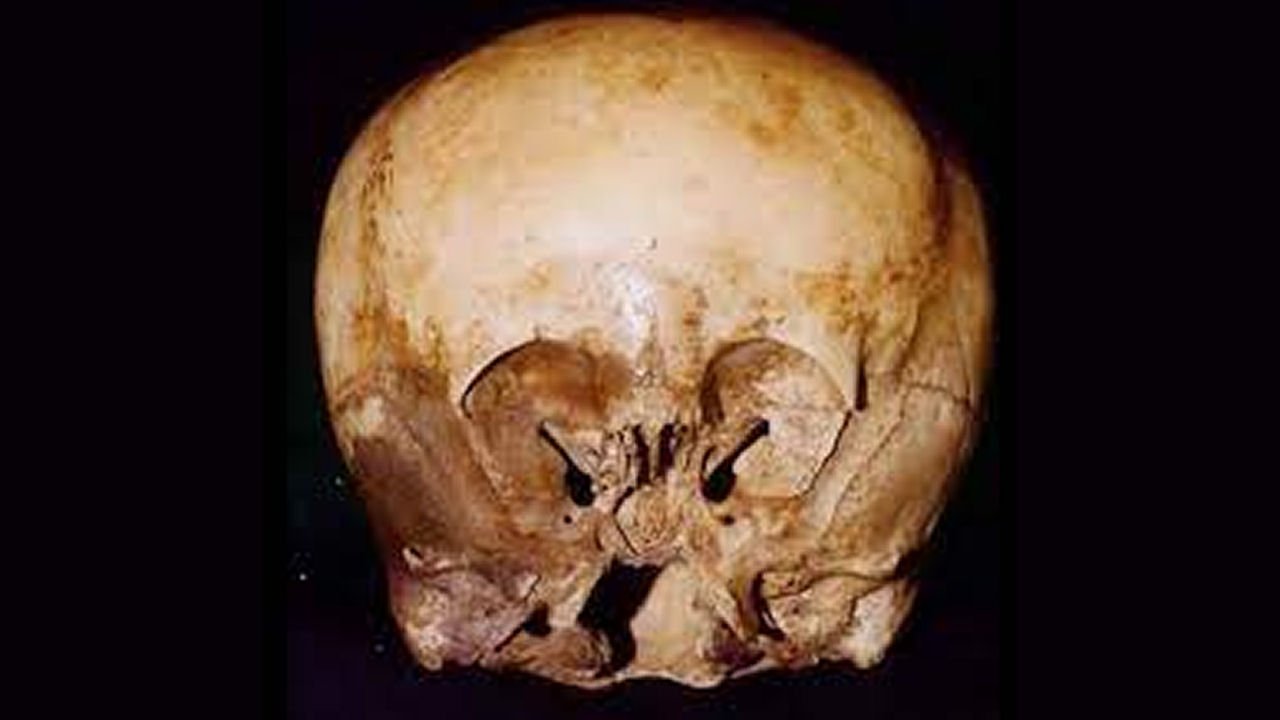
The discussion shifts back to Lloyd Pi, who talks about a significant discovery he made due to the attention his book received. He describes being contacted by the owners of a peculiar skull, which they suspected might not be entirely human. Due to Pi’s expertise in bones and genetics, as outlined in his book, he was approached for his insights into the skull’s origins.
Pi describes being approached by a group of people, including the skull’s owners, for his expert opinion due to his knowledge of eyes, influenced by his father’s profession as an optometrist.
The skull’s history traces back around 60 to 70 years to a teenage girl who, during a family visit to Mexico near Chihuahua, discovered it in a mine tunnel. Despite warnings not to explore local caves and tunnels, her curiosity led her to a human skeleton lying on the ground with a hand emerging from the soil beside it. Upon further investigation, she uncovered another body with a misshapen head and a smaller frame than the first skeleton.
The girl gathered all the bones she found into a basket, intending to hide them until she could figure out what to do. However, a subsequent rainstorm washed away all the bones except for the two skulls, which she managed to save and smuggle back into the United States without informing anyone.
Pi shares that the girl was an American citizen who had moved to Mexico and then returned to the U.S. He addresses the plausibility of sneaking the skulls through customs, suggesting that security measures were not as stringent back then as they are today.
Lloyd Pi discusses further details about the mysterious skull, which he refers to as the “Starchild.” He explains that the skull was given to a man by a dying woman who had found it decades earlier in Mexico. The man’s wife, uncomfortable with keeping the skulls, urged him to dispose of them. He eventually gave them to a younger couple who were fascinated by the skull’s resemblance to the head of a “grey” alien. This couple then contacted Pi for his evaluation.
Pi became the caretaker of two skulls: one human and the other, the Starchild. The Starchild skull has physical features resembling descriptions of “greys” from alien encounter stories. These features include a large, heart-shaped upper head, a flat and slanting rear head, a shifted and smaller neck position, and unusual eye sockets. Pi notes the presence of baby teeth and secondary teeth within the skull, suggesting it belonged to a child.
Art Bell then directs listeners to view photographs of the skull on the Starchild Project’s website. He and Pi discuss the visible differences between the Starchild skull and a human skull, emphasizing the uniqueness of its structure.
The segment shifts to the website, where Bell and listeners can view images of the skulls. Bell notes that the website is experiencing slow traffic due to the number of listeners accessing it simultaneously. He attempts to navigate the site to view more images and provide a better understanding to the audience.
Lloyd Pi recounts the story of how the skull came into his possession. The original finder of the skull, a teenage girl in Mexico, kept it her entire life before passing it on to an American friend. Eventually, the skull was given to a couple who believed it resembled the head of a “grey” alien. This couple contacted Pi, and he became the caretaker of the skull.
Pi describes the skull as having features commonly attributed to “grey” aliens, such as a large, heart-shaped upper head and a small, flat rear head. The website hosting photographs of the skull crashed due to heavy traffic from listeners following along with the show.
Pi reveals that carbon-14 dating indicated the skull is approximately 900 years old, dating back to the time of the Aztecs. This finding was surprising, as initial estimates suggested it was only a few hundred years old.
When Pi sought professional opinions about the skull, he received various explanations, including suggestions of known genetic disorders. However, after conducting his own research in medical libraries, Pi concluded that the skull did not match any known deformities and was something highly unusual.
Pi explains that congenital deformities typically do not allow for survival when they are extensive, yet the Starchild skull shows anomalies in all eight major areas, which is highly unusual. Pi estimates the age of the Starchild at around five or six years old, based on dental development and suturing of the skull.
Pi then discusses the genetic testing conducted on the skull. Initially, they could only afford forensic genetic testing, which is less detailed and less expensive than diagnostic testing. The forensic testing indicated that the Starchild was male, but due to the acidic soil conditions where the skull was found, the DNA was fragmented, making it difficult to obtain a complete genetic profile.
The Starchild skull’s bone is also unique, being highly porous and weighing about half as much as a normal human skull. Pi shares that thousands of people have held the skulls and were struck by the significant difference in weight.
The geneticist concluded that the skull was human based on the presence of an X and a Y chromosome. However, Pi points out that this does not rule out the possibility of the skull being a hybrid, as the genetic testing was not detailed enough to detect subtle differences that might indicate a non-human origin.
Pi mentions the need for diagnostic genetic testing to further investigate the skull’s origins, which would cost around $20,000. The goal is to delve deeper into the DNA to determine if there are any anomalies that would suggest a hybrid nature of the Starchild.
The skull’s DNA was damaged due to acidic soil conditions, leading to fragmented DNA strands. This complicates the analysis, but Pi hopes that advanced recovery techniques available through diagnostic testing could yield more information. The ideal lab for such testing, according to Pi, is run by Svante Pääbo in Munich, Germany, known for his work on Neanderthal DNA and Ötzi the Iceman.
Pi faces financial constraints, as diagnostic testing requires about $20,000, a sum he has struggled to raise. He explains that the forensic testing they could afford indicated the skull is male, but due to the DNA damage, it provided limited information.
The conversation then shifts to the possibility of involving major organizations like the Smithsonian for funding and assistance. Pi expresses his distrust, fearing the skull might be hidden or disregarded due to its potential challenge to established paradigms.
Art Bell speculates about the circumstances surrounding the deaths of the Starchild and the human whose arm it was found holding. He suggests scenarios such as a murder-suicide or a mother taking her own life after her child’s death.
The show plans to bring on Dr. Ted Robinson, a craniofacial plastic surgeon who examined the skull and found it unlike anything he had seen before. He became an advocate for the Starchild project and helped connect Pi with a DNA lab.
They discuss the ongoing need for diagnostic genetic testing, which could provide more detailed insights into the skull’s origins but faces financial constraints. Pi mentions that the best lab for this testing is run by Svante Pääbo in Munich, Germany, but his attempts to communicate with Pääbo have been unsuccessful.
Bell then introduces Dr. Ted Robinson, a craniofacial plastic surgeon with a background in paleontology and anthropology. Dr. Robinson shares his expertise and interest in human evolution, noting his involvement with Richard Leakey’s specimens from Lake Rudolf. He has never seen anything like the Starchild skull, including in the context of human deformity.
Dr. Robinson discusses the evolutionary changes in human skull structure, highlighting the expansion of the braincase and reduction of the facial area over millions of years. He references a specific example from Time magazine illustrating these evolutionary changes. The Starchild skull is noted to have a brain volume 400 cc larger than an average human adult, which, according to Dr. Robinson, is significant in terms of human evolution.
Dr. Ted Robinson, a craniofacial plastic surgeon, joins the discussion about the Starchild skull. He brings his expertise in plastic surgery, paleontology, and anthropology to the conversation. Dr. Robinson confirms that there has been no measurable difference in human skulls for the last 50,000 to 100,000 years, making the Starchild skull’s unique features even more intriguing.
Dr. Robinson elaborates on various aspects of the skull:
- Brain Size: The skull has a very large brain size compared to humans, yet the face is very small. This contrasts with the evolutionary trend of expanding braincases and reducing faces in human evolution.
- Genetic Deformities: Dr. Robinson rules out common genetic deformities like hydrocephalus and craniosynostosis as explanations for the skull’s shape. He notes that the skull does not show signs of erosion typical of hydrocephalus and that the sutures are still open, indicating growth.
- Unusual Characteristics: The skull’s shallow eye orbits, the positioning of the optic nerve, broad temporal bossing, and the flat angle towards the foramen magnum are all atypical for human skulls. These features suggest that the brain might have been wired differently from a human brain.
- Muscle Attachments: The skull lacks a significant inion, which is the area of muscle attachment for holding the head upright. This indicates that the creature might have had a slender neck.
Dr. Robinson concludes that the skull could represent either an unknown genetic abnormality or a different species altogether. He rules out the possibility of it being an animal, given the brain size relative to the skull.
Dr. Robinson leans towards the possibility that the skull is not completely human, based on several unique features that differ significantly from a typical human skull. He compares it to a 5 to 6-year-old human skull and finds stark differences.
Dr. Robinson has shown the skull’s CT scans to several radiologists, including the head of pediatric neuroradiology at a children’s hospital in Vancouver, who were all startled by its unusual nature. These experts confirm that the skull’s characteristics are unlike anything they have seen in normal human skulls.
The skull’s features that stand out include shallow eye orbits, a differently positioned optic nerve, broad temporal bossing (indicative of intelligence), and a very short skull from front to back. There is also a unique flattening towards the foramen magnum (where the spinal cord passes). Dr. Robinson notes that the skull’s muscle attachments suggest it had a slender neck, different from humans.
Despite these peculiarities, Dr. Robinson is cautious about jumping to conclusions. He mentions the potential difficulty in reconstructing the face from the skull due to the unknowns about the tissue depth over its bony prominences. This is because the techniques used for facial reconstruction from skulls typically rely on data from human skulls, which may not apply to the Starchild skull.
Art Bell then discusses whether the number of deformities present in the skull would have allowed the individual to live. The show plans to continue exploring this question and the skull’s mysteries.
Dr. Robinson suggests that the skull might not be entirely human due to its many divergences from typical human skulls. He notes that even in modern times, babies with numerous abnormalities often do not survive, and this would have been even more likely in ancient cultures where resources were scarce.
Dr. Robinson highlights that the bone of the Starchild skull is abnormal, being incredibly light and porous, unlike the normal bone of a human with a craniofacial abnormality. These characteristics make it difficult to ascertain the skull’s origins using standard forensic methods.
Art Bell then introduces Dr. Paula Gunn Allen, an expert in American studies, who discusses “Star Children” stories in Native American traditions. These stories often involve women who select stars (perceived as handsome men), go to sleep, and then find these stars transformed into human men by their side. They often bear children from these unions, hinting at the blending of human and celestial beings.
With expertise in American studies and a focus on Native American literature and oral tradition, Dr. Allen provides insights into the “Star Children” or “Star Beings” stories prevalent in various cultures around the world. These stories often depict celestial beings descending to Earth, engaging with humans, and sometimes resulting in the birth of hybrid offspring.
Dr. Allen notes that such stories are not exclusive to the Americas but are also found in African, Asian, European, and Australian cultures. She emphasizes that these widespread stories likely have a basis in fact, considering their consistency across diverse cultures with different worldviews and religious beliefs.
One common theme in these stories is the rapid growth and unique abilities of the hybrid offspring, often depicted as twin boys. Dr. Allen points out the presence of these tales among vastly different indigenous groups, despite their distinct languages and cultural practices.
Upon reviewing photographs of the Starchild skull on the website, Dr. Allen remarks on its unique eye sockets, which she describes as resembling “savage eyes” or “Indian eyes.” She expresses a sense of validation upon seeing the skull, feeling it corroborates the ancient stories and legends she has studied.
Dr. Allen also discusses the practical and respectful approach Native cultures typically have towards these otherworldly beings, emphasizing peaceful coexistence and the importance of treating them with respect to avoid negative consequences like droughts or bad weather.
Dr. Allen elaborates on the nature of these beings, suggesting they exist in more than three dimensions and thus are not bound by the same physical rules as humans. This multidimensionality could explain why they are only seen sporadically or in altered states of consciousness.
Dr. Allen also addresses the motive behind the interactions between these beings and humans. She emphasizes that in many indigenous cultures, the approach to these beings is one of coexistence and respect. The idea is to live peacefully without interfering with each other, as disrespect can lead to negative consequences like natural disasters.
Regarding abductions, Dr. Allen notes that while she doesn’t trust these beings entirely, many indigenous people don’t actively seek contact with them. She speculates that the abductions could be a form of self-defense against humans. In many of the stories, abducted individuals often return with enhanced abilities and contribute positively to their communities.
Dr. Allen also suggests that the motive behind the creation of hybrid beings could be as simple as mutual attraction between humans and these otherworldly beings, similar to human relationships.
The conversation then shifts to discussing the physical characteristics of the Starchild skull, particularly its eye sockets. Dr. Allen finds a resemblance to the eyes described in various indigenous stories about Star Beings.
Dr. Paula Gunn Allen and Lloyd Pi discuss the Starchild skull in the context of global myths and legends about Star Children or extraterrestrial beings. Dr. Allen emphasizes the prevalence of these stories across various cultures, suggesting a basis in real events given their consistency and widespread nature.
She mentions that in many cultures, these beings are portrayed as having impregnated human females, leading to the birth of hybrid offspring. This theme is echoed across different continents, including Egypt, Asia, Europe, Africa, and America. Dr. Allen and Pi speculate that the Starchild skull might be physical evidence of such a hybrid, linking the myth to a tangible artifact.
Dr. Allen also shares a personal revelation she had upon seeing the title of a book about the Hollow Earth theory, which resonated with stories she grew up hearing about her people originating from beneath the Earth. This experience paralleled her reaction to seeing the Starchild skull, where she felt a sense of literal truth to the legends she knew.
The discussion then touches on the advanced capabilities of these Star Children, including their potential for invisibility or mind control, which Dr. Allen suggests could be linked to their larger brain capacity.
Lloyd Pi talks about seeking contributions for the Starchild Project to facilitate the required genetic testing, emphasizing the importance of keeping the project non-commercial and people-driven. He believes that relying on small contributions from individuals rather than a single large entity or person would maintain the integrity of the project and prevent any potential manipulation of results for personal gain.
Lloyd Pi shares details about the Starchild Project, which is part of the Truth Seeker Foundation, a legitimate nonprofit organization. He provides contact information for listeners who might be interested in contributing to the project.
Art Bell acknowledges the challenge of raising the necessary funds ($20,000) for genetic testing and encourages listeners who might be interested in supporting the project. Lloyd Pi is open to accepting contributions from individuals, but he stresses the need to carefully consider the source of the funds to avoid any potential conflicts or issues down the line.
A caller named Calvin from Los Angeles, who is a doctoral student in chemistry, joins the discussion. He expresses skepticism about the skull’s origin, particularly in relation to its supposed extraterrestrial nature and the genetic evidence indicating that the skull belonged to a male.
Calvin questions the likelihood of an extraterrestrial being having DNA compatible with humans, given the general principles of interspecies breeding and genetic compatibility. Lloyd Pi counters this by suggesting that if the being was a hybrid of human and extraterrestrial origin, it would not be surprising to find human-like genetic structures.
The conversation delves into the complexities of interspecies breeding and the potential for genetic similarities between humans and extraterrestrial beings. This part of the discussion highlights the challenges in reconciling scientific understanding with the extraordinary claims surrounding the Starchild skull.
Lloyd Pi discusses the challenges he faces in maintaining the project’s financial viability while adhering to its non-commercial ethos. He explains that the project relies on small contributions from individuals to avoid potential conflicts of interest that might arise if it were funded by a single large entity or organization.
A discussion ensues about whether to approach organizations like NIDS (National Institute for Discovery Science), funded by Robert Bigelow, for support. Lloyd Pi expresses hesitation, concerned that involvement with such organizations might lead to accusations of data manipulation or bias, affecting the project’s credibility. He emphasizes the importance of maintaining the project as a “people’s project,” funded by the public to ensure unbiased results.
Lloyd Pi reveals that he is stepping down as the caretaker of the Starchild Project due to financial constraints. Dr. Ted Robinson and Chad Deacon will be taking over his role. This change marks a significant shift in the project’s leadership.
John from Encino, California, recalls watching an episode of “In Search of Ancient Astronauts” hosted by Leonard Nimoy, which explored ancient Mayan and Aztec civilizations and their possible connections to extraterrestrial beings. John suggests that the idea of interbreeding between humans and extraterrestrial beings is plausible and could explain the Starchild skull’s origins.
Another caller, Steve from Windsor, Ontario, Canada, brings up the topic of progeria, a rare genetic disorder causing children to age rapidly. He speculates whether progeria could be related to alien genetics, considering the theoretical effects of traveling at near-light speeds on aging. Lloyd Pi responds by acknowledging the creativity of the theory but doubts its validity, explaining that progeria is a known genetic defect occurring across different races and is a fundamental flaw in the human gene pool.
The caller notes that humans 900 years ago were generally shorter, as evidenced by historical artifacts like armor and clothing. He also corrects a previous statement about Neanderthal brain size, clarifying that Neanderthals actually had larger brains than modern humans.
Lloyd Pi discusses the possibility that extraterrestrial beings could be our progenitors, which aligns with his book’s content. He suggests that the hybrids mentioned in various reports might not be the result of direct sexual union but could be created through advanced genetic manipulation, like in vitro fertilization.
The conversation touches on the characteristics of different alien species, including the Grays, who are often reported to lack outward genitalia, suggesting they might reproduce differently than humans. Pi speculates that to create a hybrid with humans, it would likely involve laboratory manipulation of human eggs and alien genetic material.
Pi reiterates the Starchild Project’s need for donations to continue its research and confirms his plan to write another book. The show concludes with Art Bell thanking Lloyd Pi for his contributions and research efforts, highlighting the ongoing interest in the Starchild skull and its implications.