
Art shares his excitement about welcoming a new affiliate in Lawton, Oklahoma, and expresses gratitude for the positive feedback on his “Desert of the Sea” photograph. Art delves into his fascination with amateur rocketry, revealing his desire to purchase a large rocket to place in his front yard, signifying a bold statement to his neighbors. The discussion shifts to an upcoming amateur rocket festival near Boulder City, Nevada, where enthusiasts will launch numerous rockets, an event that Art plans to attend and is also available for live streaming on his website.
Art delves into an amusing anecdote involving a wooden carved alien figure from Rush Limbaugh’s office. After encountering the alien during a visit to ABC studios in New York, Art was later surprised at a seminar when he received the same alien figure as a gift from Rush, conveyed through Randy Michaels, CEO of Clear Channel Radio. Art’s delight is palpable as he shares this unexpected yet humorous token of appreciation with his audience. Additionally, he introduces another intriguing segment on his website featuring spectacular aircraft photographs, including a dramatic image of two MIG aircraft crashing and an Apache helicopter maneuvering near water. Prepping his audience for the upcoming segment, Art teases a story about Dr. Jonathan Reed’s alien encounter, hinting at new witnesses and information to be revealed.
Art speaks about the overwhelming response to the incredible aircraft photos featured on his website, claiming they are unlike anything seen on the internet before. Art transitions into discussing the Radio and Record seminar, mentioning the rush to upload photos without labeling all the luminaries present. He then shifts to a more somber note, referencing a naval tragedy cover-up story, adding a touch of serious journalism to the show.
Art’s broadcast continues with a humorous speculation about the mysterious dung falling from the sky, engaging listeners with his imaginative take on what would happen if someone were caught outside during this bizarre event. He then transitions to more practical matters, highlighting the importance of staying updated with business news and stock market trends, emphasizing the value of information for investment and retirement planning.
The show also features traffic updates, providing listeners with necessary information to navigate their commutes efficiently. In a lighter moment, Art teases the notion of little people inside the radio, inviting listeners to visit the station’s website and view the studio via webcam, adding an interactive element to the broadcast.
Furthermore, Art touches on personal well-being, discussing the detrimental effects of worry and anxiety on health and relationships. He introduces a resource for listeners to seek help, reinforcing the show’s commitment to addressing a wide array of topics affecting its audience.
The focus shifts to the much-anticipated revelation of Dean Kamen’s invention, previously referred to as ‘Ginger.’ Art and investigative reporter Robert Stenson discuss the unveiling of this device, which is not just a scooter as many speculated but appears to be a revolutionary type of wheelchair. They describe how this wheelchair maintains balance on two wheels using servos and gyros, potentially changing the way people with mobility issues navigate their environment.
The device’s design allows it to counterbalance itself, even moving forward or backward to maintain equilibrium. It’s suggested that it could even ascend steps, demonstrating a significant advancement in wheelchair technology. The conversation touches on the broader implications of this invention, suggesting it could revolutionize not just individual mobility but entire communities, with potential applications in the military and space exploration.
The power source behind this innovative wheelchair remains a topic of curiosity, with hints that it involves a unique arrangement of servos, possibly representing a breakthrough in power systems for such technology.
The discussion delves deeper into the revolutionary device introduced by Dean Kamen, now revealed as the “iBOT Transporter.” Art and investigative journalist Robert Stenson explore the potential of this new wheelchair, which promises enhanced mobility for people with disabilities, allowing them to navigate spaces previously inaccessible with traditional wheelchairs.
The conversation touches on the device’s speed and agility, with the ability to move swiftly, stop instantly, and turn on a dime, offering unprecedented freedom of movement. The design is such that it can accommodate even those without legs, fitting into narrow spaces thanks to its compact wheelbase.
Robert chose Art’s show to break this significant news, despite the potential financial gains from selling the story elsewhere, highlighting a genuine appreciation for the show’s platform and its audience. They speculate on the dissemination of disinformation regarding the invention, suggesting that earlier images of a scooter might have been a ruse to mislead the public.
The conversation shifts as Robert shares a curious anecdote about Jay Leno on a jet-powered motorcycle being cut off by the President’s motorcade, showcasing his knack for capturing unique moments. Art then encourages Robert to reveal more about his diverse background, which intriguingly includes working on the radar defense system for the stealth fighter, blending technical expertise with investigative journalism.
The discussion returns to the groundbreaking iBOT Transporter, highlighting its potential to transform mobility for individuals with disabilities. Art emphasizes the device’s balancing technology and maneuverability, underscoring its potential to navigate various terrains and obstacles, providing unprecedented freedom of movement.
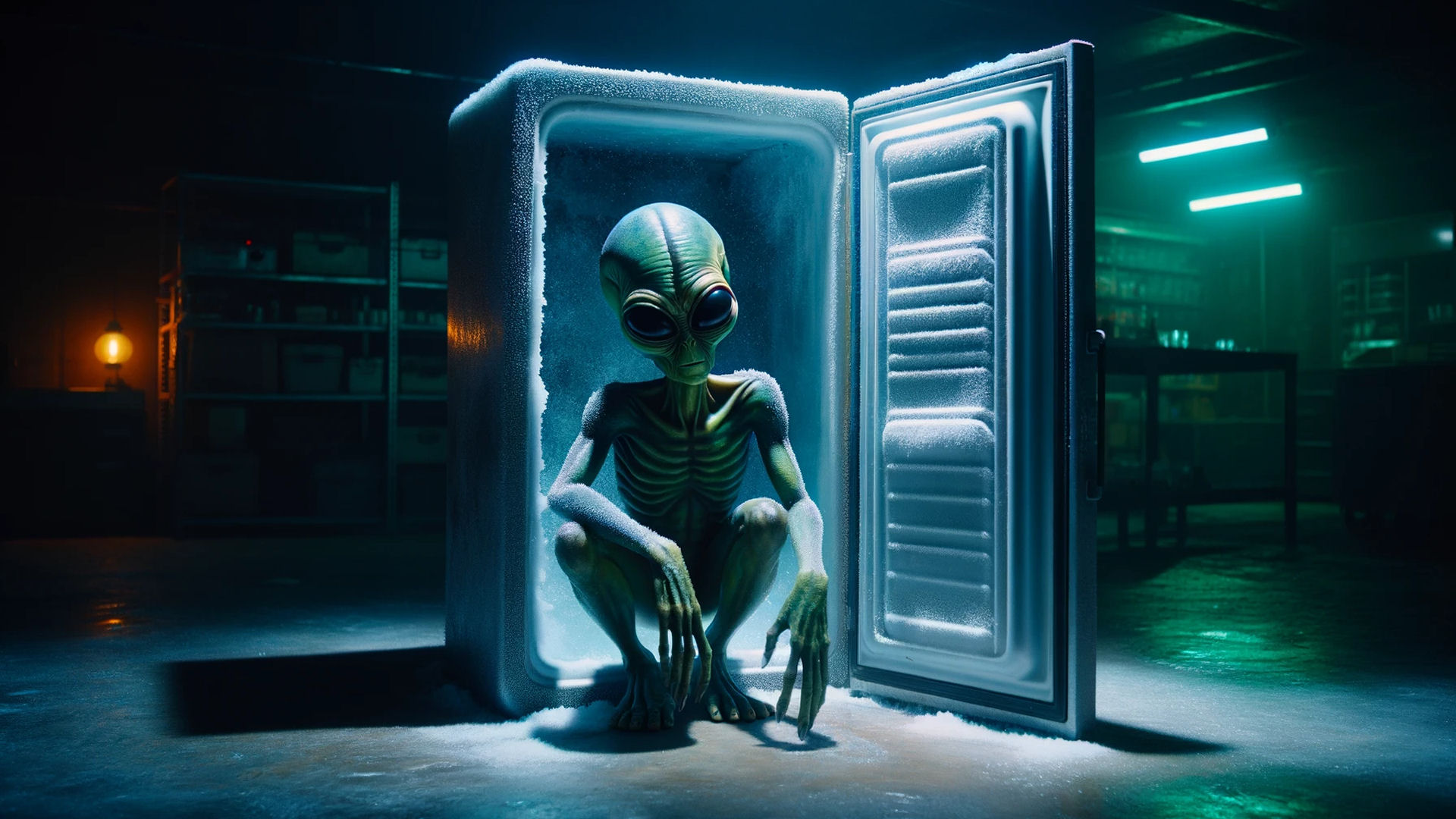
The focus shifts from the iBOT Transporter to a completely different story, one involving Dr. Jonathan Reed and his controversial alien encounter. Art introduces the story as one of the most hotly debated and controversial alien contact stories ever, involving what has been referred to as the “alien in the freezer” or “alien in the burrito” story.
Dr. Jonathan Reed, who claims to have experienced this alien encounter, is interviewed, discussing his background in developmental psychology at the University of Washington and the life-altering impact of his encounter. Reed’s story involves detailed photographs and evidence that he asserts prove his encounter, sparking significant debate and intrigue among the audience and the wider public.
Robert Raith, who became involved with Reed’s case early on, corroborates Reed’s claims, stating that after meeting Reed and reviewing the evidence, including photographs and videos, he believes Reed’s story is true. This endorsement adds another layer of complexity to the already mysterious and contentious narrative.
Dr. Jonathan Reed recounts a harrowing and graphic encounter during his hike where his dog, Suzy, engages with a mysterious creature. Initially thinking it might be a child, Reed’s perception quickly changes when he sees the creature violently attacking his dog. In a desperate attempt to save Suzy, Reed strikes the creature with a branch, causing significant injury to it.
Reed describes the creature’s violent reaction to his dog, including a disturbing account of Suzy imploding and turning into white ash. This intense moment leads Reed to act instinctively, focusing solely on defending himself and his beloved pet.
Amid this turmoil, he noticed a strange, harmonic sound leading him to discover the floating obelisk. After regaining some strength, Reed decided to document the extraordinary events he was witnessing by using his camera to take photos of the alien creature and the obelisk.
Art Bell emphasizes the authenticity of the photos presented on the show’s website, assuring listeners that he personally scanned the photographs and negatives, countering skepticism regarding their genuineness.
As Reed describes his efforts to preserve evidence of the incident through photography, the narrative invites listeners to engage with the visual elements of the story, offering them an opportunity to explore the evidence themselves and draw their own conclusions.
Dr. Jonathan Reed’s tale becomes even more intricate as he delves into the peculiar properties of the black, floating obelisk he encountered. He describes a strange resistance, likening the air beneath the object to molasses, and recounts the chilling sensation and stonelike feel when he touched the obelisk. Interestingly, Reed notes that the obelisk’s emitted sound changed from irritating to more pleasant when he made contact with it.
In his weakened state, Reed mustered the strength to document the scene with his camera, capturing images of the obelisk and the alien creature. Despite facing criticism about the clarity of his photographs, he explains that his camera’s automatic settings and his makeshift tripod technique enabled him to take well-focused shots.
Listeners are invited to view these images on the show’s website, adding a visual dimension to this auditory narrative. The photographs serve as a point of contention, with some questioning their authenticity due to their clarity. Reed speculates that the obelisk might be a portal or gateway, not a craft, suggesting it’s anchored between two points in space.
The discussion also touches on Reed’s physical symptoms following the encounter, drawing parallels to radiation exposure.
fter wrapping the alien body in a thermal blanket, Reed realizes the creature is remarkably light, facilitating his decision to transport it back to his vehicle. Despite his weakened state, compounded by shock and physical illness, Reed manages to carry the wrapped body back to his jeep.
Upon returning home, Reed places the alien body, still wrapped in the thermal blanket, into his freezer—a decision driven by a mix of fear, confusion, and a desperate need to validate the reality of his experience. This action underscores the surreal nature of his predicament, as he grapples with the implications of his encounter and the physical evidence he now possesses.
After initially considering that he might have hallucinated the entire encounter, Reed confirms the alien’s presence by checking the thermal blanket in his garage. He decides to bring the alien into his house and documents it with his video camera, capturing footage that he later shares.
Reed’s description of the alien, highlighting its non-human features and the photographic evidence he took, adds a tangible aspect to his extraordinary claim. The photographs, available on the show’s website, allow listeners to visually engage with Reed’s story, providing an opportunity for them to assess the credibility of his account.
Reed’s isolation and desperation become apparent. He reaches out to friends for support, underlining his need for validation and assistance in processing the traumatic events he has experienced.
Dr. Reed recounts the moment he finally receives a response from his friend Gary, who visits him, likely skeptical of the extraordinary situation Reed describes. Upon arrival, Gary is confronted with the tangible evidence of Reed’s experience: the alien body Reed has stored in his freezer. This pivotal moment marks a transition in the narrative from an individual’s isolated encounter to a shared experience, as Reed seeks validation and support from a trusted friend.
Dr. Jonathan Reed’s tale takes a deeper dive into the complexity and urgency of his situation as he seeks advice on how to handle the alien evidence. He shares his experience with a group in Seattle, believing them to be affiliated with MUFON, who offer to help him secure the evidence. However, it turns out that these individuals were not who they claimed to be, leading to the loss of some of Reed’s evidence.
Reed also reveals another significant discovery: an artifact he found near the alien’s body, described as a device with hieroglyphic-like symbols, which he speculates to be a link or control device between the alien (whom he refers to as “Freddy”) and the obelisk. This object adds another layer of mystery to the story, suggesting a technological aspect to the alien’s presence.
Furthermore, Reed describes taking graphic photographs of the alien after bringing it home, detailing the visible head trauma and brain material, which he later has analyzed.
Dr. Jonathan Reed’s story takes an even more dramatic turn as he recounts going back to the freezer, where he had stored what he believed to be the deceased alien body. To his shock, upon opening the freezer, the creature sat up and screamed, a sound so powerful that Reed describes it as physically impactful. This unexpected resurgence of life in the alien adds a new layer of complexity and fear to Reed’s experience.
Reed captures the creature’s scream on tape, providing an auditory element to his story that listeners can directly engage with. This recording, along with his continued interactions with the now-living alien, deepens the narrative, offering evidence that challenges the boundaries of understanding and belief.
The creature’s subsequent behavior—showing signs of intelligence and strength, interacting with objects, and seemingly preferring the cold environment of the freezer—suggests a level of complexity and mystery in its nature. Reed’s attempt to care for the creature, offering it food and water, reflects his shift from fear to a cautious form of empathy, despite still feeling overwhelmed by the creature’s presence.
As Reed and his friend Gary continue to grapple with the reality of their situation, the story evolves from a tale of alien encounter to one of ongoing, dynamic interaction with an extraterrestrial being.
After revealing the alien’s unexpected revival and his subsequent efforts to care for and understand the creature, Reed describes a harrowing incident where his house was invaded, and everything, including the alien, was taken.
Reed narrates a chilling scene of returning home to find men and vans removing contents from his house, leaving it in shambles. This event marks a drastic shift from a personal encounter with the unknown to a broader conspiracy, suggesting that forces beyond Reed’s understanding are at play, keen on seizing and concealing the evidence of extraterrestrial existence.
Dr. Jonathan Reed’s narrative escalates into a complex thriller, involving break-ins, threats, and mysterious deaths linked to the evidence of the alien encounter. Reed describes the harrowing moment when he found his house burglarized, his garage door frame torn out, and the alien along with the freezer gone. The intrusion didn’t stop at his property; people close to Reed, like his friend Dolly, who was safeguarding some of his evidence, and another associate, Gary, suffered violent consequences, adding layers of danger and conspiracy to his ordeal.
Reed’s sense of betrayal deepens when he discovers that individuals posing as MUFON members had deceived him, taking valuable evidence without returning. The incident with Dolly, who was found dead under suspicious circumstances, and the brutal beating of Gary, underscores the high stakes involved in Reed’s possession of alien evidence.
The interview takes a twist when technical difficulties disrupt the connection with Reed, leaving only Dan Iaria, an independent researcher, and Robert Raith on the line.
Iaria undertook a thorough investigation, including getting the negatives of the photographs authenticated by Bob Shell, editor of Shutterbug magazine. This document of authentication is available on Iaria’s website, which he provided to substantiate the photographs’ credibility.
Dan Iaria authenticates the negatives of Reed’s photographs with the help of Bob Shell, the editor of Shutterbug magazine, adding a layer of credibility to Reed’s claims. Iaria also explores the “red eye effect” in one of the photographs, suggesting its authenticity due to the difficulty of replicating such a detail in a fabricated image.
Furthermore, Iaria delves into the scientific aspects of the case, investigating the alien’s blood and drawing parallels to sea tortoises, known for their nucleated red blood cells, which contrasts with human blood cells. This detail aligns with Dr. Reed’s claims about the alien’s non-human biological characteristics.
The segment also touches on the dangers associated with unveiling such a story, with references to the NSA’s surveillance capabilities and the mysterious deaths of individuals connected to Reed’s case. Iaria’s personal conviction in the truth of Reed’s account is evident, and he emphasizes his thorough questioning and investigation to understand and validate Reed’s experiences fully.
Iaria’s website, AlienDestiny.com, serves as a repository for the documentation and evidence he has gathered, offering the public a chance to review the information and draw their conclusions.
The narrative resumes with Art attempting to reconnect with Dr. Jonathan Reed and Robert Graves after unexpected interruptions, underscoring the tension and unpredictability surrounding Reed’s story. The mention of surveillance technologies like Echelon and Tempest adds a layer of intrigue, suggesting the potential reach and power of unseen forces monitoring Reed’s situation.
The conversation shifts to highlight the personal risks and losses associated with the alien encounter. Reed’s ordeal extends beyond the alien’s disappearance, affecting his acquaintances, Dolly and Gary, who face dire consequences. Dolly’s mysterious death and Gary’s brutal beating emphasize the dangerous implications of their involvement with the alien evidence.
Daniel McEvoy, an independent investigator from Delaware, delves into Dr. Jonathan Reed’s case, offering an external perspective on the unfolding events. McEvoy’s involvement stems from his interest in the paranormal and ufology, which leads him to closely scrutinize Reed’s story and the evidence presented. Through extensive interviews with Reed and others connected to the case, McEvoy aims to verify Reed’s background and the consistency of his account.
McEvoy details his investigative process, emphasizing the rigorous questioning and cross-examination he conducts to assess the credibility of Reed’s narrative. His findings, particularly the validation of Reed’s educational credentials by a former professor, lend additional support to Reed’s claims, suggesting a foundation of truth in his extraordinary encounter.
Daniel McEvoy provides a detailed account of his investigative efforts into Dr. Jonathan Reed’s background and the surrounding circumstances of Reed’s alien encounter story. McEvoy confirms Reed’s educational history through interviews with a professor who remembers Reed and others who attended the same universities. He also interacts with Reed’s relatives, who provide additional context and personal history, including photos and memorabilia of Reed’s life before the encounter.
The situation’s sensitivity is underscored by the reluctance of interviewees to be publicly identified due to fear of repercussions, reflecting the perceived dangers associated with the case. McEvoy’s findings add credibility to Reed’s claims, offering a more rounded picture of his background and the reality of his experiences.
Furthermore, McEvoy discusses interviews with members of the DNA analysis team who examined the alien tissue, including Dr. Roger Haggard, whose subsequent murder adds a layer of mystery and potential conspiracy to the story. These developments heighten the narrative’s tension, suggesting the high stakes and risks involved in unveiling what might be concealed truths about extraterrestrial life and its interaction with humanity.
An intriguing aspect of McEvoy’s findings includes the discovery of a transponder implant in one of Reed’s teeth, believed to be associated with his abductions. This detail adds a sinister dimension to Reed’s experiences, suggesting surveillance or manipulation by unknown entities, potentially linked to government or extraterrestrial sources.
The interview concludes with a promotion of Reed’s book, “Link: An Extraterrestrial Odyssey,” offering a comprehensive account of his encounter and subsequent events.