
Art Bell delves into a variety of topics, beginning with a light-hearted discussion about April Fools’ pranks that fooled him, including a blue screen of death gag on his website. He welcomes a new affiliate in Grand Forks, North Dakota, and shares a listener’s amusing story about being tricked by the blue screen prank. The show transitions into more serious content with Linda Moulton Howe, a reporter and investigator, who discusses a concerning environmental phenomenon in Florida. She describes massive areas of dark, dense water noticed by fishermen, which have been linked to dead marine life and coral. NASA’s satellite images and scientific investigations are highlighted, pointing to a non-red tide algal bloom as the potential cause of this environmental issue.
Dr. Brian Keller delves deeper into the mysterious dark waters reported by fishermen between Naples and the Florida Keys. Fishermen observed conditions unlike anything they had seen before, with no oil sheen or strong odors indicative of red tide, but with notable phosphorescence caused by comb jellies and certain phytoplankton. Researchers found large numbers of diatoms in water samples, suggesting a massive and persistent algal bloom as the likely cause. Despite the dark appearance in satellite images, the water was actually a brownish-greenish color up close. The size and persistence of this phenomenon suggest an unusual influx of nutrients, though not from agricultural sources but naturally occurring from the geology of the area. The wetter-than-usual season, possibly linked to an El Niño event, might have contributed to the nutrient influx, fueling the bloom. Additionally, there’s speculation about the ecological impact, including dead sponges and corals found in the area, pointing to the potential detrimental effects of this natural event.
Art Bell continues his exploration of the dark waters phenomenon with more insights into the environmental impact. The connection between the diatom bloom and the death of marine life like sponges and corals is still unclear. Researchers are considering various potential causes, such as toxic effects from the microscopic plants and physical clogging of filter feeders by the algae. Efforts to collect tissue samples aim to provide insights into the die-offs near Key West. The area affected by the plume remains extensive, with underwater visibility greatly reduced in the brownish-green water. Discussions also touch on the broader implications of such blooms, questioning the balance between natural and human-related causes. The conversation shifts to the potential for increased frequency of such events in the context of global warming and historical precedents of similar occurrences.
The discussion shifts to historical context as Dr. Keller mentions past instances of dark water events, comparing them to the current situation to seek potential patterns or explanations. Beverly Roberts, a research administrator, is introduced, providing insights from her extensive analysis of water samples from the affected areas. The findings indicate a complex mix of organisms, with no single dominant one identified, complicating the understanding of the cause behind the discoloration and ecological impact. The presence of brevetoxin, associated with red tides, is noted in the samples, but its exact role remains uncertain. Despite the uncertainties, the divers have reported no adverse effects from the waters, described as “pea soup” due to their density. The ongoing investigation hints at a decline in the bloom, suggesting it may be nearing its end. However, the broader concern is raised about the potential increase in such events due to rising global temperatures, posing unanswered questions about future marine environmental health.
The discussion broadens to a global perspective as Art Bell and his guests explore the impact of climate change beyond the dark waters of Florida. They note Australia’s coldest summer and its effects on wildlife, contrasting it with warming trends in other parts of the world, particularly at the poles. The conversation touches on the unexpected thawing of the icy realms traditionally inhabited by indigenous peoples, the disintegration of the Larsen B ice shelf, and the escalating drought conditions across the United States, especially impacting New York City’s water supply. These examples serve to illustrate the unpredictable and often severe consequences of climate change, highlighting the urgency of understanding and addressing these environmental challenges.
The conversation transitions to Art Bell discussing his previous works and their eerie relevance to current environmental and geopolitical shifts. Linda, his guest, underscores the severe water shortage affecting the U.S., particularly focusing on the reservoirs supplying New York City, which are alarmingly below capacity. The dialogue then shifts to an intriguing introduction to Bonnie Ramthun, an expert in war gaming and defense strategies. Bonnie’s background is diverse, involving helicopter crash investigations, robotic automobile assembly, missile defense, and war gaming. She has a knack for military strategies and a deep understanding of international defense dynamics. The discussion hints at the influence of media, like the movie “WarGames,” on the perception and development of real-world defense facilities, intriguingly suggesting life imitating art in the design of such establishments.
The conversation transitions into an intriguing look at Bonnie Ramthun’s experiences in the world of war gaming and defense. She describes the unique security measures at her workplace, including submarine-style doors and sophisticated biometric systems, highlighting the intense secrecy and security surrounding her role. Bonnie shares her journey into becoming a war gamer, driven by curiosity and a desire to explore intriguing environments. The discussion delves into the extensive background checks required for her security clearance, emphasizing the serious nature of her responsibilities and the potential consequences of disclosing classified information. The narrative offers a glimpse into the secretive and high-stakes world of military strategy and defense, shedding light on the meticulous precautions taken to protect national security.
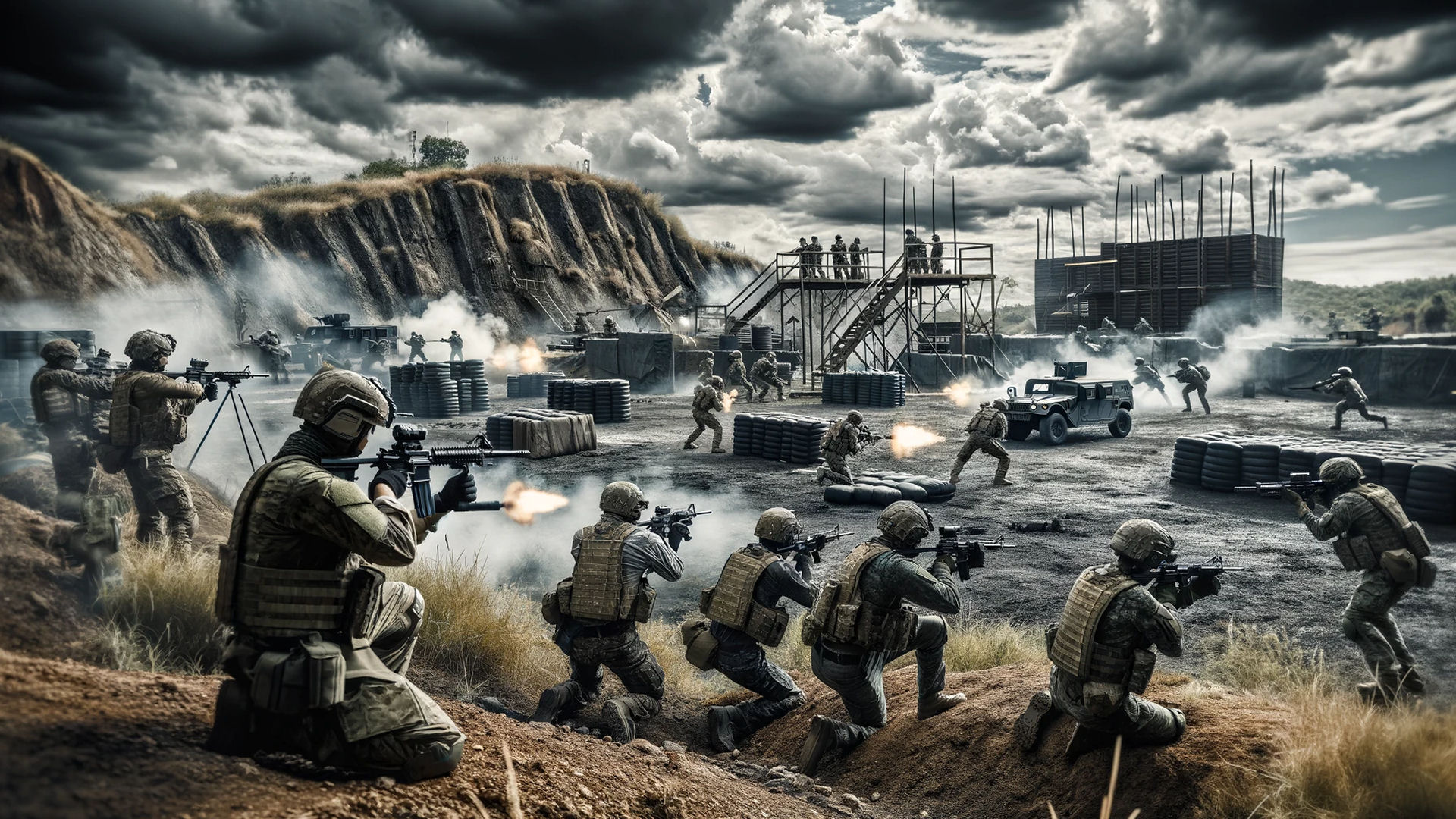
Bonnie Ramthun delves into the fascinating and intense world of war gaming within a defense context. She provides a vivid description of the scenarios she encountered, including one where England attempts to reclaim the U.S. as a colony. The war games are not limited to mere computer simulations but involve participants actively role-playing various global actors in intricate and realistic settings. Bonnie explains the dire outcomes often depicted in these simulations, particularly the apocalyptic scenarios involving nuclear war, described as the “hand of God” due to the visual representation of missile trajectories.
The discussion transitions into space-based defense systems, including the concept of “brilliant pebbles,” which are intended to neutralize threats in their country of origin to avoid catastrophic fallout. However, Bonnie notes the significant risks associated with intercepting nuclear devices, highlighting the dangerous trade-offs involved in defense strategies. The conversation touches on the evolving nature of global threats, shifting from superpower confrontations to the more nuanced risks of limited strikes and the complexities of modern defense planning
Bonnie Ramthun discusses the critical role of satellite systems in modern society and the implications of their potential destruction in a conflict scenario. She illustrates how a single satellite outage can significantly disrupt daily life, affecting everything from medical communications to financial transactions. The conversation delves into the concept of hardening satellites against electromagnetic pulses (EMP), a process that is crucial for military assets but prohibitively expensive for civilian ones, exposing a significant vulnerability in our reliance on space-based technology.
Bonnie also reflects on the personal impact of her career, sharing that the intensity and the grim realities simulated in war games began to intrude upon her life, prompting her to pursue her passion for writing. The discussion transitions back to the broader consequences of a full nuclear exchange, echoing the somber scenarios depicted in works like “On the Beach,” where the aftermath of such a conflict would lead to global devastation.
Bonnie Ramthun continues to share her experiences and insights from her time as a war gamer, emphasizing the strategic considerations of nuclear warfare and the transition from large-scale scenarios to more targeted and limited engagements. She discusses the psychological impact of participating in war games, particularly the shift in strategic thinking from the Cold War doctrine of mutual assured destruction to more nuanced approaches that consider non-nuclear responses even in the face of significant losses.
The conversation also touches on the importance of satellite systems in modern communication and the catastrophic effects of their potential loss in a conflict. Bonnie explains the concept of “nuclear winter” and the long-term environmental consequences of a large-scale nuclear exchange, aligning with scientific theories about global cooling following significant atmospheric particulate dispersal.
Additionally, the dialogue explores hypothetical scenarios involving limited nuclear strikes and the U.S.’s potential responses, highlighting the importance of missile defense systems and the strategic calculus in deciding whether to employ nuclear retaliation.
Bonnie Ramthun discusses the nuanced strategies and implications of using weapons of mass destruction (WMDs), including nuclear, biological, and chemical weapons. The conversation highlights the U.S. government’s stance on preemptive warnings against the use of WMDs, emphasizing that such warnings are intended to deter potential aggressors by making clear the grave consequences of initiating an attack.
Bonnie also touches on the psychological and strategic aspects of deterrence, noting the challenges in communicating threats to irrational actors or groups like terrorists, who may not respond to traditional forms of deterrence. She explains the broader definition of WMDs, which includes biological and chemical weapons, underscoring the global consensus on the severe threats these weapons pose.
The discussion delves into the specifics of weaponized diseases, like the attempts to make Ebola more transmissible and less immediately lethal, to increase its effectiveness as a biological weapon. Bonnie mentions the testing of thermobaric bombs, which are designed to incinerate targets without dispersing biological agents into the atmosphere, highlighting the considerations taken to prevent collateral damage in the event of an attack on a biological facility.
Bonnie Ramthun discusses the ethical and strategic complexities of developing and using biological weapons. The conversation delves into the potential dangers of resurrecting deadly pathogens like the 1918 flu virus for research purposes, emphasizing the thin line between scientific investigation and the risk of unleashing catastrophic biological threats.
Ramthun also explores the hypothetical scenarios of biological attacks and the corresponding responses. She emphasizes that while other nations may engage in the development of offensive biological weapons, the U.S. focuses on defensive measures. However, she acknowledges the inherent duality of such research, where developing defenses against biological agents often requires understanding and sometimes creating the very pathogens one seeks to defend against.
The discussion touches on the strategic rationale behind the U.S.’s stance on using nuclear weapons in response to biological attacks—not as a form of retaliation but as a means to eliminate the threat and prevent further aggression.
Bonnie Ramthun discusses the targeting strategies during the Cold War, clarifying that the U.S. aimed at military targets in Russia rather than civilian centers, contrasting with the Soviet Union’s strategy which included targeting American cities. This difference in military doctrine reflects distinct philosophical approaches to nuclear deterrence and warfare.
She also delves into the concept of cascading conflicts, where a nuclear exchange between two countries could potentially trigger a broader conflict, drawing in other nations and leading to a more extensive nuclear war. This concept underscores the intricate balance of international relations and the potential for localized conflicts to escalate into global crises.
Ramthun touches on the aftermath scenarios of such exchanges, suggesting that while a full-scale nuclear war might not lead to a “nuclear winter,” it would result in significant political and social upheaval, with major cities destroyed and the federal government’s authority diminished.
The conversation also briefly explores hypothetical scenarios of decapitation strikes aimed at disrupting government leadership, illustrating the various considerations and potential outcomes that strategists must contemplate in their planning.
Bonnie Ramthun discusses the intriguing aspect of war games that simulated non-human adversaries, revealing a facet of military strategizing that extends beyond traditional earthbound conflicts. While she wasn’t privy to the details of these higher clearance level games, the mere acknowledgment that such scenarios were considered is revealing and stirs curiosity about the depth and range of defense planning.
Ramthun shares her personal experiences, depicting the high-security environment she worked in, including the intriguing and somewhat clandestine nature of certain areas within the defense facility that were off-limits even to someone with her clearance. Her attempts to explore these restricted areas underscore a natural curiosity about the undisclosed aspects of her work environment and the broader implications of government projects that remain shrouded in secrecy.
She also touches on her writing, hinting at how her experiences influenced her novels, particularly “Earthquake Games,” which explores the dual nature of government projects that can wield enormous power for both good and evil. Her insights provide a glimpse into the complexity and moral ambiguity inherent in defense and strategic planning, as well as the human element within these high-stakes roles.
Bonnie Ramthun delves deeper into the construction and purpose of the war game center, suggesting that its design was not just about physical security but possibly aimed at countering more esoteric threats like remote viewing, given the extensive electronic shielding incorporated into the building. This speculation hints at the multifaceted aspects of security considerations, extending beyond conventional espionage to include psychic espionage efforts known to have been explored during the Cold War.
Ramthun also discusses the strategic importance of the Middle East in global conflict scenarios, acknowledging the region’s historical and ongoing volatility. She confirms that many war games focused on the Middle East, reflecting its critical role in potential global conflicts, including those involving nuclear weapons. The mention of Israel’s nuclear capabilities and the potential for escalation in the region underscores the delicate balance of power and the high stakes involved in military planning and geopolitical strategies.
The conversation touches on the broader implications of conflict in the Middle East, suggesting that any nuclear engagement there could quickly draw in major powers, leading to a cascading series of events with global repercussions.
Bonnie Ramthun explores the potential impacts of Israel using nuclear weapons and the United States’ efforts to prevent the escalation to nuclear conflict, particularly in the Middle East. She notes that in war game scenarios, it was often the U.S., not Israel, that employed nuclear weapons, primarily to maintain regional stability and prevent broader conflict.
Ramthun speculates on the possible use of advanced weaponry, like thermobaric bombs, to target enemy facilities without resorting to nuclear strikes, reflecting a strategic preference for minimizing nuclear escalation. She also introduces an intriguing concept from her book “Earthquake Games,” inspired by the idea that the U.S. government might possess technology capable of inducing earthquakes, a notion she ties to Nikola Tesla’s theoretical inventions.
The discussion shifts to the events of 9/11, questioning Osama bin Laden’s involvement and the U.S.’s response strategies. Ramthun reveals that similar scenarios involving nuclear weapons (rather than planes) had been gamed, highlighting a gap in considering aircraft as weapons in these simulations.
Bonnie Ramthun elaborates on the concept of a decapitation attack, which aims to eliminate a nation’s leadership to cause disarray and weaken its structure. She describes how the 9/11 attacks were a form of decapitation strike using airliners, targeting critical national landmarks and infrastructure to disrupt the United States’ command hierarchy.
Ramthun reflects on the United States’ response during the 9/11 attacks, noting the grounding of planes which potentially thwarted further attacks and highlighting the courageous actions of the passengers on the flight that crashed in Pennsylvania. This discussion underscores the unpredictability and chaos of such scenarios, even for those trained to handle crises.
She also touches on the aftermath and the government’s response, suggesting that the attackers aimed to create a power vacuum by targeting key figures and locations. The conversation sheds light on the intricacies of national security responses during unprecedented crises and the strategic considerations behind preventing and reacting to decapitation attacks.
Bonnie Ramthun discusses the strategic considerations surrounding potential military actions against Iraq and the nature of threats posed by terrorist cells within the United States. She reflects on the complexity of modern warfare, where battles are fought both on conventional fronts and through asymmetric warfare, like terrorism, that targets civilians and non-military infrastructure.
Ramthun speculates on the reasons behind the U.S. military’s focus on Iraq, suggesting that there’s a strong belief within the defense community that Saddam Hussein would use weapons of mass destruction if given the chance. This view is supported by Saddam’s previous actions, such as his use of chemical weapons against the Kurds, reinforcing the perception of him as a ruthless leader willing to deploy such weapons.
She expresses concern not just for the military operations abroad but also for the potential repercussions on American soil, highlighting the fear of retaliatory terrorist attacks in response to U.S. military actions. The discussion captures the multifaceted nature of modern security threats, where state and non-state actors can significantly impact national and global stability.
Bonnie Ramthun engages with callers, addressing their concerns and questions. One caller expresses anxiety about the nuclear threat and its implications for future generations. Ramthun reassures her by comparing current global threats to the past, suggesting that while individual acts of terrorism are deeply concerning, the broader threat of global nuclear annihilation has diminished since the Cold War.
Another caller inquires about the security measures and personal experiences within the war game center, leading to a light-hearted anecdote about Ramthun’s breast pump during a security check, illustrating the human side of working in such a high-security environment.
A subsequent caller’s question about the CIA introduces a discussion on Ramthun’s perception of the agency’s personnel, which she humorously critiques based on her limited interactions. This personal anecdote provides a glimpse into the interagency dynamics and perceptions within the U.S. defense community.
The conversation shifts to a question about Oak Ridge, a significant site in the development of nuclear weapons. Ramthun acknowledges its historical importance but suggests that in the context of modern, more targeted threats, its significance as a target has waned compared to broader strategic targets during the Cold War.
Bonnie Ramthun discusses the dynamics of first strike policies and their implications in the context of war games and real-world scenarios. She clarifies that while the U.S. has sworn off first use of nuclear weapons as an offensive measure, it retains the option for a nuclear response to a WMD attack. This nuance in policy reflects the complexities of modern warfare, where the lines between defensive and offensive actions can blur, especially in the context of preemptive or retaliatory strikes.
Ramthun also touches on the international ramifications of such scenarios. She suggests that major powers like China and Russia, despite their geopolitical interests, would likely not escalate a conflict if the U.S. were to use nuclear weapons in response to a biological attack by a rogue state like Iraq. This perspective underscores the global consensus against the proliferation and use of WMDs, even among rival nations.
The discussion also delves into the broader strategic environment, noting the U.S.’s advancements in missile defense and space-based weapons, which could potentially neutralize the nuclear arsenals of other nations. This evolving military landscape raises questions about the future of nuclear deterrence and the balance of power in international relations.
Bonnie Ramthun engages in a thought-provoking conversation with a caller about the possibility of a rogue scientist unleashing a global biological threat, specifically one that targets fertility. This scenario, while fictional, raises real concerns about the potential misuse of advanced biotechnology and the vulnerabilities of global populations to such threats. Ramthun’s optimistic perspective contrasts with the caller’s more alarmist view, highlighting the diversity of opinions on how humanity faces and responds to existential risks.
Additionally, Ramthun discusses the role of gender in war gaming and broader strategic thinking. She acknowledges that while physical differences might influence the presence of women on the battlefield, cognitive diversity is crucial in strategic planning and decision-making. Her comments on the potential for a female president holding the “football” (a metaphor for the nuclear command authority) further emphasize the importance of individual qualities over gender stereotypes in leadership roles.
Bonnie Ramthun discusses various scenarios explored in war games, including accidental missile launches and the ethical dilemmas surrounding the use of nuclear weapons. She highlights a unique situation where a missile misfired towards Seattle instead of its intended target, Washington D.C., demonstrating the unpredictable nature of warfare and the importance of missile defense systems.
The conversation also touches on public perceptions and criticisms of U.S. foreign policy and military actions, with a caller questioning the U.S.’s moral stance given its arsenal of weapons of mass destruction and historical military interventions. Ramthun defends her work and perspective, emphasizing her commitment to American values and the belief that her role in war gaming was to safeguard the nation, not to propagate disinformation or support unjustified aggression.
Bonnie Ramthun discusses the United States’ missile defense capabilities and the potential threats from foreign troops or terrorist cells within the country. She clarifies that while the U.S. has some missile defense systems, such as Aegis-equipped naval vessels, there are limitations, particularly against submarine-launched missiles close to the coast.
The conversation also touches on domestic security measures, particularly the protection of critical infrastructure like dams and tunnels, which could be targeted in terrorist attacks. Ramthun notes the quick deployment of military assets to protect key sites post-9/11, indicating that such contingency plans were already in place.
Additionally, callers inquire about the safety of various locations in the event of a global catastrophe. Ramthun suggests that, barring a direct hit from a nuclear weapon, most places in the U.S. would be relatively safe due to the country’s robust infrastructure and emergency response capabilities. However, she emphasizes that no location can be deemed entirely safe from all types of threats.
Bonnie Ramthun discusses the potential outcomes of a nuclear conflict, emphasizing that while disastrous, it would not necessarily lead to the apocalyptic scenarios often depicted in media from the 1970s and 1980s. She clarifies that while a “dirty bomb” could cause significant harm, the aftermath would be a situation from which recovery is possible, contrasting this with the total devastation often associated with nuclear war in popular imagination.
The dialogue also touches on the idea of “cascading effects” in conflict, where actions in one region could trigger responses and further conflicts in others, particularly in volatile areas like the Middle East. Ramthun suggests that while a global war might be devastating, it would not necessarily result in the end of the world, drawing a distinction between a large-scale conventional war and a full-scale nuclear apocalypse.
A caller’s question about the involvement of divine intervention in human affairs leads to a discussion about the metaphorical use of the term “hand of God” in the context of missile trajectories and the moral implications of nuclear weaponry. Ramthun’s response reflects a nuanced view of fate, human agency, and the moral complexities of war.