
Art starts the show by welcoming everyone and expressing his excitement to be back. He mentions that the show is now covering a large part of the world again, including a station in Charlotte, North Carolina. Art then teases an upcoming segment with Richard C. Hoagland, who had a recent conversation with NASA. He also shares some personal anecdotes about his recent RV trips and modifications he made to improve shortwave signal reception. Additionally, Art talks about Bonnie Crystal, who claims to have found the deepest hole in the world, and her upcoming appearance on the show.
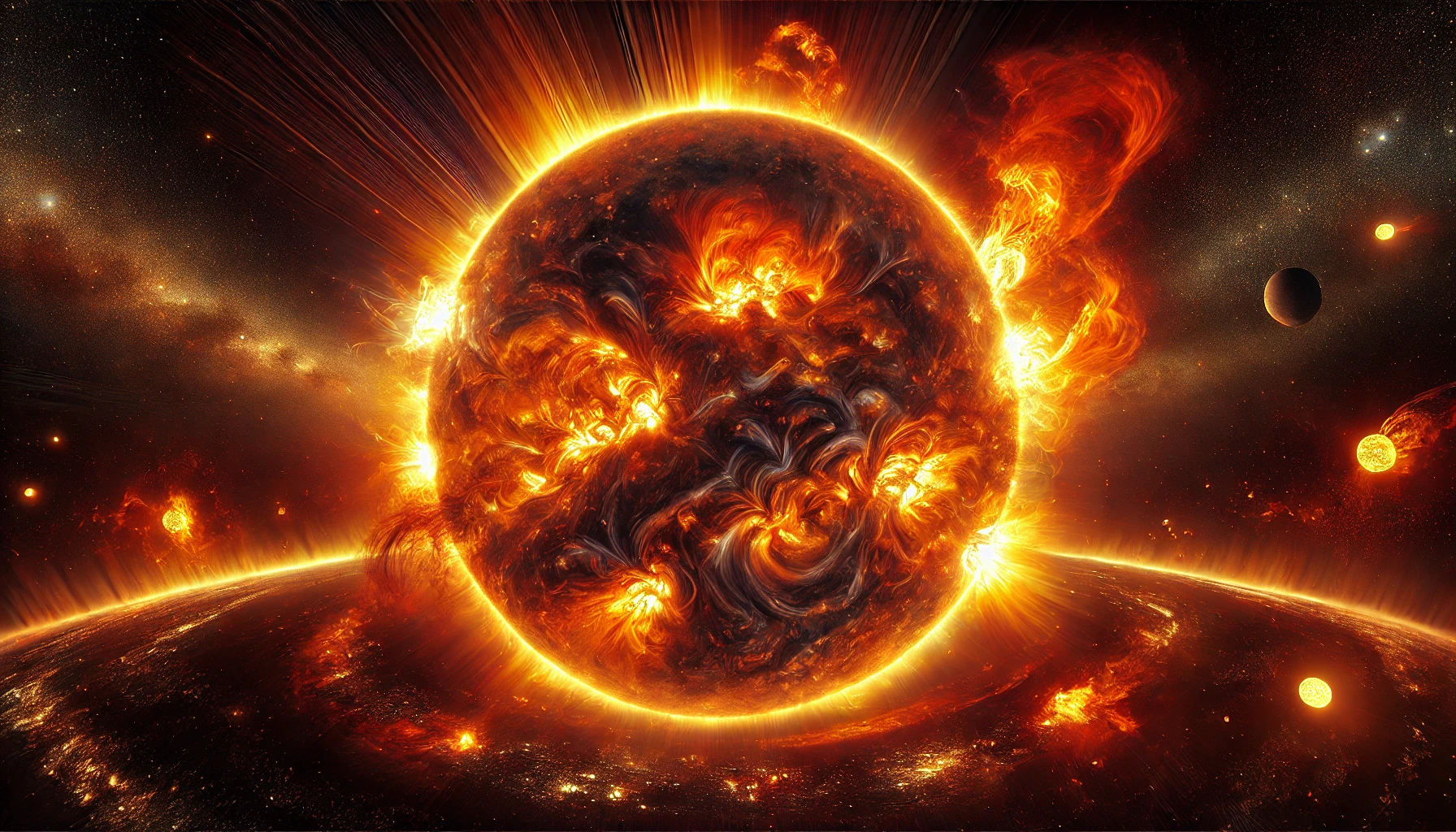
Art shifts focus to a major solar event that occurred, showing a photograph of a huge eruption on the sun, which he describes as one of the biggest he’s ever seen. He then mentions a paranormal incident involving a ghostly photograph taken in Tampa Bay, Florida. Art briefly covers a tragic plane collision over southern Germany and an incident involving pilots who were prevented from flying due to alcohol consumption. Finally, he reports on a bombing in central Afghanistan by US forces in response to an attack.
Art reports on a tragic incident where a wedding celebration in Afghanistan was bombed, resulting in many casualties. He discusses a federal judge’s ruling that federal executions are unconstitutional, citing the wrongful execution of innocent people. Art then talks about the ongoing investigation into WorldCom’s fraudulent activities, expressing his frustration with white-collar criminals and the need for them to face serious consequences to restore public confidence in the economy. He provides updates on the stock market, noting significant declines in the Dow and Nasdaq due to the scandal.
Art shares that his small town of Pahrump, Nevada, will have the biggest fireworks display in the state on July 4th, with their local radio station choreographing the event. He expresses excitement and curiosity about how they acquired so many fireworks. Art then introduces Richard C. Hoagland, who had a teleconference with NASA prompted by legal threats from Peter Gersten. Richard explains the background, detailing a formal request made to NASA for better images of the Sedona region on Mars. Despite initial cooperation, they received no further communication or images, leading to the current situation.
Richard explains that due to a lack of response from NASA regarding requested images of the Sedona region on Mars, Peter Gersten threatened a lawsuit, prompting a teleconference with NASA. During this call, NASA’s Jim Garvin and Don Savage provided a detailed timeline and reasons for the delays, emphasizing the importance of maintaining the Mars Global Surveyor’s health to ensure it can relay data from upcoming Mars missions. They discussed the historical failures of Mars missions and the measures being taken to avoid similar issues with the 2004 Mars Exploration Rover mission, which has a significant investment.
Garvin explained that previous telemetry failures were due to the lack of an orbiting mothership to relay data during critical moments, and efforts are being made to prevent this in future missions. The conversation also covered technical details about telemetry issues and the importance of maintaining the Mars Surveyor. Richard noted the extensive detail provided by Garvin, highlighting the challenges and limitations faced by NASA in capturing the requested images due to limited resources and the priority of mission-critical tasks.
Art discusses the wildfire crisis, noting that human actions have caused significant fires in Colorado and Arizona, including the Rodeo Fire. A Bureau of Indian Affairs worker admitted to starting the fire during a court hearing. Art emphasizes the ongoing weather changes, lack of moisture, and the irresponsibility of those meant to protect the land.
Art returns to the discussion with Richard C. Hoagland, acknowledging Richard’s groundbreaking work on Europa and Mars. Richard explains that NASA’s Dr. Garvin promised to review the target list for Mars images, despite the priority of preserving the Mars Surveyor spacecraft’s fuel. Richard reiterates the importance of obtaining more stereo images of the Cydonia region and other Martian anomalies, such as glass tunnels and tetrahedral pyramids. These images could provide crucial evidence to dismiss previous misconceptions about Martian structures.
Richard also questions NASA’s delay in releasing color and infrared images from the Mars Odyssey mission, which were promised but not yet delivered. Dr. Garvin claimed ignorance of these images, leading Richard to remind him of a previous commitment made by Dr. Roger Gibbs at JPL, emphasizing the need for these images to advance scientific understanding.
Richard continues detailing the discussion with NASA’s Dr. Garvin, who promised to inquire about the missing color and infrared images from the Odyssey mission. Garvin also committed to moving their target list to the Odyssey for both infrared and color photography. He would also contact a colleague involved with a German camera on an upcoming European Space Agency mission to Mars, which uses a more advanced framing camera, promising higher resolution images.
Richard mentions the possibility of a manned mission to Mars, fueled by these discoveries and ongoing initiatives. His contacts in the Bush administration have suggested that the push for cooperation from NASA stems from directives by the White House. Richard expresses cautious optimism about the new level of transparency and cooperation, noting that both sides need to build trust through action.
Garvin proposed utilizing the Mars Reconnaissance Orbiter (MRO), set to launch in 2005, which will have the capability to capture images with centimeter-level resolution. This could provide unprecedented detail of Martian structures. Richard is hopeful but remains vigilant, awaiting the promised infrared and color images and further communications to confirm NASA’s commitment to their agreement.
Richard discusses the need for detailed imagery of Mars’ surface and emphasizes the importance of being close enough to see structural details without creating illusions. Dr. Garvin from NASA assured Richard that about 10-20% of the Mars Reconnaissance Orbiter (MRO) photography would be reserved for NASA headquarters’ discretion, potentially allowing the anomalous community to have specific targets photographed.
The conversation shifted to the need for a collaborative dialogue between NASA and the anomalous research community. Dr. Garvin suggested creating a proposal for review and indicated it would likely be viewed favorably. He also proposed setting up a “Martian Enigmas Panel” for the second international Mars conference, inviting researchers to present papers and engage in discussions about Martian artifacts. This represents a significant shift from the previously adversarial relationship between NASA and independent researchers.
Art and Richard also touched on the broader implications of these discoveries and the potential for a renewed national or global goal, such as a manned mission to Mars. This could provide a unifying purpose and a positive focus for society amid ongoing concerns about terrorism and global instability. Richard is cautiously optimistic about the changes at NASA and the potential for meaningful collaboration moving forward.
Art and Richard discuss the importance of including the anomalous research community in the dialogue about Mars exploration. Richard emphasizes that if the theories proposed by the anomalous community prove true, they would be a significant reason for a manned mission to Mars. Dr. Garvin from NASA acknowledges the political and bureaucratic challenges, including the implications of the Brookings Report, which suggested that public disclosure of extraterrestrial evidence could be disruptive. This report has historically influenced NASA’s communication strategy.
Garvin proposes involving the anomalous community in conferences and discussions to bridge the gap between mainstream science and independent researchers. Richard appreciates this shift towards collaboration and transparency, noting that the real test will be whether NASA follows through on these promises, such as providing the requested infrared and color images from the Mars Odyssey mission.
Art then transitions to discussing a massive solar explosion that occurred on July 1st, encouraging listeners to view the impressive photographs on his website. He introduces his next guest, Ramon Lopez, a distinguished professor of physics specializing in space environment dynamics. Ramon will discuss the solar event and its implications.
Dr. Ramon Lopez, a distinguished professor specializing in space physics, joins Art to discuss the recent massive solar explosion. Dr. Lopez explains that the photograph of the solar event was taken by the SOHO satellite, which orbits a point where the Earth’s and Sun’s gravity balance. This particular explosion, thirty times the diameter of Earth, was a significant solar prominence. If such an event had been directed at Earth, it could have caused anything from minor effects to a major magnetic storm, depending on various factors like the amount of ejected gas and its speed.
Art and Dr. Lopez discuss the potential dangers of solar flares, particularly for airline passengers and crew. Dr. Lopez mentions an extreme solar flare from March 31, 2001, that reset the flare scale, illustrating the severity of such events. Historical records, like the massive flare in 1859, indicate that even larger events have occurred, causing intense magnetic storms and auroras visible as far south as Havana, Cuba.
Art raises concerns about the risk to frequent flyers, such as pilots and flight attendants, during solar maximum periods. Dr. Lopez acknowledges the increased attention this issue is receiving, especially within the European Union, due to the potential health risks posed by high-altitude exposure during significant solar events.
Dr. Lopez elaborates on the regulations in the European Union that limit the annual radiation exposure for pilots and flight attendants, treating them similarly to radiation workers. This includes calculating exposure, especially for those flying over polar regions where the Earth’s magnetic field allows more solar particles to enter the atmosphere. The recent introduction of over-the-pole flight routes has heightened concerns about radiation and communication disruptions during solar storms. Airlines are particularly concerned about maintaining communication, often diverting flights during major solar events, which costs them millions.
Art and Dr. Lopez discuss the unusual nature of the recent solar cycle, which had a rare double peak, confusing forecasters. Dr. Lopez explains the basics of solar fusion, where hydrogen is converted into helium, releasing a vast amount of energy. He compares the mass of Jupiter to the Sun, noting that Jupiter, despite being massive, is not nearly large enough to start fusion and become a star.
They also talk about the life cycle of stars, with larger stars burning through their fuel faster and ending in dramatic supernovae. These supernovae are crucial for creating heavy elements, such as the gold in a wedding ring, which are formed in these massive stellar explosions and then spread throughout space, contributing to the formation of new stars and planetary systems.
Dr. Lopez explains that all heavy elements on Earth, except for hydrogen and helium, were formed in the cores of stars and distributed through space by supernova explosions. Art mentions that our Sun, considered relatively small and stable, has occasionally exhibited variable behavior similar to other stars thought to be stable. While our Sun has variable outputs, it remains relatively stable compared to other stars that have shown sudden, dramatic changes.
The discussion shifts to the possibility of stellar disturbances caused by passing comets, a theory Dr. Lopez finds unlikely due to the insufficient gravitational impact of comets on stars. Art and Dr. Lopez then take a brief break, during which music plays, before resuming the conversation about the recent solar eruption, noting its massive size and potential impact if it had been directed at Earth.
Art mentions a Japanese satellite, Nozomi, which was damaged by a solar flare in May. Dr. Lopez confirms the incident, explaining that the satellite, bound for Mars, lost some communication and scientific instruments but was not entirely disabled. This leads to a discussion about the broader implications of solar flares on space missions, echoing concerns raised earlier in the program with Richard Hoagland.
Art and Dr. Lopez discuss the significant challenges of protecting astronauts from radiation during a manned mission to Mars. Unlike Earth, which has a magnetic field and thick atmosphere to shield from cosmic rays and solar energetic particles, Mars offers almost no protection. The Martian atmosphere is very thin, and Mars lacks a substantial magnetic field, making radiation shielding essential for the safety of any Mars mission crew.
Dr. Lopez explains that magnetic fields in planets are generated by internal currents. Mars likely lacks a magnetic field because it does not have a liquid core like Earth’s. Surprisingly, Venus, despite being similar in size to Earth, also lacks a magnetic field. This lack of a magnetic field does not affect the ability to navigate satellites around these planets, as orbital dynamics are primarily governed by gravitational forces, not magnetic fields.
They touch on Earth’s wandering magnetic field and its gradual weakening, raising the possibility of a future pole reversal. During such a reversal, Earth might experience a temporary loss of its magnetic field, leading to increased radiation exposure from solar flares. However, Dr. Lopez reassures that the atmosphere would still provide significant protection, and any field reversal would occur over thousands of years, giving humanity ample time to adapt.
Dr. Lopez explains that the Earth’s seafloor provides evidence of magnetic field reversals. As lava emerges from volcanic ridges like the Mid-Atlantic Ridge, the Earth’s magnetic field is imprinted in it. By examining these imprints, scientists observe magnetic stripes that alternate directions, indicating historical field reversals.
Art and Dr. Lopez discuss the potential impacts of a magnetic field flip. Increased radiation could raise cancer rates, but humans and other species have survived past reversals. The primary concern would be technological vulnerabilities to solar storms. Dr. Lopez debunks a theory suggesting that dinosaurs were wiped out by a solar event, affirming that an extraterrestrial impact, evidenced by a layer of iridium and associated crater, was likely responsible.
The conversation shifts to current climate change, with Dr. Lopez acknowledging the warming trend and its potential links to both human activities and solar variations. He highlights the Maunder Minimum, a period of low sunspot activity in the 1600s that coincided with the Little Ice Age, suggesting a connection between solar activity and Earth’s climate. Despite debates on the causes of climate change, Dr. Lopez and Art agree on the necessity of adapting to these changes, as we cannot control the Sun’s behavior.
Dr. Lopez discusses the variability of the Sun’s output and the necessity of scientific studies to mitigate worsening climate changes. Art raises a question about governments potentially manipulating sunlight to control weather, which Dr. Lopez finds highly unlikely and not discussed within the scientific community. Art mentions a wild NASA proposal to move the Earth using a large asteroid to alter its orbit and reduce global warming effects, which Dr. Lopez also finds implausible due to the immense forces required.
They delve into the formation of the Moon, agreeing that the most accepted theory involves a Mars-sized object colliding with Earth early in its history, creating a debris cloud that formed the Moon. This event would have melted the Earth completely, leaving no hole behind, as the material re-coalesced.
Art and Dr. Lopez then prepare for a break, with Art encouraging listeners to visit his website to see the spectacular photograph of the recent solar eruption. Dr. Lopez’s book, “Storms from the Sun,” is also mentioned, offering further insights into solar phenomena and their impacts.
Art and Dr. Lopez continue discussing changes in the Sun and its potential impacts on Earth. Dr. Lopez notes that while scientific studies should continue to explore ways to mitigate climate change, it is crucial to recognize that the Sun’s variability in output, including sunlight, magnetic fields, and plasma, will continue to affect our planet.
Art brings up a perception shared by some listeners that the Sun appears whiter and brighter than it did in the past. Dr. Lopez responds that he has not seen any scientific evidence supporting this observation and emphasizes that the color of the Sun is influenced by the Earth’s atmosphere, which filters the sunlight differently depending on factors such as time of day and atmospheric conditions.
They then discuss the debate about whether the moon landings were faked. Dr. Lopez dismisses the claims, explaining that astronauts did receive some radiation exposure but not enough to cause significant harm. He mentions a specific solar flare in August 1972 that could have been deadly had there been an Apollo mission at that time. This incident underscored the risks of space radiation, a key theme in Dr. Lopez’s book “Storms from the Sun.”
Art expresses frustration over humanity’s retreat from manned space exploration since the Apollo missions, highlighting the potential difficulties and dangers of a manned mission to Mars, particularly due to solar radiation. Dr. Lopez agrees, noting that while a Mars mission poses many challenges, including maintaining the mental and physical health of astronauts, it remains an inspiring goal for future space exploration.
Dr. Lopez and Art continue their discussion, touching on the possibility of finding evidence of early life on Mars. Dr. Lopez is optimistic about finding bacterial fossils, given Mars’ history of water. He also believes Europa, a moon of Jupiter, may harbor life beneath its icy surface, suggesting future missions will likely explore these possibilities.
Art mentions a story about the potential melting of Mars’ ice caps and questions whether this could be linked to solar activity. Dr. Lopez explains that while Martian seasons can cause significant changes in the ice caps, there is no substantial evidence linking these changes to global warming or solar variations.
The conversation shifts to the impact of solar activity on communication technologies. Art shares an anecdote about his ham radio experience being affected by a prolonged solar flare, illustrating how solar activity can influence the ionosphere and, consequently, radio communications. Dr. Lopez adds that solar radio noise can also interfere with cell phone signals, especially when the sun is aligned with communication towers. During solar maximum, these issues can become more frequent, causing significant disruptions in cell phone and satellite communications.
Art notes that similar principles affect satellite dish reception, where solar noise can overwhelm the signal during equinox alignments. Dr. Lopez acknowledges the increasing reliance on cell phones and the potential for solar activity to impact everyday communication, though he personally is not concerned about potential health risks from cell phone use.
Dr. Lopez and Art discuss the potential impact of space weather on everyday activities. Dr. Lopez highlights how space weather, such as solar storms, can affect satellite communications, which are crucial for services like credit card transactions and medical pagers. He recalls the Galaxy 4 satellite outage in May 1998, which disrupted communications across the United States, illustrating the significant impact of space weather on modern technology.
Art raises the possibility of daily solar forecasts, similar to weather forecasts, becoming a routine part of media broadcasts. Dr. Lopez agrees that while it might be more of a curiosity, such forecasts could be crucial for activities like polar flights. Airlines might already divert flights due to solar activity, but they generally do not disclose this to passengers, citing technical difficulties instead. This lack of transparency is likely due to concerns about public panic, especially when using terms like “radiation.”
The conversation touches on the potential for new guidelines in the airline industry, similar to those adopted by the European Union, which regulate radiation exposure for flight crews. Dr. Lopez suggests that such guidelines may eventually be adopted in the United States as well.
Art and Dr. Lopez discuss the far-reaching impacts of space weather on modern technology and daily life. Dr. Lopez highlights how space weather can affect satellite communications, which are crucial for numerous services like credit card transactions and medical pagers. They recall the Galaxy 4 satellite outage in May 1998, which disrupted communications across the United States, illustrating the significant impact of space weather on modern technology.
Art mentions the availability of space weather forecasts, which can be accessed through his website or directly from NOAA. He notes that, as a ham radio operator, he frequently checks these reports to monitor solar activity’s effects on communication.
Dr. Lopez points out that space weather predictions are already a part of the National Weather Service, with reports issued by the Space Environment Center in Boulder, Colorado. People whose work depends on space weather are already paying attention to these reports, similar to how residents in hurricane-prone areas monitor weather forecasts.
They discuss the challenges of attributing satellite failures to space weather. While the scientific community often suspects space weather in incidents like the Telstar 401 and Galaxy 4 failures, insurance companies prefer to attribute them to engineering issues to avoid claims related to “acts of God.”
Art reflects on how many isolated cultures worship the Sun, acknowledging its profound impact on life on Earth. Dr. Lopez agrees, noting that the Sun is indeed the giver of life and that ancient civilizations, such as the Egyptians under Pharaoh Akhenaten, worshiped the Sun as a deity.
They speculate on whether the Sun affects human behavior, with Dr. Lopez suggesting that while any direct effects are likely psychological, cultural conditioning plays a significant role. For example, light levels can influence people’s moods, contributing to higher rates of depression during winter in northern countries, which often correlates with higher alcohol consumption.
Art and Dr. Lopez continue discussing the potential influences of celestial bodies on human behavior. They delve into the topic of how sunlight affects mood and physiology, particularly in regions with long, dark winters where people often use sun lamps to improve their wellbeing. Dr. Lopez agrees that sunlight has a significant impact on mood, which is evident from studies showing improved mental health with increased light exposure.
Art brings up the idea that extreme heat can lead to increased irritability and violent crime, suggesting a possible link between environmental conditions and human behavior. Dr. Lopez mentions self-fulfilling prophecies, where people associate celestial events, like comets, with significant outcomes, potentially causing them to act in ways that bring about those outcomes.
The conversation shifts to the historical use of celestial observations for decision-making, such as Chinese astrologers using sunspots to guide the emperor’s actions. Dr. Lopez clarifies that while cultural and psychological impacts are real, there’s no scientific basis for astrology’s claims that celestial bodies directly influence human behavior.
Art then talks about the full moon and its perceived effects on behavior. He shares his experience in talk radio, noting that shows around the full moon tend to be wilder and that emergency rooms and police officers often report more activity during full moons. Dr. Lopez acknowledges that certain cycles, like the lunar and diurnal cycles, are deeply ingrained in many species due to evolution, and while he is not aware of clear statistical evidence linking the full moon to specific behaviors, he does not dismiss the possibility outright.
Art and Dr. Lopez discuss various topics related to celestial influences on Earth and space exploration. They start by exploring the potential correlation between lunar cycles and human behavior, mentioning studies from Moscow that looked into suicide rates. Dr. Lopez points out that while correlations can be found, proving a direct cause-and-effect relationship is more challenging. They also touch on historical attempts to link sunspot cycles with various phenomena, such as lake levels in Tanzania, which initially showed a strong correlation that later disappeared.
The conversation shifts to the intriguing idea of using solar sails for space travel. Dr. Lopez explains that solar winds, particles moving at about a million miles per hour, can theoretically propel spacecraft using large solar sails. This concept, while often featured in science fiction, is grounded in scientific fact. NASA is exploring alternative propulsion technologies, including solar sails and magnetic sails, where a magnetic field catches the solar wind.
They discuss a past Soviet mission called Regatta, which planned to use solar sails for station-keeping but was canceled due to the collapse of the Soviet Union. Dr. Lopez elaborates on the idea of using a magnetic field inflated with plasma to create an invisible sail, a concept being studied at the University of Washington in Seattle.
NASA’s Deep Space program includes technology demonstrations for various propulsion methods, including electric propulsion, which offers significant advantages over traditional chemical propulsion. Electric propulsion can achieve much higher thrust velocities, making it a promising option for future spacecraft.
Art and Dr. Lopez consider the feasibility of using solar sails for manned missions. While the slow acceleration of solar sails might be more suitable for unmanned spacecraft, the concept remains a fascinating area of research with potential applications in long-distance space travel.
Art announces the opening of the telephone lines for listeners to ask Dr. Lopez questions about the topics they’ve discussed, including the Sun’s effects on Earth and space weather. Dr. Lopez explains that while the Sun is incredibly influential, scientific understanding is still evolving, and there is much more to learn.
Art mentions the importance of the internet, which was designed to withstand multiple nuclear blasts and is increasingly reliant on satellite communications. He speculates that a significant solar event combined with a weakened Earth’s magnetic field could potentially disrupt the internet. Dr. Lopez reassures that the internet’s design, particularly its use of packet switching and landlines, makes it highly resilient, comparing it to a cockroach that can’t be easily killed.
A caller from Texas, Jill, asks about measuring the heat received from the Sun to determine its contribution to global warming versus greenhouse gases. Dr. Lopez explains that various spacecraft measure the “solar constant,” which quantifies the amount of sunlight reaching Earth. However, this measurement is complex because it involves factors like reflection and absorption by the Earth’s atmosphere. The solar constant is not entirely constant, varying with the solar cycle, which adds to the complexity of understanding its impact on Earth’s climate.
Dr. Lopez explains the complexities of measuring the amount of heat received from the Sun, which includes factors such as reflection and the greenhouse effect. The latter blocks some infrared radiation from being radiated back into space, contributing to global warming. He mentions recent studies on “earthshine,” where light reflected off Earth and then the Moon back to Earth shows that Earth’s reflectivity varies more than previously thought.
Art and Dr. Lopez then discuss the concept of using large mirrors or satellites to reflect sunlight onto Earth, potentially turning night into day for certain areas. While the US hasn’t pursued this, there were past Soviet plans and US studies on using large satellites to collect solar energy and beam it back to Earth via microwaves. Dr. Lopez reassures that the power density would be low, similar to leakage from microwave ovens, to avoid harmful effects.
A caller shares observations of carpenter bee behavior, noting changes during solar maximum periods. Dr. Lopez acknowledges that some bees use the Sun for navigation but suggests that direct observation of the Sun is the best way to understand the solar cycle. He notes that the total solar output variation over the cycle is small, with larger magnetic storms being the most significant change.
Art brings up the topic of ozone, particularly in regions like Australia and New Zealand, where children are required to wear head coverings due to increased ultraviolet radiation from the ozone hole. Dr. Lopez emphasizes the importance of using sunscreen and the dangers of increased UV exposure, especially during solar maximum when the ozone layer can be more compromised.
Dr. Lopez discusses the depletion of the ozone layer and its relationship to chlorofluorocarbons (CFCs). The scientific consensus that CFCs significantly contributed to the ozone hole led to global policy changes, like banning CFCs. However, Dr. Lopez admits he’s not up-to-date on the exact timelines for when the ozone layer is expected to recover fully. He reiterates that while the ozone hole is a man-made issue, solar cycles can exacerbate the effects by increasing ultraviolet radiation, particularly under ozone-depleted areas.
Art inquires about the potential correlation between gravity and magnetic fields, given the lack of complete understanding of gravity. Dr. Lopez clarifies that while magnetic fields are generated by electric currents, gravity is related to mass. There isn’t a straightforward relationship between a planet’s gravity and its magnetic field, as demonstrated by the differences among the rocky planets: Earth and Mercury have magnetic fields, while Venus and Mars do not.
The discussion shifts to the generation of magnetic fields within planets, which is more about the motion of conducting materials inside the planet rather than their size or mass. Dr. Lopez explains that these motions, driven by the planet’s history and internal heat, create electric currents that generate magnetic fields.
A caller from St. Louis asks if it’s true that it takes a million years for energy to travel from the Sun’s core to its surface. Dr. Lopez confirms that the widely accepted number is around a million years, though some papers have suggested shorter timescales, like 50,000 to 100,000 years. However, most solar scientists adhere to the million-year estimate.
Dr. Lopez explains why the Sun’s corona is significantly hotter than its surface. The surface temperature of the Sun is about 6000 degrees Kelvin, while the corona reaches temperatures of over a million degrees. This phenomenon puzzled scientists for a long time, but it is now understood that the energy transfer is not thermal but mechanical. The churning motion of the Sun’s surface twists its magnetic field, storing energy that is later released in the corona, heating it up.
The conversation shifts to discussing the direct impacts of solar activity on Earth. Dr. Lopez explains that during significant solar events, the initial impact on Earth, such as an increase in electromagnetic radiation (including X-rays and radio noise), reaches us in about eight minutes—the time it takes for light to travel from the Sun to Earth. The charged particles and magnetic fields from solar flares take longer to arrive, usually a day or two, giving some time to protect sensitive technology.
Art shares his experiences as a ham radio operator, noting that solar eruptions can be detected through increased noise levels at 50 MHz even before charts on space weather websites reflect the event. This is due to the immediate impact of electromagnetic radiation from the Sun. He also describes how major solar events can disrupt the ionosphere, leading to a sudden loss of radio signals as the ionosphere absorbs the signals instead of reflecting them.
Art and Dr. Lopez discuss how solar flares and magnetic storms disturb the ionosphere, affecting radio signals and technologies like GPS. Art shares his experiences as a ham radio operator, where solar activity disrupts long-distance communication. Dr. Lopez explains that humanity is transitioning into an era where the Sun’s activity increasingly impacts our technology, similar to how early humans worshiped the Sun.
The conversation shifts to the impact of space weather on various infrastructures, including oil pipelines. Dr. Lopez mentions that space weather can induce electric currents in pipelines, leading to corrosion, which is why oil companies monitor space weather forecasts and adjust voltages to protect the pipelines. This highlights how space weather affects not just communication but also essential infrastructure.
A caller from South Carolina asks about the contribution of wood burning to the greenhouse effect. Dr. Lopez confirms that burning wood contributes to greenhouse gases, but the scale of human impact has increased significantly with industrialization. He notes that while early human activities had localized effects, modern activities have global consequences due to the sheer scale of human influence.
The discussion touches on the controversy surrounding the Kyoto Treaty and global warming. Dr. Lopez believes that both human activities and solar variability contribute to global warming but emphasizes the need for further scientific study before imposing significant economic changes. He suggests that while remediation might be necessary in the future, the scientific community has not yet reached a consensus on the issue.
Dr. Lopez discusses the timing of the Earth’s magnetic pole reversals, explaining that the last reversal happened about 700,000 years ago. The intervals between reversals average roughly half a million years, but this is highly variable. He emphasizes that while we might be overdue for a reversal, these events take a few thousand years to complete, and the weakening of the magnetic field is a slow process, occurring at a fraction of a percent per year.
Art and Dr. Lopez discuss the potential impacts of such a reversal, noting that while it won’t happen in our lifetimes, it’s a fascinating topic for geological and environmental studies. The movement of tectonic plates and seafloor spreading provides clues about the history and timing of these magnetic shifts.
A caller from Phoenix asks about Immanuel Velikovsky’s theories from “Worlds in Collision,” which suggested that Venus was captured by the Sun’s gravity. Dr. Lopez responds that while the ideas make for interesting science fiction, there’s no scientific support for them.
They then delve into how scientists determine the temperature at the core of the Sun. Dr. Lopez explains that physical modeling and helios seismology, which studies the Sun’s oscillations, help scientists understand the Sun’s internal structure and calculate temperatures. This method is similar to how seismologists study earthquakes to learn about the Earth’s interior.
Dr. Lopez explains that while the Sun’s core is much hotter than the corona, the corona’s extremely high temperature is due to its thinness, allowing a lot of energy to be concentrated in a small amount of matter. This doesn’t change the basic structure of the Sun, but it creates the temperature differential observed.
In discussing fusion reactors, Dr. Lopez notes that achieving temperatures similar to the Sun’s core is possible, but maintaining stability and efficiency is challenging. Fusion reactors use magnetic fields to trap and contain the hot plasma, or they use laser-induced shockwaves to compress fuel pellets to fusion conditions. He reassures that a fusion reaction would quickly die out if not contained, avoiding a dangerous explosion.
Art and Dr. Lopez wrap up their conversation, reflecting on the fascinating and wide-ranging impacts of the Sun on Earth and human activities. They touch on the speculative idea that the Sun affects human behavior, though this isn’t scientifically established. Dr. Lopez’s book, “Storms from the Sun,” is recommended for those interested in learning more about solar phenomena.