
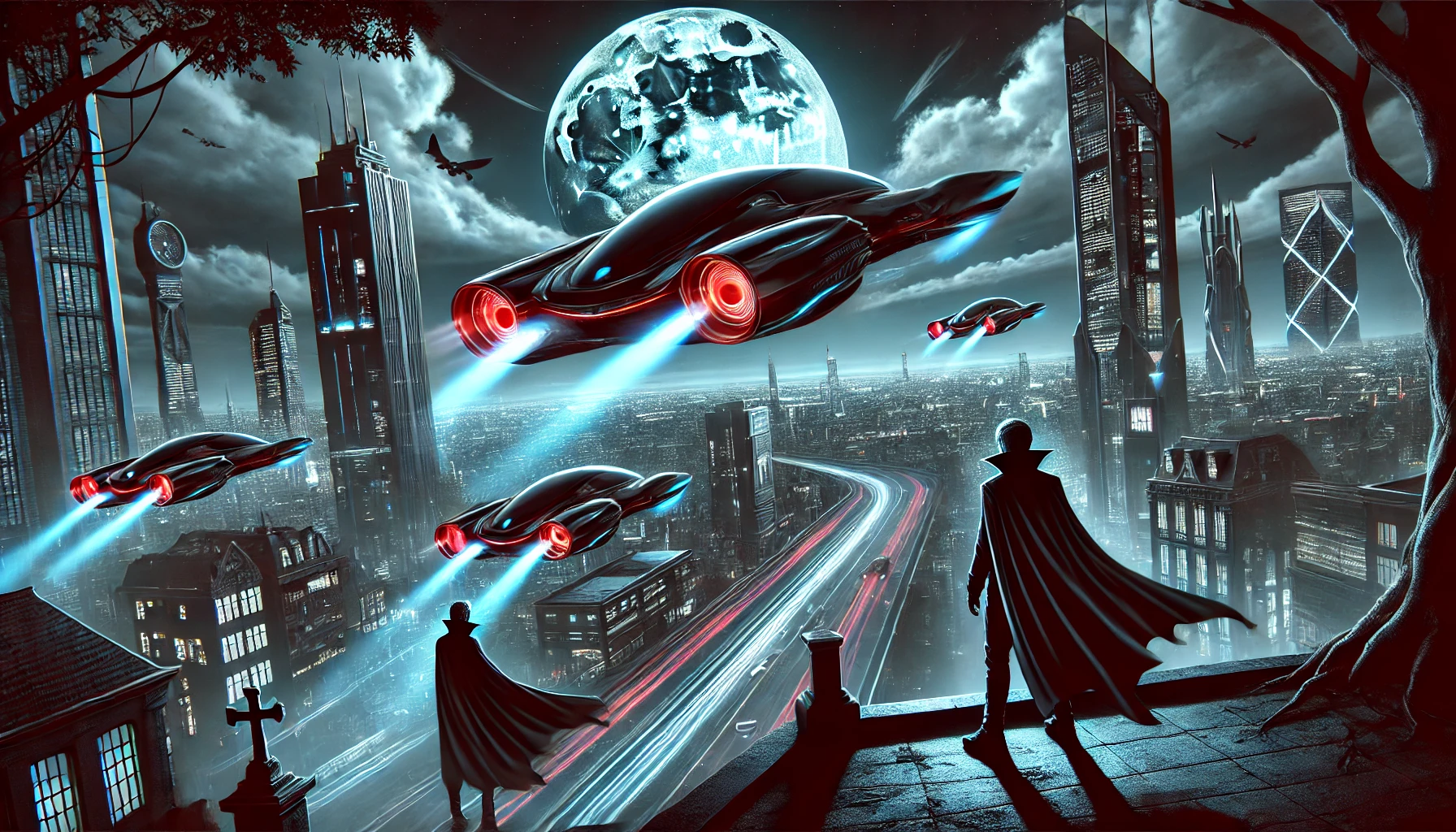
In this episode of Coast to Coast AM, Art Bell starts with a playful yet frustrated monologue about the inconvenience of changing clocks due to daylight saving time. He argues that it’s an outdated practice, encouraging listeners to take action and write to their representatives to end it. Afterward, Art introduces Dr. Paul Moller, the inventor of the Skycar, a revolutionary flying car designed for vertical takeoff and landing. They discuss the vehicle’s development, performance capabilities, and future potential in aviation.
The Skycar combines the functionalities of a helicopter and an airplane, allowing for efficient vertical takeoff without needing runways. Dr. Moller explains how the Skycar is easy to operate and controlled electronically, designed for the general public. He also emphasizes that new technologies, such as GPS and air traffic control advancements, will make it feasible to manage large numbers of Skycars in the future.
As the conversation progresses, Dr. Moller discusses the vehicle’s size, speed, and the impact of future automated systems on air travel. He explains that the Skycar will be priced similarly to luxury cars, making it affordable for the upper middle class. The episode delves into safety features like multiple redundancies, parachutes, and stability controls, ensuring it is reliable for widespread use. They also touch on environmental aspects, such as the Skycar’s use of alcohol fuel.
Art continues his interview with Dr. Paul Moller, delving deeper into the Skycar’s performance and future possibilities. Dr. Moller explains that the Skycar is designed to be as easy to fly as driving a car, controlled primarily with a joystick and throttle. Its vertical takeoff and landing ability come from the unique design of its ducts, which deflect air downward, much like the military’s Harrier jet. However, the Skycar operates on a completely different technology and physics than the Harrier.
The discussion shifts to safety, where Moller emphasizes the importance of redundancy in the design. The Skycar has multiple engines, computers, and even parachutes to ensure maximum safety in case of failures. This redundancy ensures that, unlike conventional aircraft that rely on a single engine, the Skycar can continue operating even if one or more systems fail. The parachutes, both high and low-speed, are designed as last-resort measures, particularly useful during test flights.
Art expresses excitement about the upcoming public demonstration of the Skycar, scheduled for the following spring. Dr. Moller outlines that during this press event, the Skycar will perform vertical takeoffs, hovers, and maneuvers over a test lake to showcase its capabilities. While Moller himself will pilot the Skycar, he emphasizes that the vehicle is so easy to operate that even non-experienced pilots like him can manage it with little effort.
The episode touches on the use of alcohol as a fuel for the Skycar. Dr. Moller explains that alcohol provides a safer and more environmentally friendly option than gasoline, although it slightly reduces the vehicle’s range. At full capacity, the Skycar can travel up to 750 miles, but with fewer passengers, it can go even farther. Dr. Moller also credits advances in materials, such as carbon fibers and lightweight metals, for making the Skycar’s development possible.
Art concludes this segment with excitement over the Skycar’s potential to transform the future of personal transportation, likening the experience to flying in the Jetsons’ world.
Art and Dr. Moller continue their in-depth discussion about the future of the Skycar and its impact on aviation and everyday transportation. Dr. Moller reflects on the Skycar’s journey from concept to reality, noting how difficult it has been to overcome technical challenges that often took years to solve. He explains that despite these hurdles, the Skycar is now fully operational and has undergone successful test flights, although piloted flights are still forthcoming.
Art is particularly intrigued by the vehicle’s ease of use, asking Dr. Moller how someone without a pilot’s license could operate such a sophisticated machine. Moller reassures him that the Skycar is almost entirely automated. The onboard systems handle the complex tasks, such as stabilizing the vehicle and guiding it through the sky. All the operator needs to do is enter a destination, and the Skycar takes care of the rest, making it accessible even for people with no flight training.
They also discuss the future of air traffic control in a world where Skycars are widely used. Moller points out that current systems are inadequate for handling large numbers of personal aircraft, but he envisions a new “highway in the sky” system where GPS and other technologies would automatically manage air traffic. This would allow hundreds of thousands of Skycars to operate simultaneously without overwhelming human air traffic controllers.
Art and Moller touch on the potential cost of the Skycar, comparing it to high-end automobiles. While the initial models may cost around $50,000, similar to a luxury car, Moller is optimistic that, with mass production, the price could drop significantly, making the Skycar accessible to more people. Additionally, the Skycar’s value could remain stable over time, as aircraft tend to depreciate more slowly than cars.
Finally, they talk about future innovations, with Moller emphasizing that the Skycar is just the beginning. He believes that personal flying vehicles will revolutionize transportation in the coming decades, and the Skycar is the first step toward that future. Art wraps up the conversation with a sense of excitement, encouraging listeners to check out the Skycar on the website and imagine a future where flying cars are a reality.