
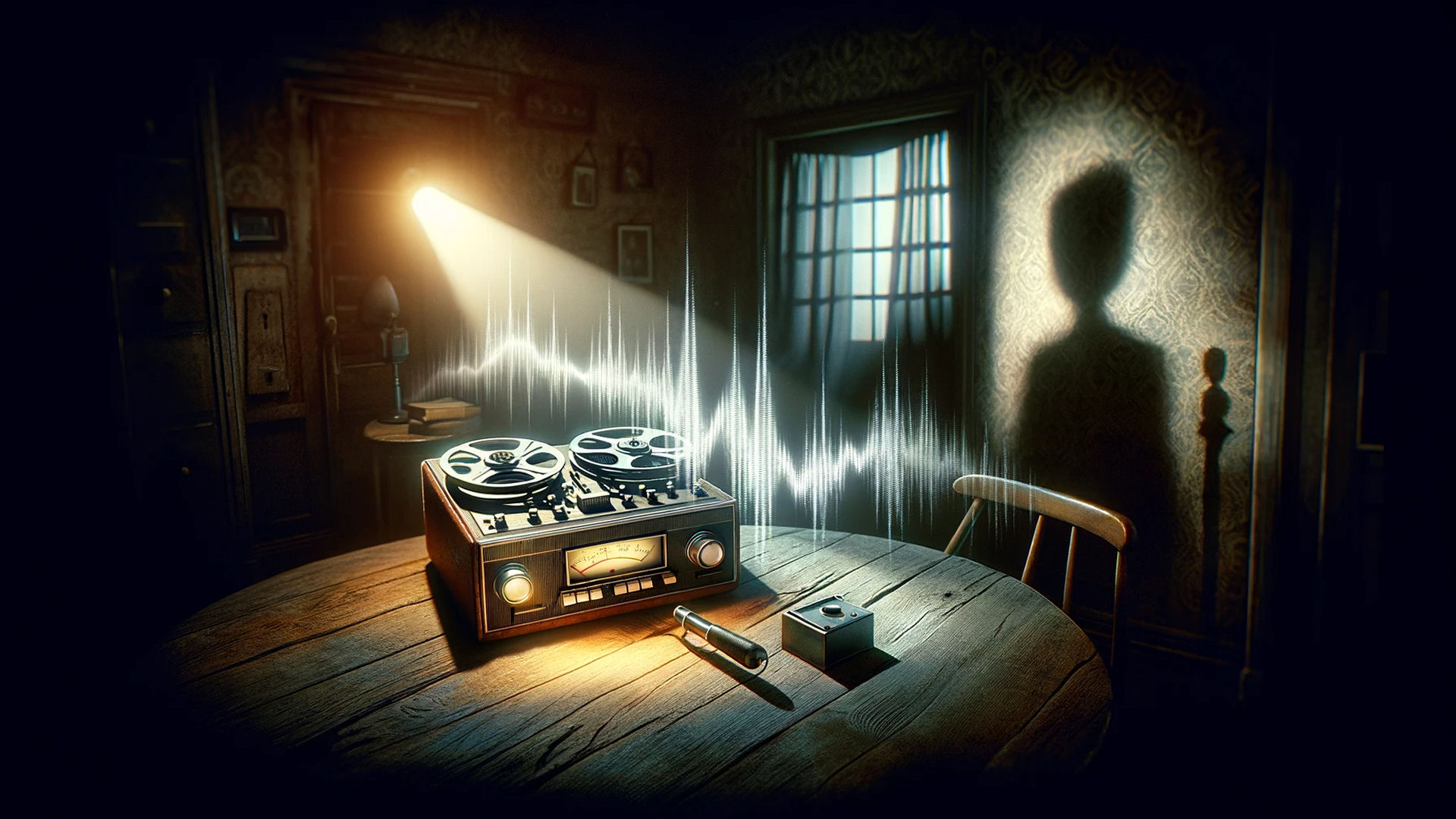
The discussion opens with a fascinating and mysterious premise. Art introduces a segment involving Brandon Cook and Barbara Macbeth, who specialize in electronic voice phenomena (EVP), using digital technology to capture voices from beyond the grave in various locations like graveyards and prisons. The segment takes an intriguing turn when Art receives an email from a man claiming to know a brigadier general in the South African Army, who allegedly ordered a UFO shot down and later transported it to the US. This man, referred to as Chris, claims to have been directly involved in this incident and is ready to share his story on the show. Art, sensing the sensitivity and potential danger of the topic, had kept this guest a secret from the network. The story unfolds with Chris, the supposed former brigadier general, recounting his involvement in the mysterious UFO event that occurred in 1982.
Chris, identified as a former brigadier general in the South African Army, was unexpectedly on duty when two unidentified aircraft were detected approaching South African airspace. He explains that the usual resources were occupied chasing a Russian submarine, leaving limited options to intercept the incoming aircraft. They dispatched an F1 Mirage jet, a French-built fighter capable of carrying nuclear weapons, which South Africa had tested secretly in the past.
The Mirage pilot, upon reaching the unidentified aircraft, reported that it was not a military jet, but something else entirely, with no apparent weapons. Chris, uncertain of the aircraft’s intentions and capabilities, authorized the Mirage to engage using a close-range weapon, later revealed to be an experimental laser beam. The unidentified aircraft was described as round, wingless, and capable of flying at high speeds, much like a disc. The incident left Chris and his team baffled as to the nature and origin of this mysterious aircraft.
After the UFO was hit by the laser from the Mirage fighter jet, it began to lose control, bouncing around erratically before crashing to the ground. Chris then ordered a helicopter to the crash site, concerned about possible Russian pilots on board, given the political tensions of the time.
However, the helicopter experienced mechanical problems near the crash site, and some of the personnel later reported feeling ill after approaching the UFO. The crashed object was described as glowing in rainbow colors, approximately 12 to 14 feet in diameter. Chris, tasked with anti-terrorism, was instructed by the commander in chief to investigate what they had shot down. Upon arriving at the site with his team, they found the UFO, which had stopped glowing by then, and noticed a significant dent from the laser impact. Touching the object caused pain and numbness, similar to an electric shock.
The unidentified object, which had crashed in the Kruger National Park area, a heavily patrolled zone during the war, initially emitted a glowing light that caused sickness among those who approached it. After about five hours, the glow faded, allowing closer inspection. Chris noticed that a hatch on the UFO was open, raising concerns about potential hostile entities inside. However, only their standard firearms and mortars were available for defense.
Upon investigation, they discovered small, child-like beings inside the UFO, which were initially assumed to be charred due to their gray color. Thinking they were burned in a fire, Chris ordered the cleanup of the site. During this process, they faced challenges in moving the UFO. A patrol truck, which was gas-powered, experienced issues, while a diesel-engineered truck with a crane was unaffected by the UFO’s presence. The UFO was eventually lifted onto the diesel truck for transportation, still containing the beings inside.
Chris initially believed the craft to be a foreign test aircraft, rather than an extraterrestrial one. He coordinated with the engineers to move the UFO to a more appropriate location for investigation, as it was still largely intact, except for a significant dent caused by the laser impact.
The craft was moved approximately 800 miles to Pretoria, South Africa, and then to a base near Cape Town. Chris was assigned to continue overseeing the UFO, but he was reluctant as his service time was nearly over and he wanted to return to his engineering career.
Despite his reluctance, Chris was tasked with transporting the UFO to the United States. He was provided a Hercules C-130 for the journey, and the UFO was loaded onto the plane. Additionally, two body bags containing gray beings with elongated fingers and large eyes were also loaded. Chris, initially skeptical, was shocked upon confirming their contents.
The flight experienced multiple mechanical issues, leading Chris to realize the significance of what they were transporting. During the flight, one of the beings allegedly woke up, causing panic among the crew. Chris’s team subdued the being, but not without injury.
The destination in the U.S. was indicated as Andrews Air Force Base, near Washington, D.C. Chris reflected on the gravity of his actions in ordering the UFO shot down, and the realization fully dawned on him during the flight to the U.S.
The former South African brigadier general, Chris, continues to describe the aftermath of the UFO incident. After experiencing panic and confusion during the flight from Cape Verde to Washington D.C., Chris and his crew successfully landed in the U.S. early in the morning. They were confronted by an American colonel who was aggressive towards the crew, leading to a tense standoff.
Chris revealed that he decided to come forward with his story after watching broadcasts about Bob Lazar, who claimed to have seen a similar craft at Area 51. The similarities between Lazar’s account and his own experience convinced Chris that there was truth to these stories. He also mentioned that several of his crew members experienced health issues similar to those reported by people around Area 51, reinforcing his belief in the connection.
Fearful for his life due to political changes in South Africa, Chris now lives a transient lifestyle. He expressed regret over shooting down the UFO, wishing he could have communicated with the beings inside. He confirmed that the craft and the beings were taken to Washington D.C., and then swiftly transported by the CIA to an unknown location.
In this segment of “Coast to Coast AM,” Art Bell transitions from the previous UFO discussion to a new topic featuring guests Brendan Cook and Barbara McBeth, members of the Ghost Investigators Society (GIS). The GIS is a non-profit organization dedicated to investigating ghosts and educating the public about ghostly phenomena, particularly through the study of Electronic Voice Phenomena (EVP).
Art emphasizes the importance of the group’s non-profit status, noting that they do not profit from their work and do not sell any products related to their investigations. This stance is crucial for maintaining their credibility and integrity in the field. Brendan and Barbara explain that their interest in EVP began in the 1950s with a man who recorded bird calls in the woods and unexpectedly captured human voices on his tapes. This incident sparked the interest in EVP, leading to the advancements in recording technology used today.
The discussion further delves into the evolution from using audiotape to digital recorders for capturing EVP. Initially, it was believed that the electromagnetic properties of audiotape made it more conducive to capturing these phenomena. However, with the digital revolution, it has been found that digital devices can also capture EVP, challenging previous theories about the electromagnetic basis of these voices.
Brendan Cook and Barbara McBeth from the Ghost Investigators Society (GIS) discuss their work with Electronic Voice Phenomena (EVP). They emphasize their non-profit status, highlighting that their work is driven purely by interest rather than financial gain. They don’t sell anything related to their investigations or write books for profit.
They explain the meticulous care taken in their EVP recordings to rule out external influences like radio frequency interference. For example, they discovered that what they initially thought were EVPs at a particular house were actually audio from a nearby drive-in theater being transmitted over a radio frequency.
GIS’s investigations aren’t limited to stereotypical haunted locations like cemeteries and prisons. They maintain that EVPs can be captured in a variety of places, not necessarily associated with death or tragedy. This perspective aligns with historical figures like Thomas Edison, who also believed in the possibility of communicating with the dead through technological means.
The GIS team is cautious about expanding their group, preferring to keep it small to avoid complications during investigations. They believe that the presence of too many people can hinder the seriousness and focus required for effective EVP recording.
Barbara shares her view that the realm in which ghosts exist is close to our own, yet those who are ghosts are often tormented and not in the place they should be.
Brendan Cook and Barbara McBeth express their belief that not all deceased individuals become ghosts, and those who do may be in a state of mental anguish, possibly unaware that they have passed away. This belief aligns with the concept of purgatory and suggests that many ghosts have unresolved issues.
The GIS team hasn’t received any EVPs explicitly indicating a journey beyond the afterlife or any direct religious references. However, they have recorded references to “the light,” a common theme in near-death experiences. They speculate that resolving personal issues in life is crucial, as these might persist after death.
Both Brendan and Barbara are committed to their research for the foreseeable future, and they joke about attempting to communicate with their group if they pass away. Art Bell then prepares listeners for the upcoming segment where EVP recordings will be played. He warns that the content might be unsettling, especially for those driving at night or those contemplating their own mortality.
In this part of “Coast to Coast AM,” Brendan Cook and Barbara McBeth from the Ghost Investigators Society continue sharing their EVP recordings. These recordings include voices captured in various locations such as cemeteries, private residences, and prisons.
- Recording 1: In a Northern Utah cemetery, they recorded a voice they believe might be speaking in a Native American language, possibly Ute. The voice is heard responding to Brendan’s background conversation.
- Recording 2: Also in the same cemetery, an EVP captured a young voice saying “it’s daddy’s car.” This was near a grave where a man regularly visited his deceased wife and son.
- Recording 3: In another cemetery, amidst a conversation about mosquitoes and bug spray, an EVP captures a voice saying “everybody here is the same.” The GIS team speculates about the meaning of this phrase.
- Recording 4: Barbara recounts an investigation where she asked if they could help a spirit. An EVP then captures a voice saying, “they followed you.” This raises concerns about spirits potentially following the investigators.
- Recording 5: Another EVP from the same cemetery captures a voice in response to an approaching car. The GIS team believes it might be another Native American voice but are unsure of what it’s saying.
Brendan Cook and Barbara McBeth from the Ghost Investigators Society (GIS) discuss the diverse nature of Electronic Voice Phenomena (EVP) recordings they have captured. They confirm that they have recorded EVPs in various languages, including Spanish and German, although these occurrences are not frequent. This is attributed to the fact that most of their investigations take place in areas where English is predominantly spoken.
Art Bell notes that EVP research is being conducted globally, with researchers capturing voices in their native languages. This international aspect of EVP research indicates that the phenomenon is not isolated to English-speaking countries or regions.
The GIS team shares another set of EVP recordings:
- Recording 6: Captured at a mortician’s house, where the mortician and his wife had been seeing a small boy in their home, even when their son was not present.
Art encourages listeners to try recording EVPs themselves and shares that many have succeeded, often getting frightened by the results. He inquires about the preferred equipment for such attempts, noting the debate between digital and analog recording methods. Brendan prefers digital equipment for its clarity, while Barbara still enjoys using analog equipment.
- Recording 7: In the same setting, Brendan and the homeowner experience a sudden malfunction of the infrared camera. An EVP is captured where a child’s voice seems to say, “Laurie pet the echo plasm.” This phrase is puzzling, and the GIS team speculates on its meaning.
- Recording 8: Captured in the mortician’s house, this EVP features a child’s voice that seems to say “I think I’ll leave.” The GIS team is particularly struck by the high number of children’s voices they capture in their recordings, often in places where children wouldn’t typically be, such as prisons.
- Recording 9: This EVP, captured in a mortician’s house, features a woman’s voice saying something unclear, which Art Bell and the GIS team try to interpret. The recording is described as creepy, especially for listeners like truck drivers who might be listening in the middle of the night.
- Recording 10: Another EVP from the mortician’s house contains a child’s voice that seems to say “Laurie pet the echo plasm.” The team speculates on the meaning of this unusual phrase.
Art Bell discusses the power of suggestion in interpreting EVPs. He acknowledges that while the GIS team provides their interpretation of the recordings, listeners may perceive different phrases or meanings. This raises questions about the subjective nature of interpreting EVPs and whether listeners are influenced by the suggestions of the investigators.
The GIS team also shares an experience where a group of listeners heard different phrases than what the investigators initially thought, illustrating the varied interpretations that EVPs can elicit.
The GIS team also talks about their experimentation with a real-time recorder that allows them to hear EVPs immediately. This device has led to some startling experiences, including hearing direct responses and even rude remarks from the other side. Despite these eerie interactions, the GIS team remains dedicated to their research, emphasizing that they do not commercialize their findings or seek profit from their investigations.
The GIS team emphasizes that they do not come to definitive conclusions about the nature of the afterlife or the spirits they encounter. They acknowledge the importance of maintaining an open mind and caution against anyone who claims to have absolute knowledge in this field.
Art Bell and the GIS team discuss the process of interpreting EVPs. They note that even within their group, there are disagreements about what is being said in the recordings. This leads to a discussion about the power of suggestion and how it can influence interpretations.
The GIS team expresses their motivation for continuing their research. They are driven by curiosity and the desire to understand and share their experiences with others. They emphasize that they are not seeking fame or fortune and are focused on learning from each experience.
The segment also touches on the nature of ghostly entities and aims to provide a different perspective on them. The GIS team believes that understanding these entities as people with past lives can help alleviate fear and misconceptions about the paranormal.
Towards the end of the segment, Art Bell reflects on the implications of EVPs for understanding the afterlife, pondering whether we remain in the same state after death as when we died.
- Recording 11: Captured in a mausoleum, this EVP features a loud, gruff old man’s voice saying, “That for Katie?” after Barbara talks about her videotape. The GIS team finds it intriguing that the ghostly voice has an echo, matching the acoustics of the mausoleum, even though they did not hear the voice at the time of recording.
Art Bell and the GIS team explore the idea that spirits might be bound by some of the same physical laws as the living, as evidenced by the echoed voice in the mausoleum recording. They discuss the rarity of actually hearing ghostly voices or seeing spirits in real-time during investigations.
The GIS team also shares their experiences investigating crime scenes. They recount a specific investigation at a site of a multiple murder but note that they didn’t capture much EVP evidence there. They speculate that the presence of a ghost and its willingness to communicate are not necessarily influenced by the passage of time since the crime.
- Recording 12: This EVP was also recorded in a mausoleum. Brendan left his favorite flashlight at a previous location, and during the recording, a child’s voice seems to say, “I want it,” after Brendan mentions the flashlight. The GIS team notes the clarity of the child’s voice in the EVP.
- Recording 14: Captured in the same mausoleum, Jenny hears a noise and asks, “What was that?” A voice responds with what sounds like “very painful.” Art Bell and the GIS team discuss whether this could reflect a ghost’s emotional state.
- Recording 15: Jenny shows a visitor a room with a dirt floor in the mausoleum, and a man’s voice says, “I see.” This recording is characterized by a ghostly whisper, adding to the creepy nature of these EVPs.
Art Bell questions the GIS team about whether they find these experiences creepy. The GIS team admits that it’s more about perspective and that they don’t typically find their investigations creepy.
- Recording 16: In this recording, a man asks, “Can you come out and talk to us, please?” A woman’s voice responds with what sounds like “Colton, get back here now.” Brendan initially wondered if he heard the name ‘Colton’ because he has a nephew named Colton, but the rest of the team also heard the same phrase, suggesting the power of suggestion wasn’t at play.
The segment concludes with Art Bell pondering the nature of these ghostly communications and the emotional content within them.
- Recording 17: Captured in Deer Lodge Prison, Montana, this EVP features Brendan discussing a notorious prisoner. After he speaks, a man’s voice is heard saying “yes,” as if acknowledging Brendan’s statement. This recording suggests that some prisoners’ spirits might remain in the prisons where they were once incarcerated.
- Recording 18: Also recorded in the mausoleum, Brendan talks about leaving his flashlight at a previous location. A child’s voice is heard saying, “I want it.” The GIS team notes the clarity of the child’s voice and discusses the eerie nature of the recording.
Art Bell and the GIS team delve into the possibility that spirits can see the living and that there might be a blending of their world with ours. They speculate about the conditions that might allow ghostly activity to take place and whether there’s an increase in EVP communication over time.
The GIS team also addresses questions about the nature of the afterlife based on their EVP recordings. While they frequently ask spirits about their environment, the only direct response they’ve received was a woman’s voice saying, “It’s cold.” This lack of detailed responses leaves many questions about the afterlife unanswered.
- Recording 18: Captured in Deer Lodge Prison, this EVP features a woman’s voice screaming “God” in the maximum security section. The recording is notable for being captured by a tape recorder left alone in the area. The GIS team speculates whether this could be a residual echo from the past, not an intelligent response.
- Recording 19: Recorded in the same prison, an EVP captures a voice responding “we sat back to back” to a comment about prison guards’ treatment of inmates. This suggests that some spirits might retain memories of their experiences in life.
The GIS team discusses the possibility that some EVPs could be residual memories or echoes from the past rather than direct communications from conscious spirits. They also note that they have captured contemporary responses, indicating some level of intelligent interaction.
Art Bell and the GIS team field questions from callers about various topics, including the oldest location they have recorded EVPs and whether they have investigated known battlefields or concentration camp sites. The GIS team shares that they have not extensively explored battlefields but have received information from German researchers about EVP recordings at Auschwitz and other concentration camp sites.
One caller from Ogden, Utah, inquires about investigations in a local hotel, and the GIS team confirms they have conducted investigations there and have EVPs posted on their website.
In the final segment of “Coast to Coast AM” with Brendan Cook and Barbara McBeth from the Ghost Investigators Society, the discussion continues on the nature of Electronic Voice Phenomena (EVP):
- The GIS team elaborates on the volume and clarity of EVPs. They note that while most EVPs are fairly low in volume and require enhancement to be heard, some are surprisingly loud and clear. An example given is an EVP saying “That for Katie?” which was louder than the voices of the investigators.
- Art Bell and the GIS team speculate on the possible reasons for the variance in EVP volumes. They ponder whether it might indicate a physical distance between the spirit and the recording device or if it’s related to how the spirits project their voices. The GIS team admits that they can only theorize about these aspects, as the exact mechanics of EVPs are still unknown.
- A caller shares his experience with EVPs, mentioning that he needs to have a radio on in the background to capture voices in his house. The GIS team responds that having a radio on could potentially contaminate the EVPs with fragments of radio broadcasts. They also touch upon the historical use of white noise as a medium for spirits to communicate.
The program concludes with the GIS team thanking Art Bell for the opportunity to share their experiences and findings.