
The program begins with Art setting the tone from the high desert and the great American Southwest. He outlines the simple rules of the show: no bad language and only one call per show. Art then proceeds to thank various individuals including Joe Talbot, Keith Rowan, Heather Wade, and others for their contributions to the show.
Art discusses a recent development where two women have passed the Army’s rigorous Ranger test, leading to a broader conversation about women in front-line combat roles. He expresses his reservations about this change, citing concerns about the natural instinct of men to protect women, which could potentially complicate combat situations.
The conversation shifts to UFO sightings, with Art mentioning that the traditional UFO investigators in Great Britain are giving up on their efforts. He shares intriguing reports of unusual UFO sightings, including a glowing arrow-shaped object over Long Island and frequent sightings in Mexico, where people gather nightly in anticipation of these events.
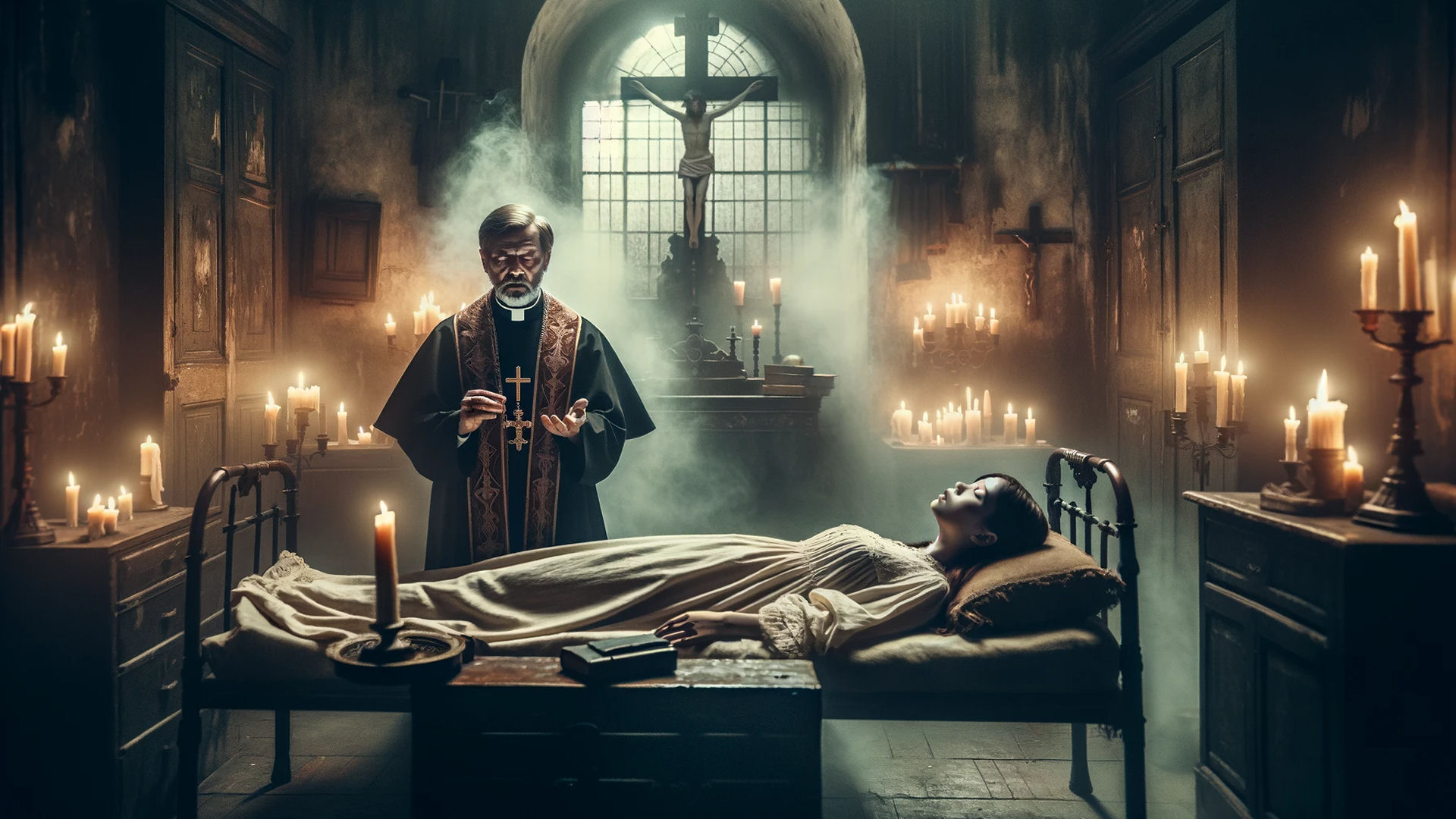
Lastly, Art introduces “Time Travelers,” a subscription service allowing listeners to access old shows. He also mentions the “wormhole” feature, where listeners can submit questions online during the show. The segment concludes with a teaser about the upcoming guest, Father Jack Ashcraft, a traditional Byzantine Catholic priest and a critic of the Vatican, known for his expertise in cults, the occult, exorcisms, and UFOs.
Art welcomes Father Jack Ashcraft to the show. Father Ashcraft, located in the greater Cincinnati-Northern Kentucky area, is compared to Father Malachi Martin due to their similar public and vocal approach to certain topics, despite Ashcraft acknowledging he doesn’t have the same level of education as Martin.
Father Ashcraft explains the term “Sede Vacantist,” which refers to the belief that the papal seat has been vacant since Pope John XXIII, with subsequent popes being considered “antipopes.” This belief, shared by Father Martin later in his life, stems from allegations that these popes were false shepherds, with connections to communism, Freemasonry, and even occultism.
Art and Father Ashcraft discuss the controversial and complex nature of these claims. Ashcraft asserts that the current Vatican hierarchy is invalid, and therefore, they have no authority over traditionalists like himself. He mentions Archbishop Lefebvre and the Society of St. Pius X as examples of others who have resisted the Vatican’s authority.
The conversation delves into Father Martin’s deep knowledge of the Vatican’s inner workings, gained from his early years working with key figures in the Church. Father Ashcraft reveals that Martin, once a supporter of the subversive elements within the Church, eventually realized his mistake and switched sides.
Art and Father Jack Ashcraft delve into the mysterious circumstances surrounding the death of Father Malachi Martin. Ashcraft shares rumors that Martin was preparing to expose a high-ranking church official, possibly a bishop, which might have led to his suspicious death. This adds a potential motive to the already dubious nature of Martin’s fatal fall down the stairs.
Father Ashcraft, who lives in a single-level home, jokes about avoiding steep staircases due to his controversial stances, which have made him a target for online attacks and smear campaigns. He discusses his belief in a literal Satan and the concept of “perfect possession,” where a person is completely controlled by demonic entities, often as a result of a voluntary pact for worldly gains.
Art and Father Ashcraft discuss the increasing prevalence of demonic activity in society, attributing it to a move away from godly principles and moral values. They note that while many claims of possession are investigated, the majority turn out to be psychological issues, attention-seeking, or outright fakery.
The conversation shifts to the degrees of demonic influence, starting from diabolic temptation to obsession and oppression. Father Ashcraft emphasizes the importance of discerning genuine cases of demonic activity amidst numerous false claims. He believes that even one true case of possession is one too many, highlighting the gravity of such situations.
Father Ashcraft explains the concept of oppression, likening it to the biblical story of Job, where Satan takes away everything from Job. He describes oppression as overwhelming and persistent problems in life, which could indicate demonic influence. The final stage, he says, is actual possession, which can be transient (where the demon enters and leaves the body intermittently) or perfect (complete control).
Art raises an intriguing question about the number of people in asylums who might be misdiagnosed as mentally disturbed but are actually possessed. Father Ashcraft believes that a significant portion could be under some form of demonic attack, although he acknowledges that many conditions can be mistaken for demonic activity. He notes that some psychologists are beginning to recognize the spiritual dimension in psychotherapy, and in some cases, exorcism has resolved issues previously thought to be purely psychological.
The conversation shifts as Art recounts his recent interview with a leader of the Church of Satan. Contrary to expectations, the interviewee, a well-educated and articulate former high priestess and Anton LaVey’s lover, claimed they do not worship Satan. This surprising revelation leads Art to play a clip from the interview, where the Satanist explains their rituals, including lust, compassion, and destruction, as forms of psychodrama rather than actual worship of Satan.
Art discusses his interview with a former high priestess of the Church of Satan. She described their rituals, including a destruction ritual, as a form of psychodrama rather than actual worship of Satan. Art reflects on how the interview initially seemed unthreatening but later realized the deceptive nature of Satan, as the interviewee was so well-spoken and convincing in her portrayal of Satanism.
Father Jack Ashcraft agrees, noting that Satan often appears as an “angel of light” to deceive. He emphasizes that sin and evil often feel good, which is why people are drawn to them. Art and Father Ashcraft discuss the underlying malevolent philosophy of Satanism, distinguishing between the psycho-spiritual approach (like the interviewee’s) and those who literally worship Satan.
Father Ashcraft explains that as an exorcist, encounters with Satan himself are rare. Usually, it’s the fallen angels who followed Satan and became demons that are involved in possessions. He delves into the reasons why demons envy and hate humanity, explaining that humans were created in the image and likeness of God, which angels were not. This envy and hatred stem from the demons’ perception of being overlooked in favor of humans.
The conversation then turns to the nature of the human soul. Father Ashcraft affirms his belief in the existence of souls, a conviction rooted in his faith and biblical understanding. He acknowledges that some in the scientific community attempt to explore metaphysical concepts, but he personally relies on a biblical approach.
Art, an animal lover, observes the range of emotions in animals, such as cats and dogs, and wonders if they possess souls. Father Ashcraft acknowledges that theologians have varying opinions on this matter. While Scripture mentions animals in the Kingdom of God, it is less clear about whether they have souls. Father Ashcraft personally believes animals might not have souls, but this doesn’t preclude them from being part of God’s kingdom.
The conversation then shifts to the topic of exorcism and possession. Art expresses his anticipation to delve deeper into Father Ashcraft’s experiences and insights on dealing with demonic possession.
Father Ashcraft comments on the increasing godlessness and immorality in society, which he sees as a sign of growing satanic influence. He mentions that everyone is involved in spiritual warfare, whether they realize it or not, and the choices they make determine which side they are on.
The discussion turns to the current state of the world, with Father Ashcraft criticizing the justification of evil acts like rape, murder, and pedophilia in some cultures. He also touches on the topic of the homosexual agenda, which he believes goes beyond seeking rights to enforcing participation in the lifestyle. Father Ashcraft criticizes the Church for not fulfilling its role in helping the needy, suggesting that if churches acted according to Christ’s teachings, there would be no need for a welfare state.
Lastly, Father Ashcraft shares his views on the current Pope, describing him as a postmodernist and not a traditional Catholic or biblical Christian. He sees the Pope’s approach as indicative of the problems in Western culture.
Art and Father Jack Ashcraft discuss the Catholic Church and its current direction under Pope Francis. Father Ashcraft suggests that the changes in the Church, which some find shocking, stem from influences dating back to the Second Vatican Council. He mentions a document titled “A1025: The Memoirs of an Anti-Apostle,” which details how Soviet infiltrators and Freemasons entered the seminaries to alter the Church’s social and theological teachings.
Art questions whether the Church’s values align somewhat with communist ideals, particularly in caring for everyone. Father Ashcraft clarifies that while Christianity is not against wealth, it opposes the love of wealth. He briefly touches on distributism, a concept that aims to distribute property widely to avoid the extremes of Marxism.
The conversation shifts to the personal relationship with wealth. Art expresses that money has never been his driving force, and Father Ashcraft agrees that doing something for love rather than for financial gain leads to a better outcome. They discuss the issue of televangelists and how some are driven by money, which Father Ashcraft sees as a problem in the ministry.
Art then steers the conversation towards exorcism, noting that people’s perceptions are often shaped by movies. He expresses interest in discussing the reality of exorcism and how it differs from cinematic portrayals.
Father Ashcraft clarifies that real exorcisms are nothing like what’s depicted in films. He has witnessed objects moving and heard multiple voices speaking simultaneously during exorcisms but has not seen phenomena like words forming under the skin.
Art expresses his desire for the existence of Satan to be true, as it would imply the reality of God. Father Ashcraft affirms the difficulty in scientifically proving God’s existence, but also notes that science cannot disprove it either.
The conversation then shifts to Father Ashcraft’s academic background and his views on the current Pope. He explains his education in a traditional Catholic seminary, emphasizing the focus on producing priests rather than achieving academic accreditation.
The topic of homosexuality and the Church’s stance on it is also discussed. Father Ashcraft clarifies that his views on homosexuality, based on biblical teachings, are not rooted in homophobia but in a belief that it is a sin, just like heterosexual adultery or fornication. He stresses that he does not hate individuals for their sexual orientation and would counsel anyone who seeks his guidance.
Art and Father Ashcraft then touch on the recent U.S. Supreme Court rulings regarding same-sex marriage and the impact on individuals with religious objections. Father Ashcraft points out the challenges faced by those who are being forced to perform ceremonies against their religious beliefs, highlighting a conflict between legal rulings and religious freedoms.
Art and Father Jack Ashcraft discuss the implications of the legalization of gay marriage on churches. Father Ashcraft believes that churches’ tax-exempt status might be affected, especially if they refuse to perform same-sex marriages due to religious beliefs. He emphasizes that he does not hate or fear homosexuals but cannot perform same-sex marriage ceremonies due to his religious convictions.
The conversation then shifts to the state of the Catholic Church. Father Ashcraft explains that from a Sede Vacantist perspective, the visible institution of the Church has been infiltrated and taken over, but the true Church consists of clergy and laity faithful to traditional teachings. He asserts that the corruption in the Vatican does not imply a defect in Scripture or validate Protestantism. Instead, he views the current Vatican as occupied by non-Catholics and not representative of the true Catholic Church.
Art asks about the effectiveness of curses. Father Ashcraft explains that curses can only affect those not in a state of sanctifying grace. The further individuals stray from Christ’s protection, the more susceptible they are to such attacks. He notes that in the current times, many people are vulnerable due to their spiritual state. Father Ashcraft also mentions the resistance he sometimes faces when trying to help those affected by curses or demonic attacks, as the remedy often requires a personal spiritual commitment that many are reluctant to make.
Father Ashcraft emphasizes that genuine spiritual change is necessary for any meaningful intervention in cases of possession or curses. He asserts that exorcism is a joint effort, and without the individual’s willingness to amend their life, there’s little a priest can do.
Art observes that the world, even in his own lifetime, seems to be approaching what many would call the end days, marked by a significant moral and spiritual decline. He mentions the rise of Donald Trump in politics as a reflection of people’s desperation and dissatisfaction with the current state, drawing a parallel to the desperation in Weimar Germany that led to the rise of figures like Hitler and Stalin.
Father Ashcraft agrees, noting the spiritual condition behind these social changes. He believes that the desperation mixed with misinformation is making people susceptible to manipulation.
The conversation then turns to Father Ashcraft’s experiences with exorcism. He recounts a case brought to him by the TV show “Paranormal State,” involving a young lady believed to be possessed. After reviewing the case, Father Ashcraft concluded it was psychological rather than demonic. Despite his assessment, the show proceeded with what they called an exorcism. He later found out the girl was seeing a psychologist and on medication, confirming his initial suspicion that the case was not of demonic possession.
Art and Father Jack Ashcraft discuss a case that Father Ashcraft found particularly frightening. It involved a young lady in Kentucky experiencing paranormal phenomena, including objects levitating and words appearing on walls, which were witnessed by several people, including a psychiatrist. Father Ashcraft found this case especially unsettling because of the demonstrative nature of the phenomena, including witnessing the words manifesting on the wall himself.
Art then shifts the conversation to the topic of ghosts. Father Ashcraft explains that there are different theological opinions on ghosts. Some believe they are spirits of those in purgatory seeking prayers, while others think they are demonic entities masquerading as the spirits of the dead. He notes that these topics often have varying schools of thought within theology.
The show then prepares to open the phone lines for listener questions. Art Bell emphasizes the importance of being polite during the call-in segment. He provides the phone numbers and Skype details for listeners to join the conversation.
As the segment concludes, Art Bell notes that Father Ashcraft’s views have ignited some tempers among listeners, and he prepares to take calls from the audience.
The first caller questions Father Ashcraft’s stance on the authority of the Holy See and the concept of justification by faith alone. Father Ashcraft responds by citing scripture and emphasizing grace through faith.
Another caller inquires about the prophecies of Saint Malachy, particularly regarding Pope Benedict and the notion of “Peter the Roman.” Father Ashcraft expresses skepticism about the authenticity of these prophecies, preferring to focus on prayer and scripture for eschatological understanding.
A caller who believes they might be experiencing demonic oppression asks for advice. Father Ashcraft suggests examining one’s life to identify spiritual weaknesses, as Satan often attacks at these points.
Zachary, another caller, asks why Father Ashcraft hasn’t recorded his experiences with demonic oppression. Father Ashcraft explains that any recordings are strictly for his bishop and are kept private to protect the individuals and families involved.
Art Bell mentions the film “The Exorcism of Emily Rose” and asks if it was a real case. Father Ashcraft clarifies that he was not involved in the case, which was based on the real-life story of Anneliese Michel in Germany during the 1970s. He notes that while Michel was possessed, there was negligence involved in her treatment, as she suffered from epilepsy and was allowed to stop taking her medication during the exorcism.
The segment is intermittently interrupted by technical issues with Skype, but Father Ashcraft manages to provide insights into each question.
A caller from Hamilton, Ontario, asks Father Jack Ashcraft about his views on the Fatima apparitions. Father Ashcraft confirms that Fatima is an approved apparition of the Church. Another caller inquires about traditional Catholic priests who do not accept the Vatican’s current stance, leading to a discussion about societies of priests who reject the Vatican’s teachings, such as the Society of Saint Pius V.
A caller from Bedford, Indiana, identifying as a “time traveler,” asks about contacting Father Ashcraft, who mentions that his email address is available on his website.
Larry from Hawaii brings up the topic of UFO shows and alien abductions, asking if they could be part of a coming deception mentioned in the New Testament. Father Ashcraft suggests that the UFO and alien abduction phenomena might involve governmental projects, psychological operations, and in some cases, demonic activity.
Art Bell then asks about out-of-body experiences (OBEs), wondering if they involve the soul leaving the body. Father Ashcraft believes that OBEs are the spirit leaving the body and considers them dangerous, noting that they have led to cases of possession.
The conversation also touches on the concept of a “silver cord” mentioned in relation to OBEs, which is believed to ensure a person’s return to their body.
One caller inquires about a friend who became increasingly violent after watching television ministry shows focused on end times prophecy. Father Ashcraft discusses the potential dangers of a morbid preoccupation with the demonic and the end times, suggesting that such an obsession can be a doorway to demonic activity.
Another caller asks about Father Ashcraft’s opinion on ghost hunting. Father Ashcraft advises against it, explaining that he has warned the team from the TV show “Ghost Adventures” about the dangers of their activities. He believes that they are not dealing with ghosts but something more dangerous.
The conversation also touches on electronic voice phenomena (EVP), with Art Bell mentioning an upcoming show on the topic. Father Ashcraft clarifies that discussing these topics is not problematic, but actively engaging in ghost hunting or similar activities can be dangerous.
One caller asks about the fate of gay people according to religious beliefs. Father Ashcraft explains that homosexuality, if it has a genetic component, can be seen as a result of the fall of humanity. He states that homosexuals are not necessarily doomed to hell if they do not act on their desires and strive to live according to the gospel of Christ.
Art Bell questions whether a genetic predisposition to homosexuality would change Father Ashcraft’s opinion. Father Ashcraft maintains that even if homosexuality is genetically driven, the scripture still considers acting on homosexual desires as sinful. He compares this to other sins that might be influenced by human nature, such as adultery or fornication.
The conversation also touches on the interpretation of the Bible. Art Bell asks if everything in the Bible should be taken literally, considering the possibility of human fallibility in its transcription and interpretation. Father Ashcraft asserts that the Bible is divinely inspired and that its original autographs were guided by God, even though human language was used.
One caller questions the concept of free will and God’s presence, suggesting that God removed Himself to allow humans to exercise free will. Father Ashcraft disagrees, stating that God has made Himself known through creation, and this is evident in the teachings of the Church and Scripture.
Another topic that arises is evolution. Father Ashcraft expresses skepticism about macroevolution, citing the law of biogenesis, which states that life comes from life. He argues that evolution requires faith as it cannot prove its beginning point, likening it to a religion that uses scientific language. He agrees with the work of Answers in Genesis, an organization that supports a literal interpretation of the Genesis account of creation.
Art Bell questions Father Ashcraft’s views on the literal interpretation of Genesis and the creation of the world in a matter of days. Father Ashcraft confirms his belief in a literal approach to Genesis and disagrees with the evidence of macroevolution, though he does not argue against microevolution.
In the concluding segment Art Bell and Father Jack Ashcraft wrap up their discussion due to time constraints. Art Bell expresses regret over the limited time and the technical issues that interrupted the conversation. He acknowledges the fascinating nature of the topics discussed with Father Ashcraft and suggests the possibility of revisiting these discussions in the future.
Father Ashcraft is thanked for his participation, and Art Bell closes the show, highlighting the wide reach of the program across different time zones.