
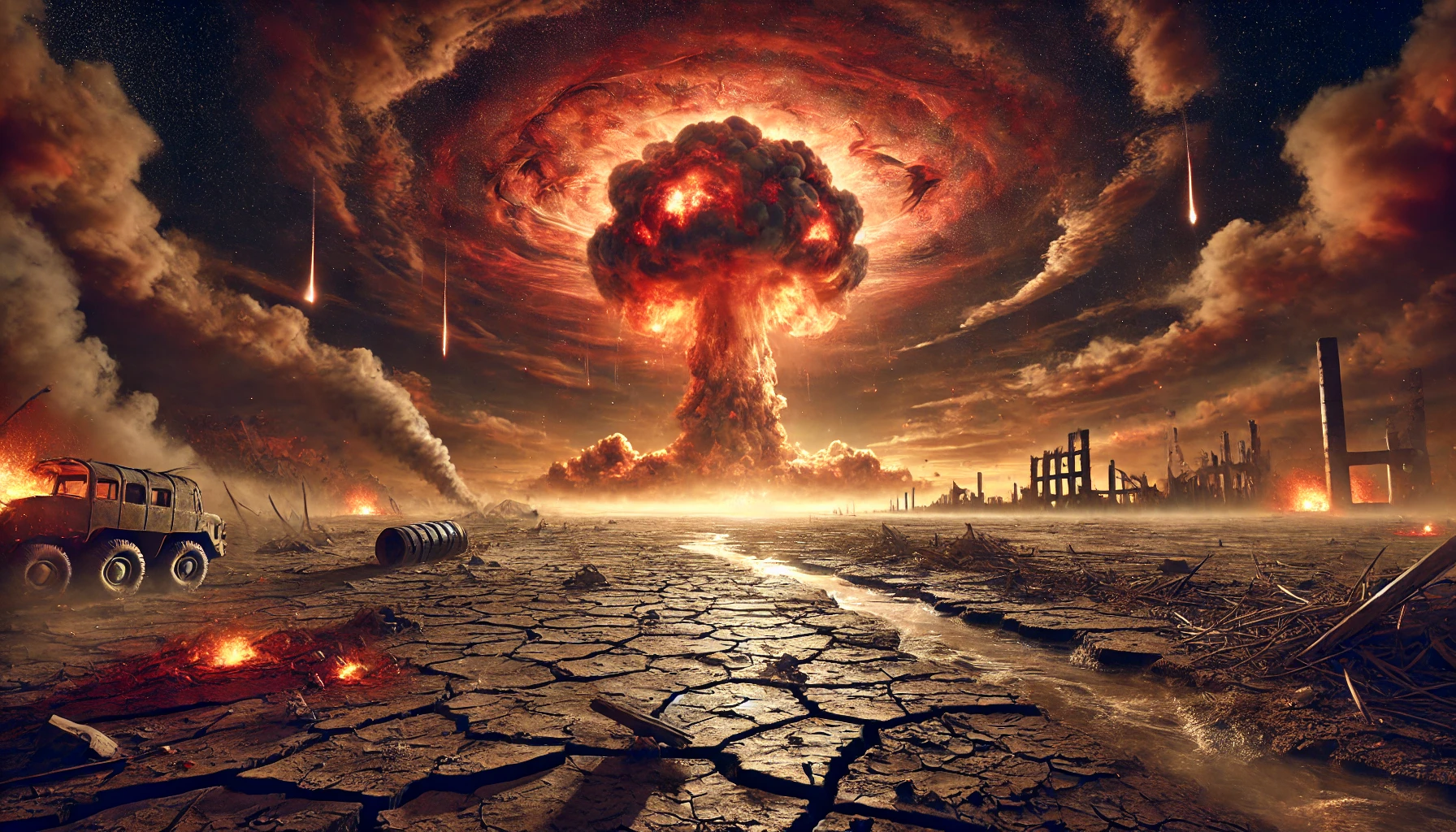
Art Bell hosts a discussion on the frightening topic of nuclear war with guest Stephen Starr, an expert on the environmental consequences of such conflicts. Art opens the show with various news stories, including the Volkswagen emissions scandal and Edward Snowden’s presence on Twitter. The focus then shifts to Starr’s in-depth explanation of the dangers posed by the renewed nuclear arms race between the United States and Russia, discussing the staggering costs, current arsenals, and technological advancements in weaponry. Starr emphasizes the existential threat nuclear war poses to humanity, pointing out that both the U.S. and Russia possess thousands of warheads capable of immediate launch. He explains the catastrophic environmental impact of a nuclear conflict, including the concept of nuclear winter, where smoke from mass fires caused by detonations would block sunlight, leading to freezing temperatures and mass starvation globally. The conversation also touches on historical events, like the Cold War and past accidents involving nuclear weapons, highlighting how close humanity has come to disaster. Starr stresses the need for public awareness and the dismantling of launch-ready arsenals as essential steps to prevent a future nuclear catastrophe.
Starr and Art dive deeper into the specific mechanics of nuclear warfare. Starr elaborates on the power and size of modern nuclear weapons, comparing them to those dropped on Hiroshima and Nagasaki, which were vastly smaller than today’s warheads. He explains how even a relatively “small” exchange of nuclear weapons, like one between India and Pakistan, could produce enough smoke to block sunlight for years, devastating global agriculture. Art brings up the idea of “nuclear winter,” and Starr confirms that the environmental consequences of nuclear detonations could plunge the world into a mini ice age, reducing crop production and leading to mass starvation. They discuss how even a small conflict could have catastrophic global effects, not just in the immediate blast zones but for populations worldwide due to food shortages and environmental changes.
The focus then shifts to the lack of public understanding and education about nuclear war. Starr points out that after the Cold War, nuclear education declined significantly, and many people, including his university students, don’t understand the difference between atomic and hydrogen bombs. This ignorance, Starr argues, contributes to a dangerous sense of complacency, with many unaware of how quickly nuclear conflict could escalate and the long-lasting environmental and human costs.
Starr and Art delve further into the geopolitical tensions surrounding nuclear weapons. Starr emphasizes the fragility of the current state of nuclear deterrence, mentioning how both the U.S. and Russia continue to modernize their arsenals, despite the enormous costs and risks involved. He explains that while mutual assured destruction (MAD) may have prevented nuclear conflict in the past, the current political climate suggests a smaller-scale nuclear exchange could be more likely—and still incredibly destructive. Starr highlights the dangers of miscalculations or accidental launches, particularly in regions like India and Pakistan, where tensions run high and early warning systems are less developed.
Art brings up the concept of survivalism and asks if such a catastrophic event could be survivable for people in places like North America. Starr acknowledges that while prepping might help individuals survive the initial stages, the long-term effects of nuclear war, especially a nuclear winter, would make survival increasingly difficult. Food shortages, collapsing infrastructure, and global environmental fallout would make life unsustainable for large populations over time.
The episode closes on a sobering note, with both Starr and Art stressing the need for greater public awareness and policy change. Starr urges for the dismantling of nuclear arsenals and a renewed focus on international cooperation to prevent the potential self-destruction of humanity through nuclear conflict.