
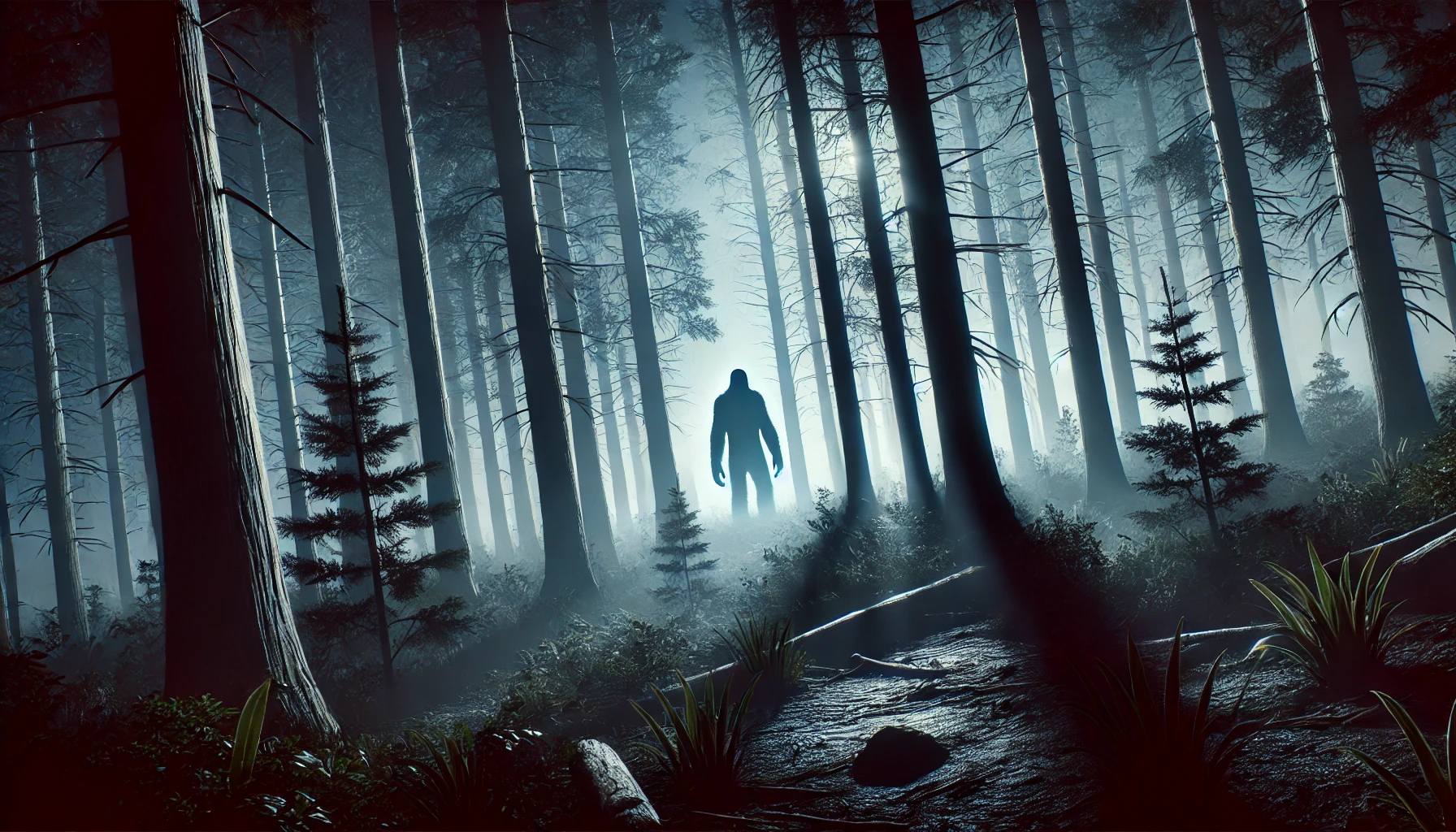
In this October 7, 2015 episode of “Midnight in the Desert,” Art hosts Ron Morehead and Scott Nelson to discuss Bigfoot, with a focus on the audio evidence known as the “Sierra Sounds.” The conversation starts with Ron Morehead, an experienced Bigfoot researcher, describing how his encounters with these creatures in the Sierra Nevada mountains led to him recording their sounds in the 1970s. These recordings, made with cassette tapes, capture vocalizations that Morehead believes are Bigfoot communication. Morehead recounts the challenges of gathering evidence and how a researcher named Al Berry helped validate the authenticity of these tapes through studies at the University of Wyoming. The recordings were confirmed to be genuine, not tampered with or altered, which bolstered the credibility of the sounds as legitimate evidence of Bigfoot.
Scott Nelson, a former U.S. Navy cryptolinguist, joined the conversation after discovering the recordings online. He immediately recognized patterns in the sounds that suggested language. Nelson, with his extensive experience in voice transcription, slowed down the recordings and noted that the vocalizations contained phonemes similar to human speech. Although no translation has been made, Nelson’s analysis indicates that these sounds exhibit characteristics of a structured language. Art, Morehead, and Nelson delve deeper into the sounds, describing them as containing various emotions like aggression, inquiry, and even humor, akin to human speech. At one point, they even compare the sounds to a heated but typical conversation between a married couple.
The discussion turns to whether Bigfoot could be more intelligent than previously thought, with the ability to evade detection despite human efforts using modern technologies. They also speculate on the possibility of Bigfoot trying to emulate human behavior, like wearing clothes, though both researchers are skeptical of this idea. Art plays some of the Sierra Sounds during the show, and both Morehead and Nelson explain that the vocalizations likely involve multiple Bigfoot creatures interacting, with a clear male and female dynamic in one recording.
Art ends the segment with a discussion about the ethics of shooting a Bigfoot to prove its existence. Both Morehead and Nelson express opposition to the idea, citing the growing body of anecdotal evidence and scientific studies, including DNA analyses, which suggest that killing a Bigfoot is unnecessary for proving their existence.
The conversation continues with Art probing deeper into the recordings and how they were obtained. Morehead explains that they didn’t actively go out seeking Bigfoot to record them, but rather, the creatures came to them. The recordings were captured at their camp in the Sierra Nevada, where Bigfoot seemed to be interacting with them from a close range. At one point, the team left food out, which attracted the creatures, and they believe that the vocalizations they recorded reflect Bigfoot communicating with each other, possibly over the food. The sounds are described as initially aggressive but later more conversational, which led Morehead and his team to believe they were being observed rather than threatened.
Nelson further elaborates on his analysis of the vocalizations. By slowing down the tapes, he could detect distinct speech patterns that mimicked human-like discourse. Despite the clear signs of language, Nelson stresses that it’s impossible to translate the sounds without more context. He notes that if they could observe the creatures directly—perhaps witnessing their actions while vocalizing—this could lead to more accurate interpretations of the sounds. For now, all they can do is analyze the phonetic structure, which points to Bigfoot having a complex form of communication. Nelson also mentions that the sounds captured on tape show a wide range of emotional expression, including aggression, concern, and even humor, as though the creatures are capable of complex social interactions.
Art reflects on the idea that Bigfoot might be much more intelligent than humans give them credit for, especially considering their ability to remain hidden despite advancements in human tracking technologies. Morehead agrees, sharing his belief that these creatures have been underestimated, particularly in terms of their intelligence and ability to avoid humans. Art then brings up the Patterson-Gimlin film from 1967, which remains one of the most famous pieces of Bigfoot evidence. Morehead defends the film, explaining that it’s still regarded as one of the most credible pieces of visual proof, and adds that his own recordings offer deeper insights into Bigfoot’s behavior beyond just visual confirmation.
The discussion moves into the realm of proving Bigfoot’s existence. Both Morehead and Nelson assert that the evidence they’ve collected, particularly the audio recordings, should be taken seriously. Morehead mentions that although they have not captured new recordings recently, the encounters they’ve documented still stand as solid proof that Bigfoot is real. Nelson adds that more examples of the creatures’ sounds would be helpful for further linguistic analysis, but both agree that patience and persistence are key.
Art, Morehead, and Nelson delve further into the complexities of trying to study Bigfoot, emphasizing how elusive these creatures are. Morehead explains that despite their best efforts, they have not been able to replicate the type of recordings they made in the 1970s. Although they have occasionally heard sounds during more recent expeditions, they haven’t been able to capture them with the same clarity. Morehead believes that Bigfoot is highly sensitive to human presence and becomes more elusive as humans try to study them. He expresses frustration that although they have made progress in understanding these creatures, it’s difficult to gather fresh, compelling evidence because the creatures seem to be more wary of human activity now than they were in the past.
Nelson elaborates on the linguistic aspect of the study, discussing the challenges of interpreting a language that is not human but has similar phonetic structures. He explains that the recordings clearly demonstrate that Bigfoot communicates with a structured language, as evidenced by the patterns of speech and turn-taking observed in the tapes. However, without being able to directly communicate with a Bigfoot or observe their behavior while vocalizing, it’s impossible to assign specific meanings to the sounds. Nelson compares the process to trying to learn a foreign language by only hearing parts of it without any context. Although they can detect emotions and interaction between the creatures, translating the language is still out of reach.
The discussion then touches on the public skepticism surrounding Bigfoot, with Art bringing up the common criticisms of the phenomenon. Morehead responds that he no longer tries to convince skeptics, believing that the evidence will speak for itself over time. He mentions the Patterson-Gimlin film once again as an example of enduring proof, and explains that the audio recordings, while not as widely known, offer a more intimate insight into the creatures’ nature. The sounds captured in the recordings, Morehead argues, are not just random noises but coherent communications between multiple creatures.
Art presses Nelson on whether he believes it is possible to eventually decipher the language if more recordings are made. Nelson is cautiously optimistic, saying that while it is theoretically possible, it would require significantly more data. He reiterates that the goal is to gather enough sounds to begin associating specific vocalizations with observed actions, which could lead to breakthroughs in understanding the language. However, both Morehead and Nelson acknowledge that the difficulty in obtaining new recordings makes this a long and uncertain process.
The conversation returns to the ethical question of whether killing a Bigfoot to prove its existence is necessary. Art notes that some people believe that a body is required for science to fully accept the existence of Bigfoot, but both Morehead and Nelson firmly oppose this view. Morehead stresses that with the growing body of evidence, including audio recordings, DNA analyses, and countless eyewitness reports, it’s unnecessary to kill one of these creatures to prove they exist. He explains that his encounters and evidence collected over the years suggest that Bigfoot is more intelligent and perhaps more human-like than previously thought. For Morehead, the ethical implications of killing such a creature outweigh the scientific benefit of obtaining a physical specimen.
Nelson echoes Morehead’s sentiments, adding that the sheer volume of anecdotal evidence, when combined with the audio proof they’ve gathered, should be enough for serious scientific consideration. He also mentions that he and Morehead attended a conference recently where proponents of killing a Bigfoot were largely booed, indicating that many in the Bigfoot research community share their stance. They argue that with advances in non-lethal research methods—like DNA extraction and remote observation—there are ways to gather conclusive proof without harming the creatures.
Art brings the conversation back to the sounds themselves, playing another recording. As they listen, Nelson points out that the exchange in the recording likely involves a male and female Bigfoot, and he describes it as a sort of domestic argument over food. Morehead suggests that the vocalizations may have been triggered by the food they left out at the camp, theorizing that the creatures might have been interacting over the provisions left by the researchers. The sounds, particularly the clear turn-taking in the conversation, indicate complex social behavior, according to Nelson.
The discussion also touches on the remarkable size and strength of the creatures. Morehead mentions tracks as large as 25 inches in length and describes following them through the wilderness, amazed at how such large creatures can remain so hidden. Despite their size, Bigfoot has proven incredibly adept at avoiding human detection, even in areas where sophisticated tracking equipment like infrared sensors are used. This further solidifies their belief in the intelligence of these creatures and their ability to evade human capture.
Art wraps up the show by thanking both guests, marveling at the depth of their research and the intriguing evidence they’ve brought forward.