
In the October 29, 2015 episode of “Midnight in the Desert,” Art hosts the renowned astrophysicist Neil deGrasse Tyson, who covers a range of space and science topics. Art opens with news stories, mentioning incidents like a recent runaway blimp and debates over U.S. budget spending, the ongoing conflicts in Syria, and China’s recent shift from a one-child policy. Art then welcomes Tyson, giving a background on his achievements and influence in science, including his role in reclassifying Pluto. Tyson explains this controversial reclassification, emphasizing how Pluto’s characteristics align more with icy Kuiper Belt bodies than with traditional planets. He discusses how Pluto’s large moon Charon and peculiar orbit play into its unique classification, clarifying that despite public backlash, the reclassification was based on its scientific characteristics rather than personal biases.
The conversation shifts to the discovery of a distant star with unusual light fluctuations, leading some scientists to speculate about an alien megastructure. Tyson, however, urges caution, suggesting alternative explanations, such as comets, that should be ruled out before considering extraterrestrial life. He reminds listeners of past discoveries, emphasizing that extraordinary findings often have explanations grounded in known physics rather than extraterrestrial theories. Art and Tyson then explore humanity’s fascination with potential alien life, touching on the vastness of the universe, the ubiquity of life’s basic elements, and the probable existence of life elsewhere. Tyson highlights the notion that intelligence might not be inevitable, using the asteroid-driven extinction of dinosaurs to illustrate how random events can shape evolution. He reflects on the evolutionary journey from dinosaurs to modern mammals, noting that without that extinction, intelligent life might not have evolved on Earth.
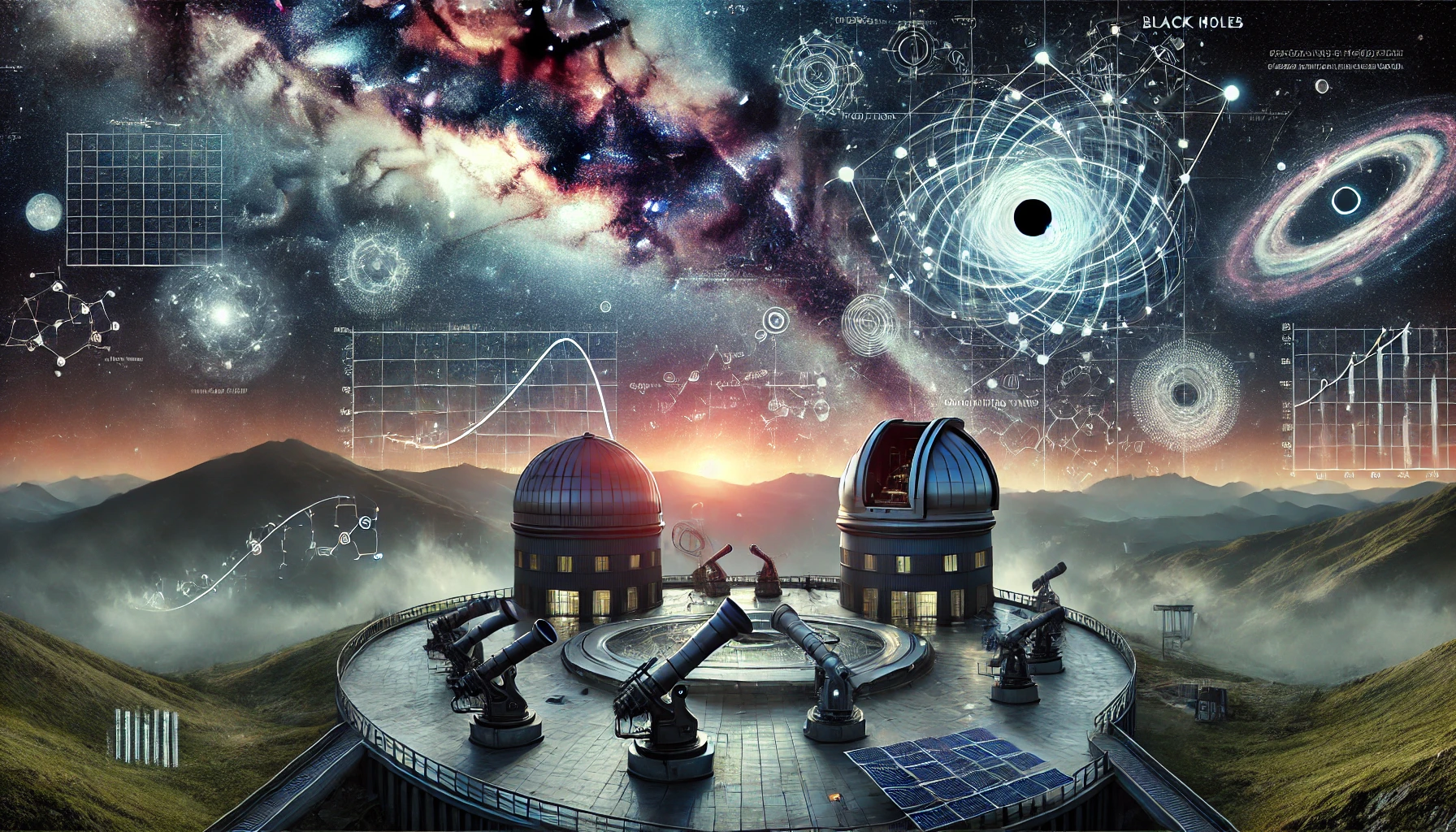
Art also brings up the Large Hadron Collider (LHC), which, in reaching unprecedented energy levels, could potentially create mini black holes or reveal connections to other dimensions. Tyson explains that any discoveries from such high-energy collisions will contribute to expanding the boundaries of physics, just as the LHC recently uncovered the Higgs boson. Tyson closes by discussing how mini black holes would likely decay almost instantly, likening their instability to the short-lived Higgs boson observed in prior experiments.
Art and Tyson delve further into the intricacies of black holes, covering topics from black hole radiation to the potential for mini black holes generated by the Large Hadron Collider (LHC). Tyson clarifies that while tiny black holes created in particle accelerators may be interesting, they would not persist due to the rapid release of energy through what’s known as Hawking radiation, leading to their almost immediate decay. Art expresses interest in the possibility of connecting with other dimensions, a speculative idea that Tyson addresses by explaining that while such phenomena are theoretical, any surprising discoveries at the LHC could significantly expand scientific understanding of the universe’s fundamental nature.
The conversation then shifts to broader cosmic mysteries, including dark matter and dark energy. Tyson gives a layman-friendly breakdown of how these phenomena affect the universe’s structure and expansion, despite their invisible and incomprehensible nature in traditional physics. He touches on how scientists continue to explore these dark forces, viewing them as essential to understanding the cosmos. Tyson compares astrophysics’ ongoing discoveries to exploring a vast, unfamiliar landscape, stressing that these mysteries exemplify the humility that astronomy demands from its scientists.
Art and Tyson revisit the topic of intelligent alien life, a subject that always fascinates Art. Tyson offers a nuanced view, asserting that while microbial or basic life forms likely exist elsewhere given the galaxy’s vast number of planets, intelligent life may be far rarer. He highlights the uniqueness of human evolution and intelligence, noting that the distinction between basic and intelligent life introduces a separate set of factors. In Tyson’s perspective, the development of intelligence isn’t necessarily an inevitable outcome of life, citing the millions of years dinosaurs ruled the Earth without evolving into an “intelligent” species. Tyson underlines that while intelligence has emerged on Earth, it required specific conditions, including a major asteroid impact, which allowed mammals to thrive and evolve into more complex forms, eventually leading to humans.
Art steers the conversation to the cultural and psychological aspects of humanity’s search for extraterrestrial life. Tyson muses on people’s attraction to the idea of intelligent life elsewhere, attributing it to a deep-seated curiosity and a need for connection beyond Earth’s boundaries. He also notes how this interest often intersects with cultural beliefs, popular science, and even conspiracy theories, which may reflect a collective yearning for answers to life’s biggest questions. Art humorously acknowledges Tyson’s practical yet open-minded stance, appreciating Tyson’s way of balancing scientific skepticism with a genuine enthusiasm for exploring the unknown.
Art probes Tyson’s thoughts on doomsday predictions and apocalyptic mindsets, a recurring topic on Art’s show given its fascination with the unknown. Tyson humorously notes how certain people seem almost disappointed when the world doesn’t end as predicted. He suggests that the psychological drive behind these beliefs might stem from a need for excitement or a desire to find meaning in life’s uncertainties. Tyson points out that end-of-world scenarios often attract large followings when presented as imminent, rather than distant possibilities, which can fuel intense, cult-like devotion. The two laugh over the pattern of shifting deadlines for such predictions, musing on the resilience of these beliefs despite repeated failures to come true.
Art transitions to another favorite theme—UFOs and alien sightings. Tyson, however, is cautious, explaining that while he respects people’s fascination with UFOs, he remains skeptical due to the lack of verifiable evidence. He argues that, as with any scientific claim, extraordinary evidence is required for extraordinary claims, and eyewitness testimony alone falls short of the rigorous standards needed for scientific proof. Tyson suggests that if intelligent aliens were advanced enough to reach Earth, their arrival would be far more obvious, leaving little room for doubt. He adds that if such an encounter were ever to occur, scientific tools and technology would provide concrete, indisputable evidence.
Art then pivots back to the possibility of life elsewhere in the cosmos, particularly microbial life, which Tyson believes is likely abundant. Tyson argues that, given the universe’s age and the sheer number of planets, life in its simplest forms could easily have developed elsewhere. He draws on Earth’s own timeline, noting that life emerged relatively quickly once conditions stabilized, and emphasizes that the fundamental building blocks of life—such as carbon, hydrogen, oxygen, and nitrogen—are among the most common elements in the universe. Therefore, he believes that life, even if only microbial, could be widespread across galaxies. Tyson also distinguishes between simple life and intelligent life, stressing that the former may be common, while the latter requires far more specific circumstances to evolve.
Art expresses awe at Tyson’s patient and methodical approach to unraveling such profound questions. Tyson explains that this approach stems from the scientific method itself, which prioritizes observation, evidence, and open-ended questioning over easy answers. He describes science as a journey rather than a destination, with each discovery opening the door to new, often unanticipated questions.
Art and Tyson discuss the future of space exploration and humanity’s potential to become a multi-planet species. Tyson passionately advocates for human exploration beyond Earth, framing it as an essential step for long-term survival. He argues that establishing a presence on other planets, particularly Mars, could serve as a form of “cosmic insurance” against potential global catastrophes on Earth. While he acknowledges the substantial challenges, including technological, financial, and psychological barriers, Tyson is optimistic about humanity’s potential to overcome them, provided there’s sufficient motivation and investment.
Art is curious about the private sector’s role in space exploration, pointing to companies like SpaceX. Tyson expresses cautious optimism, noting that private enterprises bring innovation, ambition, and cost-efficiency to the field. However, he emphasizes that large-scale, high-risk projects, such as establishing permanent settlements on other planets, are still likely to require government support due to their immense cost and complexity. Tyson envisions a partnership where governments set broad goals and provide funding while private companies handle specific missions and technological advancements.
The conversation concludes with Tyson reflecting on the legacy of space exploration as one of humanity’s most inspiring pursuits. He believes that humanity’s curiosity and drive to explore are core aspects of what makes us human, and he emphasizes that the discoveries made through space exploration enhance our understanding of existence.