
Art introduces the guest, Senator Harry Reid from Searchlight, Nevada, who discusses his journey from a small town to becoming a significant political figure in Washington, D.C. The conversation shifts to a critical issue regarding the transportation and storage of nuclear waste at Yucca Mountain, Nevada, a plan opposed by Reid. He highlights the broken promises of President George W. Bush, who, despite assurances to the contrary, supported the storage plan, betraying Nevada’s trust and potentially endangering public safety. Reid emphasizes the lack of scientific consensus and potential conflicts of interest surrounding the Yucca Mountain project, expressing his frustration and sense of betrayal by the administration’s actions.
Senator Harry Reid delves into the concerns surrounding the transportation of nuclear waste, emphasizing the unanimous agreement among environmental groups about the risks involved. He critiques the nuclear utilities for lobbying to centralize waste in Nevada, deeming it illogical given the ongoing production of nuclear waste. Reid advocates for leaving the waste at its current locations, highlighting the safety and security of dry cask storage containers, which can securely store waste for up to a hundred years, minimizing the risks associated with transportation. He also touches on the significant financial savings of on-site storage compared to the costly proposal for Yucca Mountain, raising concerns about past government assurances on nuclear safety and the enduring threat posed by such waste, underscoring the broader national implications and the potential impact on millions of Americans across various states.
Senator Harry Reid discusses the political strategies and collaborations across party lines to combat the proposed nuclear waste site at Yucca Mountain. Despite the partisan divide, Reid, a Democrat, teams up with Republican Senator Ensign from Nevada to garner support against the Yucca Mountain project. They aim to secure enough votes in the Senate to uphold a potential gubernatorial veto against the site’s approval. Reid reflects on past efforts and expresses hope in gaining support from senators of environmentally conscious states like Utah and Vermont. Furthermore, the discussion touches on the unrealistic expectations of Nevada receiving significant monetary benefits from hosting the nuclear waste site, with Reid emphasizing the state’s likely minimal gains and the broader implications of federal budget allocations. The segment concludes with Reid criticizing the Bush administration’s transparency regarding an energy task force led by Vice President Cheney, linking it to the broader issues of governance and public trust.
Senator Harry Reid reflects on honesty and integrity among politicians. He contrasts his experiences with various political figures, emphasizing the value of truthfulness, as exemplified by individuals like Governor Michael Callahan and Senate Majority Leader George Mitchell. The discussion also touches on concerns about nuclear waste transportation post-9/11, highlighting the risks associated with moving hazardous materials across the country. Reid raises geological and environmental concerns about storing nuclear waste at Yucca Mountain, noting the area’s seismic activity and potential threats to local water sources. He critiques the decision-making process that focused the nuclear waste repository solely on Nevada, questioning the geological suitability of Yucca Mountain based on its earthquake-prone nature.
Senator Harry Reid discusses potential scientific breakthroughs, such as using accelerators to neutralize harmful elements in nuclear waste, significantly reducing its hazardous lifespan from thousands of years to mere days. He mentions transmutation and the use of thorium, an abundant element, as promising methods for mitigating nuclear waste’s dangers. The conversation also touches on the financial and security challenges facing nuclear power plants in the U.S., highlighting the heightened need for stringent security measures post-9/11 and the impracticality of building new nuclear facilities due to these concerns. Reid emphasizes the importance of standardized security protocols for nuclear plant personnel and the broader issue of America’s energy dependency, advocating for conservation and better utilization of the nation’s limited petroleum reserves.
Senator Harry Reid discusses the potential of renewable energy sources, emphasizing Nevada’s and North Dakota’s capacity for geothermal and wind energy. He notes the underutilization of renewable resources in America, highlighting the environmental and health benefits of transitioning to cleaner energy. Reid advocates for legislative support to increase renewable energy usage, expressing disappointment over a failed bill that aimed for a significant shift towards alternative energy by 2015. The conversation shifts to the impact of pollution on health, particularly respiratory issues in children, which Reid attributes to poor air quality. He encourages listeners to actively engage with their senators to oppose the transportation of nuclear waste across states, emphasizing the power of constituent voices in influencing Senate decisions.
The conversation shifts to campaign finance reform, with Reid expressing hope that the recently passed legislation, despite some hoping for its judicial overturn, will endure and address the corrupting influence of large corporate donations in politics. He details the legislative safeguards in place to ensure that if parts of the law are declared unconstitutional, it won’t invalidate the entire statute. The focus then shifts to the dangers of transporting nuclear waste across states, with Reid encouraging listeners to contact their senators to express opposition.
In this segment, the discussion shifts away from Senator Harry Reid and focuses on a different topic. Art Bell introduces Brad Steiger, an author known for his extensive work on paranormal phenomena. Bell mentions a recent UFO sighting captured in Esquire, Washington, described as a clear image of a classic flying saucer. This sighting prompts a broader conversation about the prevalence of UFO encounters and the intriguing nature of these phenomena.
Bell then transitions to discussing a remarkable survival story involving a partial ejection from an A6 aircraft, highlighting the resilience and courage of those involved. The segment concludes with an introduction to Steiger’s upcoming appearance on the Learning Channel, where he will delve into the mystery and mythology surrounding giants, further expanding the show’s exploration of the unexplained.
Art Bell and Brad Steiger discuss various theories about what these phenomena could represent, such as dimensional portals, time travelers, or alien visitations. The conversation references a specific UFO sighting in Esquire, Washington, described as a clear and classic flying saucer, which adds to the ongoing discussion about extraterrestrial life and its potential interactions with Earth.
Steiger shares insights into the cyclical nature of paranormal sightings, noting an uptick in reports about glowing orbs and ghostly figures. These accounts come from reputable sources, often hesitant to come forward, underscoring the enigmatic nature of their experiences. The discussion extends to a detailed account from a former law enforcement officer who witnessed an intense white ball of light during a routine call, an event that profoundly impacted his perspective on the supernatural.
Brad Steiger shares a personal encounter with a mysterious entity, adding a first-hand account to the ongoing discussion about paranormal phenomena. The incident begins with Steiger and a fellow officer witnessing an intense ball of light, inside which appeared a creature resembling a “monkey man.” This sighting, puzzling and unexplained, becomes a topic of conversation and speculation within their department.
Steiger then transitions to his own experience, recalling two consecutive nights where he was visited by a tall, hooded being performing enigmatic gestures over him and his wife while they slept. On the first night, Steiger’s instinctual response was to protect his family, attempting to physically confront the entity. However, he finds himself drained of energy, unable to complete his intended action.
Brad Steiger continues to share his personal paranormal experiences, delving deeper into his encounters with a mysterious hooded being and a glowing green orb. These visitations not only left him physically drained but also imparted him with a sense of purpose and direction for writing a book that delves into contemporary revelatory experiences, suggesting a broader, more interconnected universe where humans possess untapped potential and capabilities.
Steiger elaborates on the idea that many individuals may receive similar messages or insights, each tailored to their unique abilities or mediums of expression, such as his own through writing and another musician through music. This concept underscores a recurring theme in paranormal encounters: the communication of profound truths and the urging for individuals to realize their greater potential and interconnectedness.
Despite the profound nature of these messages, Steiger acknowledges the challenges in widespread acceptance and action on these insights, pointing out that while the message has been consistent over decades, the majority of the world remains unaware or inactive in response to these deeper truths.
Brad Steiger discusses the broader implications of his paranormal experiences and theories about ancient civilizations. He touches on the idea that human civilization is cyclical, with societies rising and falling over millennia. Steiger mentions evidence of prehistoric giants, citing skeletal remains found worldwide, suggesting a history of human or human-like beings far older and different in scale than contemporary humans.
Steiger’s conversation transitions into a discussion on the coexistence of multiple hominid species and the mystery of why Homo sapiens prevailed. This leads to a reflection on the Biblical narrative of creation, contrasting it with scientific and archaeological findings that hint at a far more complex and ancient origin story for humanity and the planet.
The discussion underscores the tension between traditional religious interpretations of human origins and evidence suggesting a much older and diverse history of life on Earth. Steiger emphasizes the importance of individual and societal choice in interpreting these messages and histories, suggesting that while mainstream acceptance may be limited, the pursuit of understanding these phenomena remains crucial for those drawn to these mysteries.
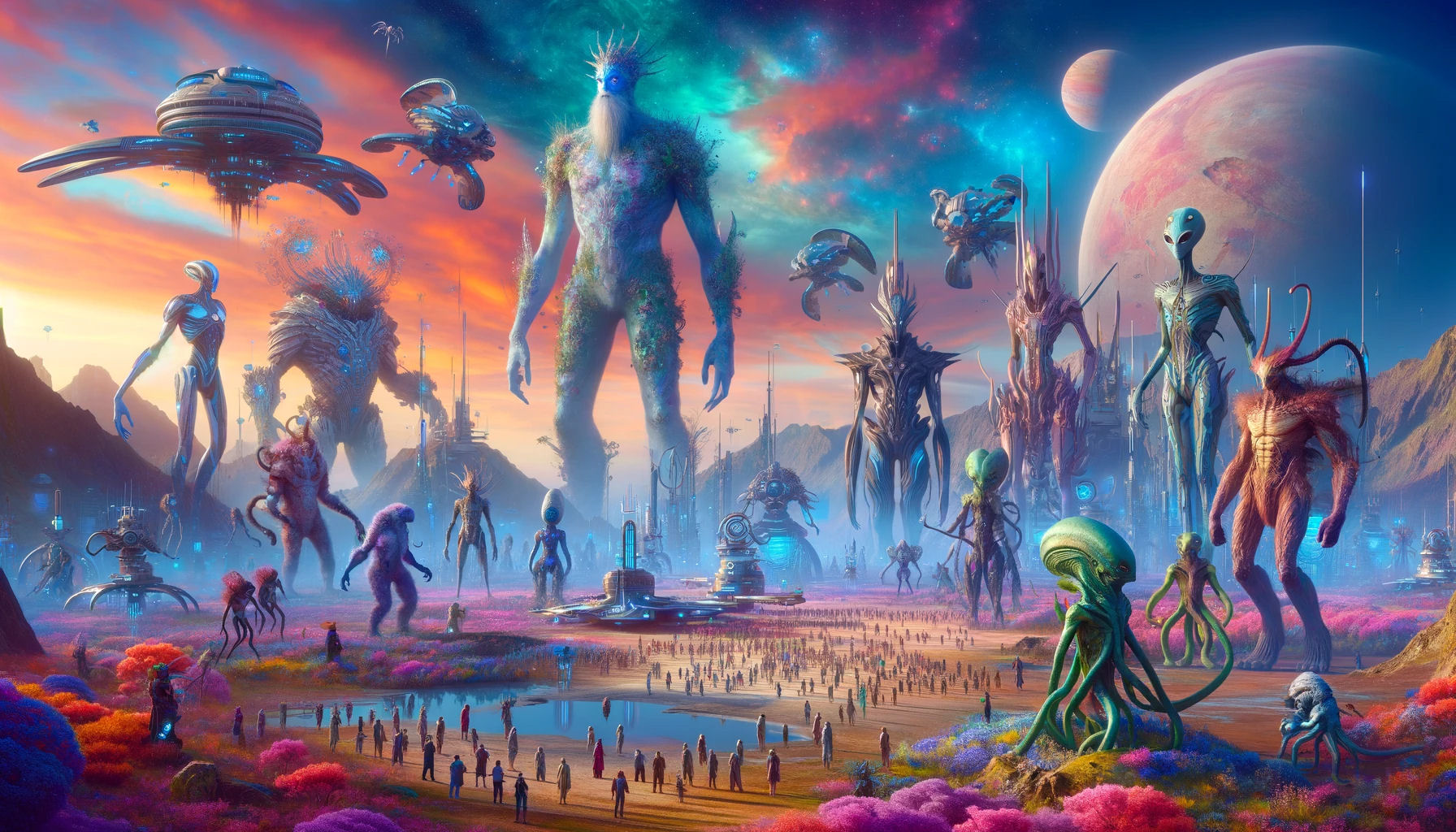
Brad Steiger and Art Bell delve into the subject of giants and their existence in ancient times, discussing the archaeological findings of oversized skeletons and artifacts that suggest a race of giants once roamed the Earth. They explore the possibility that these giants could be linked to the figures described in various mythologies and religious texts, such as the Nephilim mentioned in the Bible, who were said to be the offspring of the “sons of God” and the “daughters of men.”
Steiger discusses the evidence found in different parts of the world, including skeletal remains of entities with unusual features like horns and tails, pointing to a complex and mysterious history of human or human-like existence that challenges conventional narratives. The conversation also touches on the potential connection between these ancient giants and contemporary reports of creatures like Bigfoot, suggesting a continuity or recurrence of such beings throughout history.
Brad Steiger discusses his research on giants, including skeletal remains and other artifacts, suggesting the existence of a race of giants in ancient times. The discussion also touches on the possibility of recreating prehistoric environmental conditions to understand better how these giants could have lived, with references to experiments simulating past atmospheric conditions that resulted in larger-than-normal growth in certain species.
The conversation shifts to broader environmental changes, such as the melting of polar ice caps, hinting at humanity’s potential to face significant challenges due to environmental shifts. This leads to contemplation on the cyclical nature of civilizations and species, including the potential for humanity to face its own downfall or significant transformation.
Steiger and Bell also delve into biblical references to giants and the possibility that human history has intersected with these beings, suggesting a complex and intertwined narrative of human and giant coexistence. The dialogue underlines the mystery and intrigue surrounding the evidence of giants, questioning mainstream science’s reluctance to fully engage with these findings.
Brad Steiger suggests that the genetic traits of these ancient giants may still be present in today’s population, particularly in exceptionally tall individuals, though he distinguishes between genetic giants and those with conditions like acromegaly.
Steiger also addresses the challenges of reconciling scientific evidence of ancient giants with religious beliefs that place humanity’s inception at around 6,000 years ago. He acknowledges the creationist perspective that recognizes giants but does not push their existence beyond 6,000 to 7,000 years.
The conversation also touches on the advancements in our understanding of human capabilities, noting that individuals who are significantly taller than average can be just as coordinated and agile as their shorter counterparts, which challenges previous stereotypes.
Steiger confirms that giant skeletal remains have been excavated in Minnesota, suggesting that the region was once inhabited by these large beings. This revelation adds to the growing body of evidence that our planet’s history may have been populated by various hominid species, including giants, whose existence and legacy continue to intrigue and challenge our understanding of human history.
Steiger also talks about ancient coal and copper mines, where miners have encountered pre-existing shafts and artifacts that suggest advanced civilizations predating known human history. These discoveries challenge the conventional understanding of human history and suggest a much more complex narrative.
The discussion then transitions to a connection between these ancient mysteries and modern-day UFO phenomena, suggesting a potential link between ancient civilizations and extraterrestrial activity. Steiger and Art Bell ponder the possibility that humanity is part of a broader cosmic narrative, with ancient texts and modern sightings pointing towards a deeper interconnectedness of all things.
The conversation touches on the concept of nonlocality, suggesting that everything in the universe is interconnected at a fundamental level, a notion that aligns with both modern scientific theories and ancient mystical beliefs. This idea raises questions about the nature of reality and our understanding of the cosmos, suggesting that we may be on the verge of a significant paradigm shift in our understanding of the universe and our place within it
Brad Steiger discusses the global presence of ancient structures built with massive stones, suggesting a connection to the ancient giants or an advanced, lost technology. He touches on the Coral Castle in Florida, built by Edward Leedskalnin, a small man who somehow managed to move and sculpt enormous coral blocks into a complex structure. This feat, accomplished without witnesses or explanation, prompts discussion on whether Leedskalnin rediscovered an ancient method or tapped into a universal knowledge.
The conversation also explores why Leedskalnin might have chosen to keep his method a secret, considering the potential misuse of such powerful knowledge in a world already on a self-destructive path. The hosts speculate about the ethical considerations of possessing such knowledge and the implications of sharing it with society.
Brad Steiger and Art Bell delve into the intriguing phenomenon of human beings occasionally born with tails, which are usually surgically removed. This rare occurrence is connected to the conversation about ancient giants and the evolutionary history of hominids, suggesting that these physical traits could be remnants of past genetic variations.
The discussion also touches on the secretive nature of these medical procedures, not because they are hidden but because they are seldom discussed publicly, similar to how certain topics were once taboo. This connects to the broader theme of the segment, which is the exploration of human history’s lesser-known aspects, including the existence of giants and the potential for advanced ancient civilizations.
Brad Steiger and a caller discuss the phenomenon of mysterious balls of light, with the caller sharing a personal experience of witnessing such an orb in her living space. The caller describes the orb as a ball of energy and light that traveled through her apartment, causing no fear but leaving her and her companions puzzled.
Brad Steiger then connects this experience to other reports of visible orbs or balls of light, suggesting they might be manifestations of energy from another dimension or the afterlife. This discussion includes the appearance of similar phenomena at the World Trade Center site, where photographs captured unexplained orbs following the tragic events, implying a potential connection to the souls of the deceased.
The conversation touches on ball lightning, a rare and not fully understood natural phenomenon, acknowledging its differences from the orbs described by witnesses in terms of its physical effects and behavior.
A caller shares her experience of having an extra pair of nipples, a rare but not unheard-of condition that hints at our evolutionary past and the genetic diversity within humans. This conversation aligns with the broader theme of the show, which explores the remnants of ancient traits and the mysteries of human biology.
Another caller recounts a vivid encounter with a ball of light that exhibited intelligent movement, adding to the ongoing conversation about mysterious orbs and lights. These accounts contribute to the broader discussion about unexplained phenomena, whether natural, paranormal, or extraterrestrial.
Brad Steiger and the callers delve into personal experiences and scientific curiosities, highlighting the human fascination with the unknown and the myriad ways in which the past continues to echo in the present.
A
caller discusses his visit to Coral Castle in Florida and the mysterious magnetic wheel created by Edward Leedskalnin, the castle’s builder. This wheel, which remains at the site, might be connected to the methods Leedskalnin used to move and carve the massive coral blocks single-handedly. The caller suggests that Leedskalnin’s techniques could be part of an ancient or lost technology, possibly involving a combination of magnetism and possibly compressed air, based on the structures and devices found at Coral Castle.
The conversation delves into the specifics of how Leedskalnin might have manipulated these technologies, with the caller providing details about the wheel’s construction from car parts and the presence of a stone tower that might have been part of the overall system used to lift and position the stones.
A caller shares his insights into a magnetic wheel at Coral Castle, suggesting Leedskalnin may have understood and utilized an ancient or unique technology involving magnetism to manipulate massive coral blocks. This wheel, along with other experiments and tools found at the site, points to Leedskalnin’s potentially profound understanding of magnetic forces and mass manipulation.
The conversation also touches on a caller’s sighting of a small UFO in Georgia, emphasizing the craft’s silent movement and rapid acceleration, which the caller associates with magnetic propulsion. This account adds to the ongoing theme of unexplained aerial phenomena and their possible connection to advanced technologies or principles not yet fully understood by contemporary science.
Additionally, a listener raises a pertinent question about whether DNA analyses have been conducted on skeletal remains of the purported North American giants, suggesting a comparison with giants from other parts of the world could yield intriguing insights into human history and evolution.
Steiger reflects on his previous work and hypotheses regarding UFOs and their impact on humanity, suggesting that extraterrestrial intervention has been significant in our evolutionary journey and continues to intertwine with our destiny. The discussion touches on the profound and potentially transformative interactions between humans and these mysterious beings, implying that our understanding of ourselves and our place in the cosmos may be fundamentally linked to these encounters.
Brad Steiger confirms his involvement in an upcoming special focusing on giants and ancient mysteries, adding an extra layer of interest to the program. The special, crafted by Alex Hamilton Brown and narrated by David McCallum, is inspired by Steiger’s work and delves into the intriguing concepts of giant beings and their potential connections to humanity’s past and present.
Art Bell expresses his fascination with the Coral Castle’s magnetic wheel, emphasizing its unique and potentially groundbreaking nature. This discussion underscores the persistent human curiosity about advanced ancient technologies and the possible links between our ancestors and otherworldly beings.