
The conversation dives into the thrilling world of the Eco Challenge, an extreme adventure race that pushes participants to their limits. Art discusses the 2000 Eco Challenge in Borneo, highlighting the grueling 320-mile race through challenging terrains, including leech-infested jungles, bat-infested caves, and ancient headhunter trails. Teams comprised of members of varied genders and nationalities faced sleep deprivation and intense physical challenges, emphasizing teamwork and resilience. Notably, Art interviews the Playboy Extreme Team, including athletes and playmates Danielle Folger, Caitlyn Olsen, and Jennifer LeRoy, exploring their motivations, experiences, and the emotional toll of the race.
The team members, especially Jennifer and Kaitlyn, share their personal motivations and the cohesive dynamics that kept them going despite the arduous challenges. They touch upon moments of vulnerability, particularly highlighting Jennifer’s struggle in the bat-infested caves, showcasing the intense physical and emotional toll the race demanded. The narrative brings to light the sheer determination and teamwork involved, as the team members discuss not wanting to let each other down and their collective perseverance through the grueling race conditions.
The team members recount their most challenging moments, including the overwhelming exhaustion from days without sleep and the brutal trek through the jungle with rapidly changing conditions due to torrential rain. They share the ordeal of passport controls and the relentless struggle with the elements, particularly highlighting the agonizing condition known as trench foot, caused by prolonged wet and unsanitary conditions. The conversation also touches on the unexpected encounters with leeches, adding to the litany of physical challenges they faced. The team’s determination is underscored by their willingness to endure these extreme conditions out of sheer passion for adventure racing, despite the absence of significant financial rewards.
The participants, including the Playboy Extreme Team, are not driven by the monetary rewards, which are minimal compared to the expenses and the intense preparation involved. Art Bell delves into the unique aspect of why Playboy centerfolds would choose to participate in such a grueling event, challenging stereotypes and expectations.
The team’s resilience is tested again when they encounter a critical moment with their boat during the race. Despite initial doubts and the dismissive attitudes from other competitors, the team’s ability to overcome this obstacle exemplifies their determination and skill, proving their worthiness as competitors. This incident, where the boat gets damaged, becomes a pivotal moment, showcasing their problem-solving skills and tenacity under pressure.
Despite facing a potentially race-ending situation when their boat was damaged, the team displayed remarkable resilience and ingenuity by making on-the-fly repairs to keep their vessel seaworthy. This episode underscores the team’s determination and adaptability in the face of adversity.
Art Bell and the team also discuss the physical and logistical challenges of the race, including a particularly daunting rappelling segment conducted in complete darkness. The team’s ability to overcome these obstacles, often under the watchful eye of the camera crews, highlights their courage and resourcefulness. Despite the constant pressure and the intense physical demands of the race, the team maintained a strong spirit of camaraderie and mutual support, both within their own ranks and with other competitors.
The team members describe their initial fears and the sense of accomplishment once they overcame this daunting obstacle, illustrating the mental and physical hurdles participants face in adventure racing.
The discussion also delves into the inherent risks of the race, highlighting some of the severe injuries competitors sustained. This part of the conversation underscores the extreme danger involved in the Eco Challenge, with team members expressing their amazement that no fatalities occurred given the race’s treacherous conditions.
Furthermore, the segment touches on the dynamics of sponsorship and support. Despite initial reservations, Playboy ultimately celebrated the team’s participation. The team also received support from various sponsors, which was crucial for their participation. The conversation reveals the complexities of preparation and support behind the scenes in extreme adventure racing.
Despite the negative comments suggesting they didn’t genuinely complete the race, the team members express pride in their accomplishments and share the overwhelming positive feedback they’ve received from fans.
Art Bell discusses the team’s potential participation in future Eco Challenges, including a speculative one in Africa, highlighting both the excitement and dangers associated with such a location. The team’s interaction with Mark Burnett, the creator of the Eco Challenge, is also discussed. Burnett is described as supportive and enthusiastic, ensuring his presence at the finish line for every team, regardless of the time.
The segment also touches on the logistical challenges of the race, the camaraderie and competitive spirit among participants, and the unique experiences that come with competing in such an extreme environment. The discussion rounds off with Art Bell expressing admiration for the team’s achievements and encouraging his audience to learn more about their journey.
Transitioning from the Eco Challenge discussion, Art Bell shifts focus to various topics, including NASA’s budgetary decisions affecting Mars exploration and the scrapping of a Pluto mission, while also highlighting cuts in climate change monitoring. He notes a worrying trend in the reduction of funds for solar and alternative energy development.
The segment also delves into geopolitical tensions, with the U.S. attempting to retrieve its personnel and aircraft from China. Additionally, Art touches on solar phenomena, specifically a powerful solar flare and ensuing coronal mass ejections (CMEs) heading toward Earth, predicting potential geomagnetic storms and auroras.
An intriguing conversation unfolds around the nature of time, prompted by a caller’s account that challenges the collective memory of historical events, like Nelson Mandela’s fate. This discussion spirals into a broader inquiry about the possibility of time being manipulated, raising questions about the consistency of our memories and perceived reality.
The episode transitions to introduce Carla Wills-Brandon, a PhD author and therapist, who is set to discuss deathbed visions, adding another layer of depth to the show’s exploratory nature. The conversation briefly touches on her experience with Howard Stern, showcasing her resilience in the face of his provocative interviewing style.
Carla Wills-Brandon describes deathbed visions as occurrences where individuals at the verge of passing see and interact with deceased relatives or friends, offering reassurance about the transition to death. This phenomenon is characterized by its organized and consistent nature, differing from the chaotic hallucinations associated with mental health conditions.
Art Bell and Wills-Brandon delve into the specifics of these visions, noting that they typically happen when individuals are conscious, although there are accounts of such experiences occurring during brief periods of lucidity for those who are unconscious or in a coma. The discussion underscores the prevalence of these experiences, supported by a body of research and numerous accounts from healthcare professionals who have observed patients interacting with seemingly invisible entities at the end of their lives.
Carla Wills-Brandon continues to delve into the subject of deathbed visions, explaining how these experiences are not only limited to the individuals passing away but can also affect those close to them. She shares personal stories, including her own, where individuals became aware of a loved one’s passing through intuitive or supernatural experiences, even when they were not physically present with the dying person.
These accounts highlight a form of connection that transcends physical presence, suggesting that at the moment of passing, there can be a profound, shared experience among those closely connected to the individual. Wills-Brandon emphasizes the commonality of these experiences and the need for more exploration and understanding in this area.
The conversation then transitions to discuss the potential causes of these phenomena, whether they could be considered a form of telepathy or a message from the collective consciousness. The goal is to shed light on these experiences, encouraging more people to come forward with their stories.
Carla Wills-Brandon expands on the concept of deathbed visions, recounting various accounts where individuals nearing death see beings or figures, often interpreted as angels or other entities, that bring comfort or messages. These visions are not limited to known or remembered individuals; some see unknown figures or symbolic entities that play a role in their transition. These experiences are distinct from hallucinations, characterized by their clarity, consistency, and the peace they often bring to the individual experiencing them.
She shares a personal story involving her son, who began speaking about an entity named Thomas around the time of his grandfather’s passing, an experience that ties into the broader theme of how these visions can impact not just those who are dying but also their loved ones.
Addressing skepticism, Wills-Brandon argues against the notion that these visions are merely the brain’s reflexive responses to dying or effects of medication. She points out the specificity and consistency across different individuals’ deathbed visions, which distinguish them from drug-induced hallucinations or the brain’s disorganized signals during its shutdown process.
Carla Wills-Brandon discusses a particularly poignant account where a dying man acknowledges the presence of all three of his children, including one who had recently been murdered and whose death was kept secret from him. This incident, along with numerous other accounts, supports the idea that deathbed visions transcend mere hallucinations or the effects of medication.
Wills-Brandon emphasizes that these experiences are not influenced by the individuals’ beliefs or skepticism about the afterlife, noting that even those who are non-believers have reported similar visions. She challenges the conventional medical explanations that attribute these visions to the brain’s protective mechanisms or medication, arguing that the consistency and specificity of these visions across different individuals suggest something more profound is occurring.
She also shares insights from hospice workers, who frequently encounter deathbed visions in their care for the dying. These workers’ experiences further validate the notion that such visions are a common and natural part of the dying process, often providing comfort and closure to those on the threshold of death.
Art Bell shares a personal story about a premonitory dream involving his cat, Abby, that coincided with the cat’s sudden health crisis, raising questions about the nature of such intuitive or psychic experiences. Carla Wills-Brandon discusses similar accounts from people who have experienced unexpected, often unexplainable, connections with their pets or loved ones, suggesting a broader, interconnected web of consciousness that transcends physical boundaries and conventional understandings of time and space.
She emphasizes the need for open discussions about deathbed visions and related phenomena, pointing out that many people carry these profound experiences in silence due to societal skepticism or fear of ridicule. By sharing these stories, Wills-Brandon aims to normalize these experiences and encourage a broader dialogue about the mysteries surrounding death and the potential continuities of consciousness.
The segment also touches on the impact of solar activity on Earth, mentioning geomagnetic storms that could be affecting radio broadcasts, adding a layer of cosmic interconnectedness to the conversation. This broader context situates the discussion of deathbed visions within a universe full of unknowns and phenomena yet to be fully understood.
Dr. Carla Wills-Brandon delves deeper into the nature of deathbed visions, describing what is known as the “deathbed stare.” This phenomenon occurs when individuals nearing death appear to fixate on something unseen by others in the room, often indicating that they are observing or interacting with presences unseen by the living.
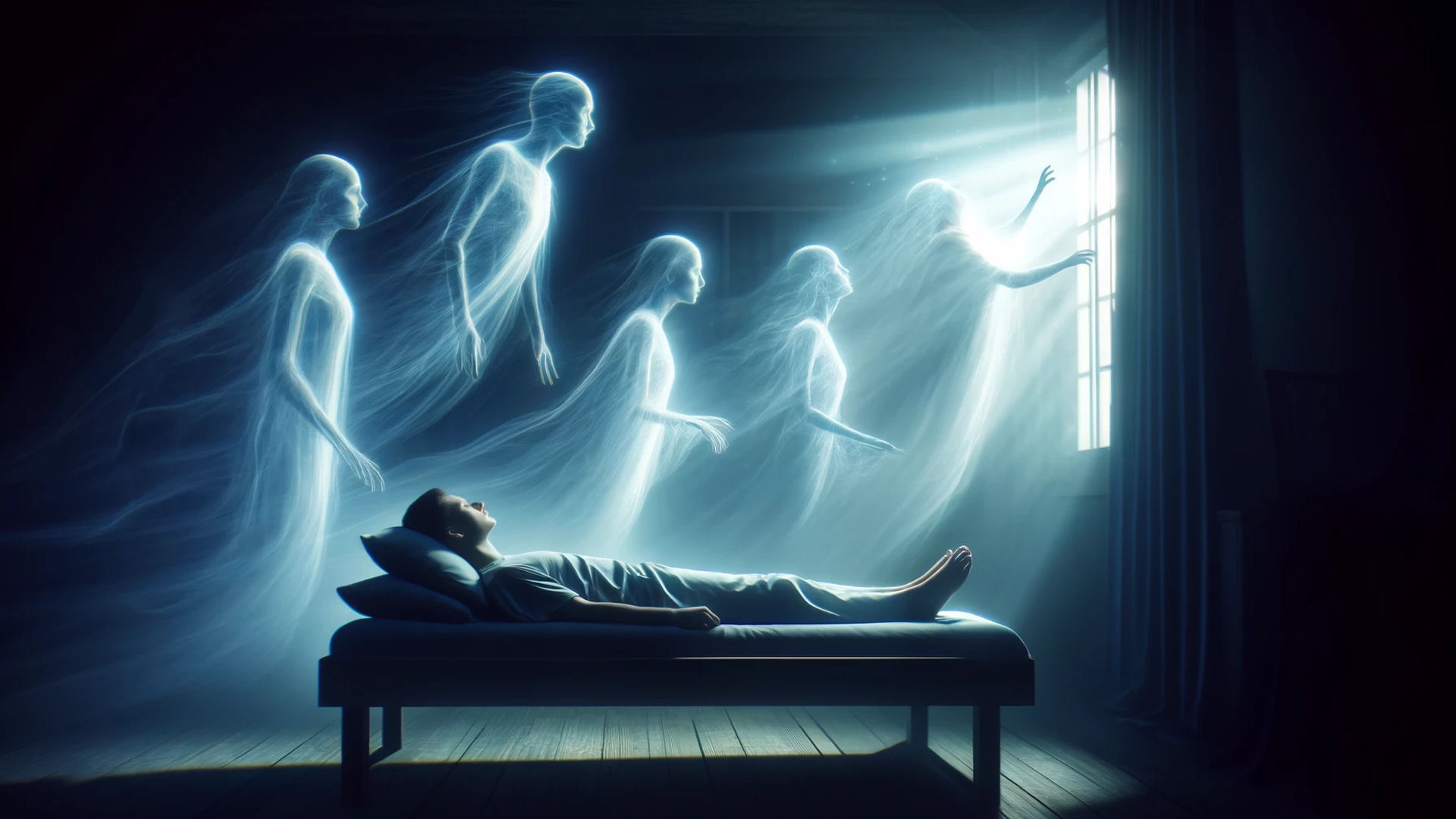
She also touches on instances where people present at the moment of someone’s passing feel or perceive something leaving the body. This sensation is not always visual; some describe it as a feeling of movement or energy passing through them, suggesting a departure of something integral to the person who has died.
Wills-Brandon shares personal stories, including her husband’s experience of witnessing a pastel, filmy substance leaving his father’s body, and a cousin who saw a blue-gray vapor at the moment of her mother’s death. These accounts align with historical descriptions and reports from hospice workers, suggesting a commonality in how people perceive the transition from life to death.
The conversation then shifts to a study from the 1800s where a doctor attempted to measure the weight of a soul by weighing patients at the instant of death.
The study found a small but consistent loss of weight, around half to three-quarters of an ounce, which couldn’t be accounted for by natural physical processes. Dr. Wills-Brandon mentions a follow-up experiment conducted in Russia that confirms these findings, adding another layer of intrigue to the nature of consciousness and its potential physical attributes.
Art Bell and Dr. Wills-Brandon explore why such groundbreaking findings aren’t more widely discussed or known, pondering the reluctance of mainstream media and scientific communities to engage with these topics. They speculate on the role of religious institutions, suggesting that doctrinal rigidity might prevent them from supporting research that could validate or challenge traditional beliefs about life after death.
Dr. Carla Wills-Brandon and Art Bell delve into the often uncomfortable relationship between religion and scientific exploration of deathbed visions. They discuss the difficulties and resistance faced when trying to bridge the gap between science and spirituality, highlighting the challenges in obtaining research funding and the reluctance within religious communities to engage with these phenomena.
Dr. Wills-Brandon recounts experiences of clergy members grappling with their faith and the internal conflicts they face when confronted with empirical evidence of phenomena that challenge traditional religious doctrines. She suggests that the security provided by the tenets of religion and science alike can make the exploration of the unknown daunting for both communities.
The conversation also revisits the intriguing study that measured a loss of weight at the moment of death, suggesting the departure of something from the body, potentially the soul. Despite the compelling nature of these findings, there’s a noted lack of mainstream attention and further research, which Dr. Wills-Brandon attributes to political correctness and entrenched belief systems.
Dr. Wills-Brandon discusses the skepticism and criticism she faces from online communities regarding her work on deathbed visions. Despite the negativity, she emphasizes the importance of exploring these phenomena without jumping to conclusions, urging a closer look at the intriguing data available.
Art Bell brings up an interesting point about the absence of negative experiences or visions of hell in deathbed accounts, noting that the messages from the other side are consistently positive or neutral. Dr. Wills-Brandon shares her belief that the afterlife is not as simplistic as some religious doctrines suggest, indicating a more nuanced process of spiritual growth beyond death.
They also delve into aura photography, particularly a study conducted by Dr. Constantine Korotkov, who investigates the changes in a person’s aura at the time of death. This research suggests that the manner of death impacts how the life force leaves the body, with violent deaths causing a quicker dissipation of energy compared to more peaceful passings.
Dr. Wills-Brandon continues discussing the challenges faced in legitimizing and funding research on deathbed visions. She shares personal anecdotes from medical professionals who have had their own experiences or witnessed such phenomena, emphasizing the impact these experiences have on their perspectives and practices.
She recounts a story from a physician friend who witnessed her grandmother having a deathbed vision, illustrating how such personal experiences can transform skeptics into believers or at least open-minded observers. This narrative underscores the importance of medical professionals acknowledging and respecting patients’ end-of-life experiences, regardless of their personal beliefs.
Dr. Wills-Brandon highlights the difficulty in securing research funding for studies on phenomena associated with death and the afterlife. She suggests that societal biases and a lack of openness to exploring the unknown contribute to this funding challenge. The discussion also touches on the cultural and professional reluctance to accept or discuss these experiences, often dismissing them as hallucinations or delusions without considering their potential significance or meaning.
In this part of the conversation, the focus shifts to the complexities of how the medical community and families handle the process of dying, particularly regarding resuscitation and the wishes of the dying person. Dr. Wills-Brandon shares anecdotes where individuals nearing death, who had experienced a sense of readiness to pass, were resuscitated against their will, causing them distress and frustration.
She emphasizes the importance of respecting the dying person’s wishes and the therapeutic value in understanding and acknowledging deathbed experiences, both for the individual passing and their family members. The narrative includes a powerful story about a minister who, through a dream, conveys a child’s request to their family to cease prayers keeping them tethered to life, illustrating the profound intersections of spirituality, belief, and the dying process.
Dr. Wills-Brandon advocates for greater awareness and openness within the medical community to recognize and honor the subjective experiences of those nearing death, suggesting that a more compassionate and informed approach can aid the transition for the dying and provide closure for their loved ones.
Art Bell and Dr. Carla Wills-Brandon discuss further the weight loss observed at the moment of death in multiple controlled studies, noting the baffling absence of this topic in mainstream discourse. They ponder why such a significant observation isn’t more widely known or discussed, given its potential implications for our understanding of life and death.
A medical doctor calls in, affirming Dr. Wills-Brandon’s observations regarding deathbed experiences. He shares his own observations from his practice in geriatrics, noting the profound sense of peace and happiness he witnessed in patients at the moment of death. This doctor’s experiences reinforce the idea that there’s more to our existence than just our physical bodies, suggesting a continuation of the spirit or consciousness after death.
The conversation touches on the possibility of after-death communication, as Dr. Wills-Brandon mentions her husband’s experience of seeing his father after he had passed away, appearing whole and healthy despite having been very ill before his death. This narrative aligns with the idea that those who have passed on continue to exist in some form and can interact with the living.
A listener then shares a personal anecdote connecting a celestial event — a shooting star — with the passing of a friend, suggesting a synchronicity or meaningful coincidence that transcends conventional explanations.
One caller narrates an encounter with her deceased stepsister, who appeared to reassure her that everything was alright, providing a profound sense of peace. This story aligns with Dr. Wills-Brandon’s discussions about after-death communications, where deceased individuals appear vividly to the living, often to convey messages of reassurance or guidance.
Another caller brings up the topic of ghosts and lingering spirits, prompting a discussion about different types of paranormal phenomena. Dr. Wills-Brandon distinguishes between residual hauntings, which are repetitive and not interactive, and intelligent hauntings, where the spirit seems aware of the present and can interact with the living. This differentiation adds depth to the conversation about the afterlife, suggesting that the nature of a person’s death and their unresolved issues might influence how they manifest after death.
In this part of the conversation, a nurse shares her experiences of witnessing the moment of death in hospice care, describing a visible, wisp-like emanation she perceived leaving patients’ bodies. She also observed changes in the patients’ auras, supporting the notion that something tangible and energetic leaves the body at death. Her account adds a healthcare professional’s perspective to the discussion, reinforcing the idea that death may involve a transfer or transformation of energy, consistent with other accounts of deathbed phenomena.
Listeners from various backgrounds call in to share their experiences and perspectives, expanding the dialogue on deathbed visions and after-death communications. These personal anecdotes contribute to a broader understanding of how different individuals perceive and interpret the moments surrounding death, whether through professional observation or personal encounters.
The conversation delves into the nature of energy and spirit, with the nurse asserting her belief in a fundamental energy that constitutes our being, which transitions at the moment of death. This perspective aligns with various spiritual and metaphysical beliefs and offers a potential framework for understanding the experiences shared by callers and the phenomena discussed by Dr. Wills-Brandon.
One caller recounts a tender moment when he and his daughter felt a kiss on their foreheads the night after his mother’s passing, suggesting a visitation from her spirit. Another caller describes a haunting experience in a Korean hotel, where unexplained phenomena occurred in their room, validated by the hotel staff’s acknowledgment of a ghostly presence.
Dr. Wills-Brandon provides practical advice for those seeking after-death communications, particularly through dreams. She suggests a methodical approach involving visualization, focusing on the deceased’s image, and inviting them to visit in dreams, emphasizing the vivid and impactful nature of such dream visitations.
One caller describes a poignant incident where a man drowned while trying to save someone else, and the caller felt a mysterious force pulling him away from the water, potentially saving his life. This story highlights the mysterious interconnectedness of events and the intuitive awareness that some people experience surrounding death.
Another caller discusses the reluctance of some religious communities to embrace the concepts of deathbed visions and after-death communications, despite their alignment with the fundamental belief in an afterlife. This conversation touches on the fear of death and the possible reasons why some religious individuals might find it challenging to confront or accept these phenomena.
Dr. Wills-Brandon addresses these topics by acknowledging the varying beliefs and traditions surrounding death and the afterlife across different cultures and religions. She emphasizes that while some may find comfort in the idea of ongoing spiritual lessons or levels of existence after death, others might struggle with these concepts due to their own beliefs or fears.
Dr. Wills-Brandon discusses the complexities of religious beliefs in relation to deathbed visions and after-death communications. She notes the potential confusion within religious communities when individuals who are nonbelievers or from different religious backgrounds report experiences that align with those found in Christian and Jewish traditions.
A caller from Ontario shares a unique experience of seeing an apparition of his living mother as a child, which he describes as ghost-like. This story adds to the conversation by illustrating that not all such experiences are related to death or the afterlife; some are encounters with the living, suggesting a broader spectrum of paranormal phenomena that challenges our understanding of consciousness and existence.
Dr. Wills-Brandon acknowledges these experiences and suggests that they are part of a wider range of paranormal phenomena, which includes apparitions of the living, commonly referred to as “living ghosts.”