
This episode of Coast to Coast AM opens with Art Bell discussing recent unusual solar activity and effects on the northern lights. Soon after, he transitions to an ominous and mysterious topic: an audio message from the “Galactic Command,” which famously interrupted a British news broadcast in 1977. This transmission conveyed a warning to humanity to abandon nuclear technology, suggesting it leads to planetary harm and warns about the consequences of ignoring the guidance. The transmission is cited as an unusual phenomenon, given it affected multiple BBC channels simultaneously. Art speculates on the authenticity and implications, asking whether humanity’s reaction to the message impacted the cessation of nuclear plant construction.
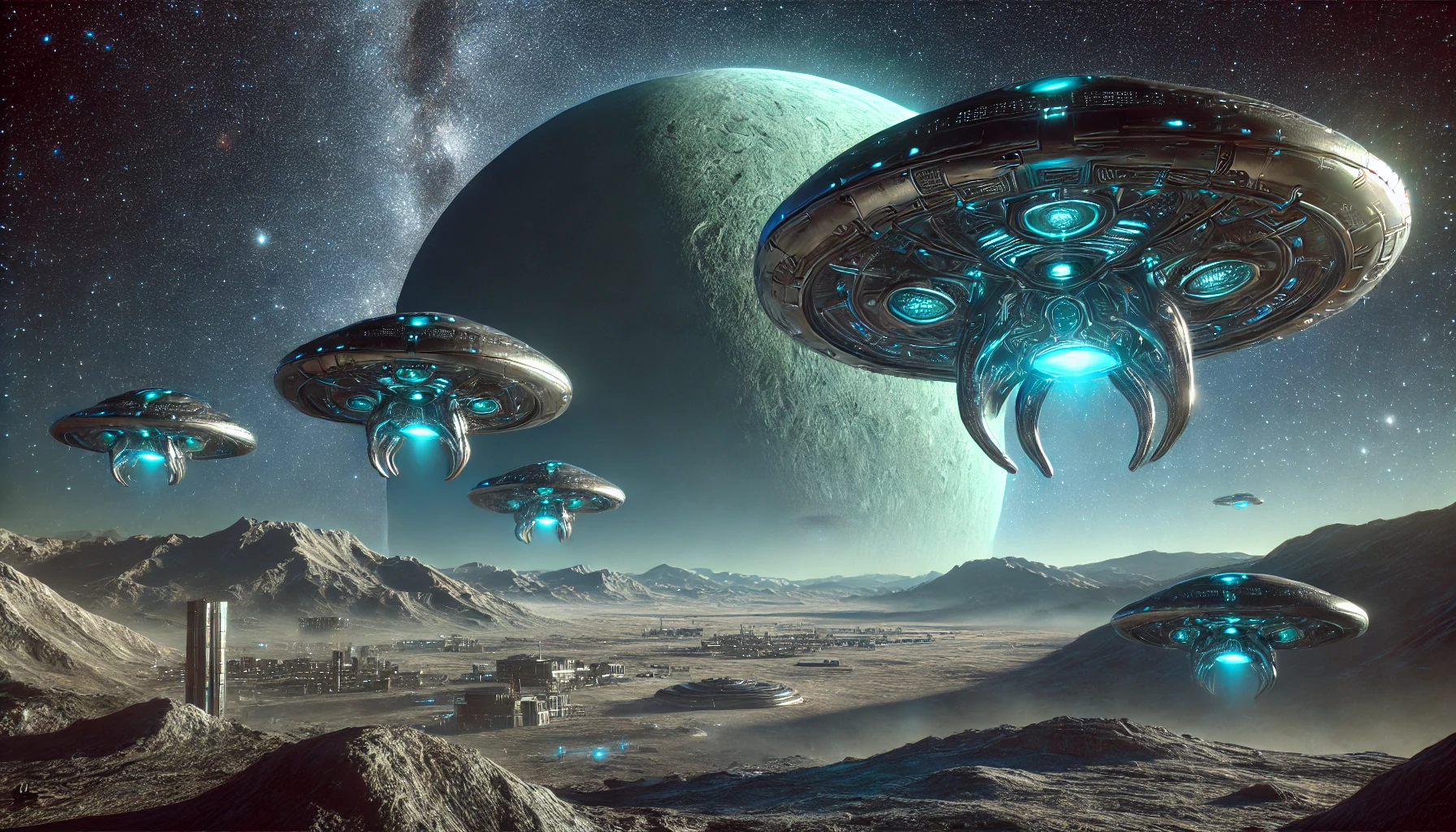
Art introduces guest Bill McDonald, an artist and UFO researcher known for investigating alleged extraterrestrial spacecraft. Bill is particularly focused on the Roswell incident, where he claims evidence suggests the crash involved a unique, disk-like craft with materials and structures beyond known human engineering. Bill argues that the Roswell UFO design appears to incorporate biological elements, theorizing that the “craft” itself might have a semi-organic structure, integrating biological and mechanical systems. He asserts this hybrid nature may allow the vessel to adapt to interstellar environments, potentially operated through some connection with a pilot’s mind or nervous system, blending organism and machine. Bill describes detailed sketches he’s drawn based on eyewitness accounts, articulating a biological-metallic material that seems to “flow” into shape rather than being constructed with rivets or panels.
Art probes Bill on these concepts, asking if such a craft could be reverse-engineered and speculating on the military’s possible interest in such a hybrid design. Bill responds that while human scientists likely experimented with similar structures in top-secret projects, the biological integration technology remains far beyond current capabilities. He describes how modern military advancements might aim to mimic this design, but he believes the fundamental principles behind such technology are still elusive. Bill also references other UFO sightings with a “living metal” quality, suggesting Roswell wasn’t an isolated instance of this advanced design.
Art shifts to discussing potential witnesses, asking how Bill gathered his sources. Bill explains he has spoken with military personnel, alleged Roswell witnesses, and a few individuals claiming to have handled materials resembling the described craft, though most remain anonymous due to fears of reprisal. Art and Bill then delve into potential reasons the government might withhold such technology from the public, touching on fears of societal disruption and national security implications. They speculate on whether official disclosure might lead to breakthroughs or disrupt the balance of technological power.
Art questions Bill about any physical evidence or samples of the “biological metal” from Roswell. Bill admits he has no direct samples but references testimony from anonymous military sources, who described materials that seemed pliable yet resilient—able to “heal” or reform after being bent or damaged. These sources claimed the material was incredibly lightweight and unusually conductive, leading to suspicions that it was neither pure metal nor a standard alloy. Bill explains that, in these accounts, the material reacts to environmental changes as if “alive,” flexing and adapting its properties in response to conditions, a characteristic far outside the abilities of known earthly materials.
They delve into the theories surrounding the technology behind these properties, particularly how biological elements could merge with machine components. Bill speculates on the possible existence of microscopic or nanotechnological elements within the metal that might enable this adaptability, theorizing it could represent a form of programmed material—one that might “know” how to maintain structural integrity or adjust itself in various settings. Art brings up the idea of future applications, envisioning human spacecraft that could adopt similar adaptive qualities to respond to space’s unique demands.
As their discussion turns to alleged reverse-engineering efforts, Bill explains that despite years of study, many scientists likely struggled to replicate such materials. He believes that any successful reverse engineering of this technology would require a leap in understanding biological and mechanical integration, something he suggests might take centuries. Bill suggests that human technology isn’t ready to achieve the kind of seamless, responsive integration of biology and machinery that he believes extraterrestrial technology has accomplished, implying that we might only be glimpsing the surface of alien technological paradigms.
Art then asks Bill to speculate on the origins and motivations of the beings behind this craft. Bill hesitates, noting the speculative nature of the question, but posits that if the craft is indeed biomechanical, the beings might have a symbiotic relationship with their technology. He imagines an advanced civilization where beings and their crafts are interconnected, possibly using mental or neural connections to pilot ships that operate as extensions of themselves. Art and Bill discuss how this potential symbiosis would redefine human conceptions of travel, technology, and even biology, envisioning a future where humanity might one day learn to grow technology rather than build it.
Art shifts the conversation to other UFO cases Bill has researched, asking if there are patterns or recurring design elements similar to those allegedly found at Roswell. Bill mentions several sightings and crash reports where witnesses described craft with seamless surfaces, lacking visible seams, bolts, or joints, similar to the biologically-integrated design he believes Roswell’s craft had. He refers to reports of translucent surfaces that could change opacity, possibly allowing occupants to observe surroundings while remaining hidden from external view. Bill theorizes that these design features indicate a sophisticated approach to material science and camouflage, pointing toward a level of integration where visibility and function are controllable on demand.
They discuss the psychological effects of encountering such technology, with Bill explaining that witnesses often report a profound sense of “otherness” when near these crafts, an almost instinctual awareness that the technology is far beyond anything terrestrial. He believes this reaction might stem from the craft’s subtle biological presence, which he describes as unsettling to humans, possibly because it combines both machine-like qualities and lifelike behaviors. Art ponders the implications, noting how the existence of such “alive” machines would disrupt conventional understanding of machinery, which we typically view as non-living and non-adaptive.
Bill touches on another intriguing report involving a supposed crash in the Pacific Northwest, where debris was reportedly found with properties similar to the Roswell material. He describes pieces that allegedly had heat-resistance far surpassing earthly metals, as well as extreme tensile strength. These materials, according to his sources, exhibited an unusual “memory” property, returning to their original shape after being bent. Art asks if this could be reproduced in labs, but Bill is doubtful, suggesting these materials are complex compounds engineered on a molecular or even atomic level—a field where human science, while advancing, is still limited.
Art and Bill then explore the role of the military and scientific secrecy in containing knowledge about such materials. Bill speculates that governments may avoid public disclosure not only due to security concerns but also because of the scientific gap that these materials highlight. He proposes that any public revelation of such advanced materials would inevitably lead to questions about how they function, placing immense pressure on scientific institutions to produce answers they might not have. Bill argues that this secrecy could be a strategy to prevent panic, as well as a way to control the technology until it can be understood and perhaps weaponized.
They end this segment on a speculative note, with Art asking what advancements might come if such materials were fully understood. Bill imagines breakthroughs in medicine, transportation, and defense, positing that a human application of adaptive, living materials could revolutionize industries from aviation to artificial intelligence, where technology could act intuitively. Art expresses hope that, one day, these materials might be used to benefit humanity rather than just serve military purposes.
Art asks Bill if he believes there’s an organized effort among governments to cover up or discredit UFO-related discoveries. Bill asserts that there is indeed a network of secrecy in place, likely initiated during the Cold War when the military saw potential strategic advantages in extraterrestrial technology. He mentions the “Majestic 12” documents as part of the broader lore surrounding government agencies tasked with UFO oversight, suggesting that while some documents might be fabrications, others could hint at genuine classified projects. Bill speculates that governments may have quietly studied such phenomena under secret programs, using misinformation tactics to maintain control over the narrative and dissuade serious investigation by independent researchers or the public.
Art raises the subject of whistleblowers and asks why more individuals haven’t come forward. Bill notes that a few military and intelligence officers have attempted to speak out over the years but often face severe repercussions, from career ruin to legal threats. He believes fear of personal and professional consequences discourages most potential whistleblowers, adding that secrecy protocols within military and intelligence circles are designed to isolate knowledge, ensuring only select individuals have access to specific information. He theorizes that this compartmentalization keeps the full picture hidden, even within the government, leaving only a handful of officials with comprehensive knowledge of any recovered extraterrestrial materials or technology.
In response to Art’s question about potential cultural impacts, Bill suggests that the discovery of extraterrestrial life and technology would fundamentally reshape human philosophy, religion, and scientific paradigms. He explains that encountering intelligent life would challenge religious views on human uniqueness and could disrupt social and moral structures. Art shares his concern that such a revelation might cause fear or disillusionment, particularly if humanity sees itself as technologically or spiritually inferior to another civilization. Bill agrees, adding that government officials might avoid disclosure to prevent potential social unrest, particularly if people felt powerless or obsolete in comparison to an advanced alien presence.
They briefly touch on the possible motives of extraterrestrial visitors. Bill speculates they may be monitoring human development, possibly assessing how humanity handles its own technological advancements and environmental challenges. He imagines a scenario in which extraterrestrials are waiting for humans to reach a certain level of ethical maturity before establishing open contact. Art contemplates whether humanity is ready for such a relationship and expresses skepticism, citing humanity’s ongoing conflicts and environmental issues as evidence that humans may still be too immature for interstellar alliances.
Art and Bill ponder whether humanity will ever have access to the information reportedly locked away by government agencies. Bill suggests that pressure from public interest groups and independent researchers might eventually bring more transparency, but he believes true disclosure is likely far in the future. Art agrees, noting that the secrecy surrounding UFOs may only begin to unravel if a breakthrough—such as the accidental discovery of a craft or material by civilians—forces the issue into the public eye.
Art and Bill discuss potential technological applications if the materials allegedly found in UFO crashes could be replicated on Earth. Bill envisions how such materials could transform aerospace engineering, with the potential to create craft that are not only more resilient but also adaptive, capable of withstanding extreme temperatures, radiation, and atmospheric pressures. He describes a hypothetical spacecraft that could shift its density, shape, or opacity in response to various environments—qualities that would revolutionize not only space exploration but also military aviation. Art remarks that such technology could eliminate the need for fuel in traditional forms, with adaptive, self-sustaining materials making travel far more efficient and allowing craft to harness energy from the environment.
Moving to a more philosophical angle, Art and Bill ponder what the existence of such advanced materials might imply about alien civilizations. Bill suggests that extraterrestrials, if they developed this technology, might have evolved with a fundamentally different understanding of matter and biology, viewing machinery as an extension of organic life. Art speculates that this might mean their science isn’t bound by the same limitations that humans face, potentially operating on principles we have yet to discover or understand. They discuss whether human science, which tends to separate biology from technology, could eventually adopt a similar perspective, merging organic and inorganic in unprecedented ways.
Art then asks if there have been any recent sightings or reports that suggest these advanced technologies are still being observed. Bill mentions that while many recent sightings lack detailed descriptions of craft materials, several involve advanced maneuvers that defy human capabilities, such as instantaneous acceleration or abrupt directional changes. He believes these sightings, many of which come from credible military and aviation sources, suggest that craft with advanced propulsion and structural capabilities continue to operate in Earth’s airspace. Bill speculates that some sightings might involve remotely operated probes, hinting that these crafts could be unmanned, possibly scouting or surveying.
The two then consider the idea of “living” technology, with Bill emphasizing the role of artificial intelligence in potential alien craft. He suggests that an advanced civilization would likely have developed AI that functions almost autonomously, capable of making decisions without direct input from a pilot. This AI could potentially form a symbiotic relationship with the craft, controlling the environment and adapting to it in real-time. Art explores whether humans could replicate this kind of sentient technology, and Bill notes that, while we are making strides in AI, the level of integration and adaptability witnessed in UFO sightings seems far beyond current human capabilities.
Art asks Bill about the personal impact of his research and beliefs on extraterrestrial technology. Bill reflects that while he finds the possibilities exciting, they also carry a weight of uncertainty and ethical considerations, especially in the event of disclosure. He worries about how society might handle the knowledge of extraterrestrial beings and their technologies, given the potential to either misuse or misunderstand such advancements. Art and Bill agree that humanity may need to evolve ethically as much as technologically to responsibly integrate any future revelations about extraterrestrial life.
Bill believes that if governments were to disclose what they know, the information could inspire a new era of innovation, sparking advancements in energy, transportation, and environmental management. He imagines breakthroughs such as self-sustaining power sources or vehicles capable of interplanetary travel without the constraints of current propulsion systems. Art expresses hope that such knowledge would be used for constructive purposes, though he acknowledges the risk of militarization or misuse, especially if only a few nations held access to it.
Bill touches on the possibility of public demand for transparency growing in the coming decades. He notes that societal attitudes toward government secrecy are changing, with more people questioning the need for such extreme confidentiality surrounding UFOs and advanced technologies. Art wonders if the public might become more accepting of the unknown as scientific and technological knowledge expands, potentially making extraterrestrial technology easier to introduce into mainstream discourse. Bill agrees, observing that each generation grows more open to new ideas, especially those involving the universe and life beyond Earth.
They delve into the potential religious and cultural impacts of such revelations, with Bill suggesting that contact with extraterrestrial technology could unify humanity under a shared sense of wonder and curiosity. He believes that if humans could see themselves as part of a broader cosmic community, it might reduce conflicts and divisions rooted in earthly differences. Art adds that the realization of not being alone could provoke a “spiritual renaissance,” transforming humanity’s understanding of its place in the cosmos. However, he also warns that this shift might be destabilizing for some, particularly those with deeply held beliefs about humanity’s uniqueness or purpose.
In their final moments, Art asks Bill if he has any advice for those curious about UFOs or interested in pursuing the subject further. Bill emphasizes the importance of critical thinking and open-minded research, encouraging enthusiasts to seek credible sources and documented cases rather than rely solely on sensational accounts. He urges listeners to remain skeptical yet receptive, noting that true understanding of the phenomenon requires both scientific rigor and a willingness to consider extraordinary possibilities. Bill reflects on his own journey, admitting that while he still has unanswered questions, his research has been profoundly fulfilling, offering a glimpse into what might lie beyond the boundaries of known science.
As the interview closes, Art thanks Bill for his insights and for sharing his work with listeners, remarking that the discussion has raised as many questions as it has answered. Bill expresses gratitude for the platform to discuss these ideas openly, noting that the pursuit of knowledge, especially in such mysterious fields, is one of humanity’s most noble endeavors.
Art takes calls from listeners, prompting various reactions and questions about Bill’s theories. Some callers express skepticism about the government’s ability to hide such advanced technology, arguing that with today’s information-sharing capabilities, any significant discovery would inevitably leak. Art agrees that, while secrecy has been maintained historically, the digital age makes it increasingly difficult for governments to control information. He speculates that if a genuine extraterrestrial artifact were discovered, it might indeed reach the public quickly through unofficial channels, a scenario he thinks could accelerate disclosure.
Other callers ask about the specifics of the “biological metal” Bill described, curious if similar materials have been publicly reported in other scientific contexts. Art shares his knowledge of shape-memory alloys and advanced polymers used in modern technology, though he concedes these materials don’t possess the self-repairing or adaptive qualities Bill attributes to alien craft. Bill himself returns briefly to clarify, explaining that while shape-memory alloys are a step toward adaptive materials, the alleged Roswell metal goes far beyond, appearing to respond at a molecular level to environmental changes. This capability, he reiterates, suggests a blend of synthetic and biological engineering beyond what humans can currently achieve.
A few callers touch on the idea of consciousness within the craft itself, asking if Bill believes these advanced technologies could possess an awareness or sentience. Bill proposes that an advanced civilization might develop technology that behaves in ways analogous to consciousness but stops short of true self-awareness, likening it to a highly adaptive form of AI. Art ponders if this could mean that the craft are not just tools but entities capable of independent interaction, an idea that fascinates some listeners and spurs discussion about the ethical implications of creating machines that might exhibit lifelike behaviors.
A caller suggests that humanity may already be reverse-engineering alien technologies covertly, pointing to certain modern advancements like fiber optics and stealth technology as possible examples. Art and Bill discuss these theories, with Bill acknowledging that while some UFO researchers do believe extraterrestrial technology has influenced human inventions, it’s difficult to verify such claims definitively. He remains open to the idea, however, noting that the rapid progress of technology over the last century has occasionally seemed to leap ahead of established scientific frameworks.
A caller raises the idea that perhaps alien civilizations are waiting for humanity to reach a certain level of ethical or spiritual maturity before initiating direct contact. Bill agrees, positing that highly advanced beings might see Earth as a “young” planet, with humanity still navigating the early stages of technological and ethical development. He compares it to humanity’s own approach to wildlife conservation, where humans observe but rarely interfere directly, allowing species to grow and adapt naturally. Art ponders if humans would ever attain this level of readiness, given ongoing conflicts and environmental challenges.
Another caller asks if the alien technology Bill described could provide solutions to Earth’s current crises, like climate change or energy scarcity. Bill responds that if humanity could fully understand and replicate these advanced materials, we might indeed unlock new, sustainable energy sources and methods for repairing environmental damage. He expresses hope that future generations might learn to harness such technology responsibly, but he cautions that without ethical growth, these advancements could just as easily exacerbate existing issues. Art concurs, emphasizing the need for wisdom and responsibility in handling such powerful knowledge.
The discussion turns briefly to public disclosure, with Art questioning whether the current generation might witness an official announcement of extraterrestrial contact or alien technology. Bill is cautious in his response, expressing skepticism about any imminent revelation but acknowledging that growing public awareness and scientific openness make it more likely over time. He mentions that movements within civilian and academic circles are pushing for greater transparency, potentially laying the groundwork for future disclosures. Art appreciates the cautious optimism, though he wonders aloud if true disclosure will only come if an undeniable event forces the matter into the public eye.
The episode closes with Art reflecting on the night’s conversation, thanking Bill McDonald and the callers for their contributions. He notes that discussions like these reveal how vast the unknown still is, urging listeners to approach such mysteries with both skepticism and open-minded curiosity.