
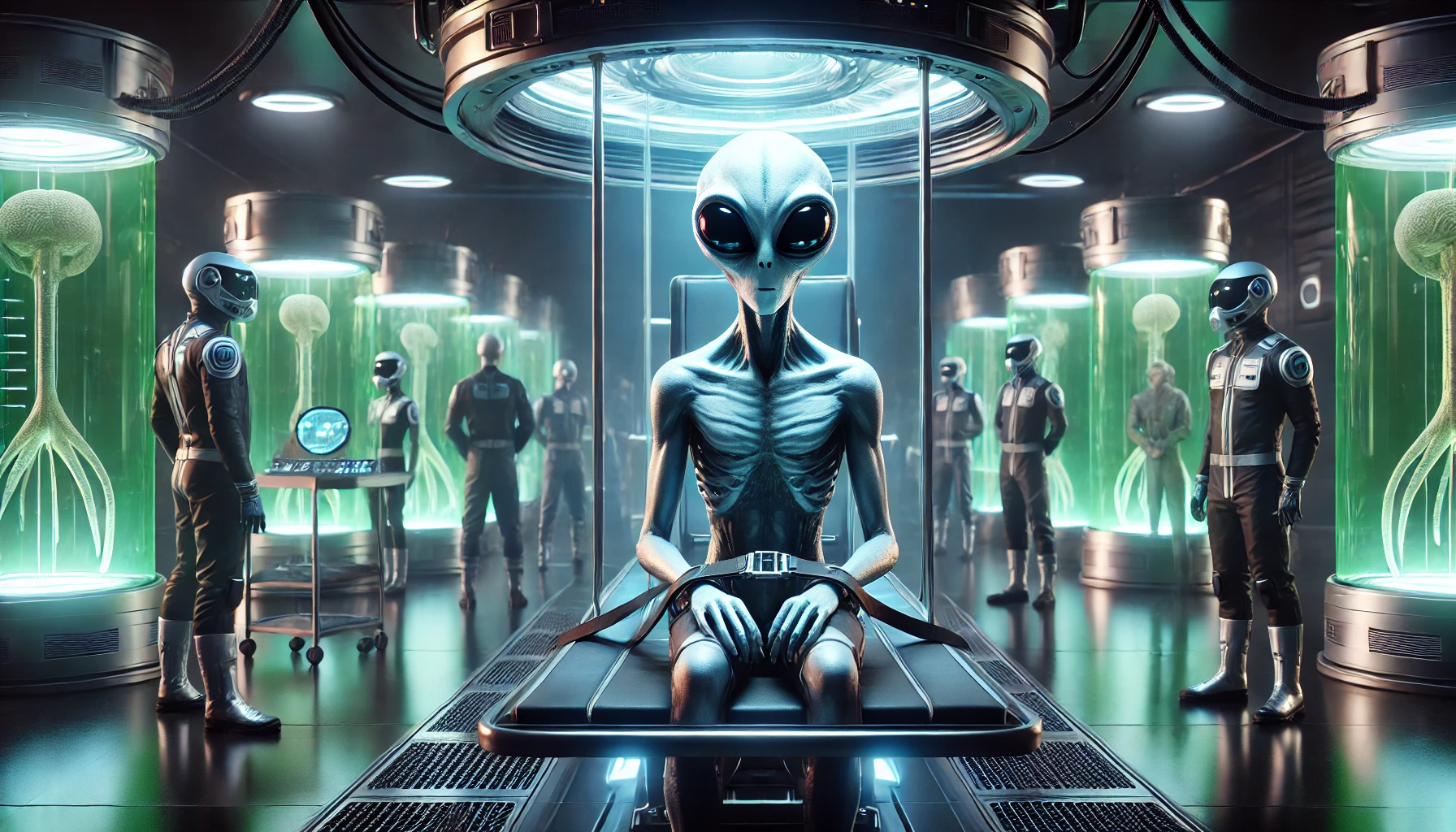
Art Bell hosted a December 9, 1999, episode of Coast to Coast AM, featuring a remarkable story involving Dr. Jonathan Reed and his claimed alien encounter. The episode delves into Reed’s alleged discovery of an alien, including photographic evidence, tissue and blood samples analyzed by microbiologist Dr. Harold Chacon. Art also introduces various witnesses, including Reed’s close associate Robert Raith, and references Reed’s personal struggles, such as being shot and his home being ransacked, allegedly to seize evidence. Photographs of the alien and artifacts are made available on Art’s website, creating a rich multimedia backdrop for the claims.
During the program, Dr. Chacon detailed his analysis of the samples, uncovering non-human characteristics like unique cellular structures and unexpected chromosomal anomalies partially resembling aquatic creatures. Reed recounts extracting tissue and blood from the alien, describing his methods and motivations. The discussion also touches on Reed’s attempts to safeguard evidence, with samples distributed among different locations and individuals.
The show continues with further analysis and exploration of the alien evidence, as Dr. Harold Chacon elaborates on his findings regarding the tissue and blood samples. He describes the methods used to preserve and study the materials, including rehydration and microscopic analysis. The skin tissue is found to have unusual properties, such as extreme density and transparency, with cellular structures dissimilar to any known human or animal. The muscle tissue also exhibits non-human traits, showing similarities to human anatomy but with significant differences, particularly in coloration and structure.
Dr. Chacon’s analysis of the blood sample reveals even more startling anomalies. While the sample includes elements consistent with human blood, nine of the 46 chromosomes detected are not of terrestrial origin. Intriguingly, these nine chromosomes bear similarities to those found in dolphins and aquatic turtles, yet remain distinct and unmatched by any known species. The presence of high copper sulfate levels further distinguishes the blood from any earthly counterpart, underscoring its alien nature.
Art transitions into a discussion about the alien brain tissue analyzed by Dr. Chacon, which presents unique and extraordinary characteristics. The cranial samples show differences from any known human or animal brain, including new structures never before documented in scientific literature. Chacon describes angular, tubular membranes intertwined with nerve fibers, forming unique looping patterns. These structures are embedded in what would correspond to Purkinje cells in humans, which are responsible for electrical signaling in the brain, yet their arrangement and function seem entirely alien.
The tissue also displays reptilian-like qualities, but with significant deviations that rule out any known earthly reptilian species. The dura and pia mater, typically protective layers around the brain in humans, are far denser and more fibrous in this sample. Additional findings include an extensive network of nerves that differ significantly in structure and density from any known species, suggesting a complex and unearthly neurological design.
The program shifts focus to the extraordinary efforts taken by Dr. Reed and his associate Robert Raith to preserve and protect the evidence. Reed recounts the harrowing experience of having his home in Seattle ransacked, an incident he attributes to efforts by unknown entities to confiscate or destroy the alien evidence. To counter these threats, Reed and Raith devised a plan to divide the evidence into multiple parts and distribute them across various locations and trusted individuals. This strategy ensured that even if some samples were seized, others would remain intact.
Reed also discusses reconnecting with his friend Gary, who played a significant role in the original encounter and evidence collection. Despite being out of contact for some time, Gary resurfaced through a cautious and deliberate verification process, adding further credibility to Reed’s account. Gary’s contributions, including securing some of the alien samples, were vital to the ongoing investigation.
Art introduces Larry Arthur, Dr. Reed’s former landlord, who corroborates Reed’s account of his home being ransacked. Larry shares his observations of the aftermath, including the extensive damage and disruption caused by the intruders, which appeared targeted rather than random. This testimony supports Reed’s assertion that the perpetrators were searching for the alien body, artifacts, or other evidence related to his encounter.
The show also revisits the photographic evidence of the alien and its artifacts, which had been analyzed by experts and made available on Art’s website. Reed describes the alien object, known as the “obelisk,” in vivid detail, emphasizing its peculiar hieroglyphics and unique construction. The photos provide visual context for listeners, inviting them to evaluate the veracity of Reed’s claims.
Art discusses the broader public reaction to the case, highlighting both intense interest and widespread skepticism. Reed reflects on the toll this scrutiny has taken on his personal life, recounting threats, ridicule, and ongoing attempts to discredit him. Despite these challenges, he expresses his commitment to sharing his story and continuing the investigation.
The discussion transitions to the technological and biological evidence tied to the alien encounter. Reed provides a deeper look into the alien artifact, sometimes referred to as the “Link Artifact,” which he claims possesses unique properties, including emitting energy and displaying hieroglyphic symbols. This artifact, according to Reed, interacts with living organisms in ways that defy scientific understanding, further supporting the case for its extraterrestrial origins. Photographs and analyses of the artifact are referenced, with Art encouraging listeners to view them online.
Dr. Harold Chacon elaborates on the scientific methods used to analyze both the artifact and the biological samples, emphasizing the rigorous protocols employed to prevent contamination or manipulation. Chacon reiterates that the findings—such as the blood’s unusual copper sulfate composition and the non-human chromosomes—are unlike anything cataloged in Earth-based biology.
Reed recalls the intense scrutiny these artifacts and samples received, including efforts by various independent researchers to disprove their authenticity. Despite this, no evidence of fraud or tampering has been uncovered. The alien body itself, preserved in a freezer at one point, remains central to the story. Art notes the uncanny alignment of the biological evidence with Reed’s descriptions, keeping the audience riveted.
The episode delves further into the implications of Dr. Jonathan Reed’s claims and the evidence surrounding them. Art discusses the broader scientific and societal ramifications if the findings were to be accepted as true. Reed and Raith describe the profound impact the encounter and subsequent events had on their lives, including the dangers they faced from unidentified parties who seemed determined to suppress the story. These threats underscore the high stakes of Reed’s disclosure and add weight to the narrative.
The conversation revisits the alien tissue and blood sample analysis, highlighting the meticulous work performed by Dr. Chacon. He reiterates that the chromosomal anomalies, particularly the nine non-human chromosomes resembling aquatic species, cannot be explained by any known scientific means. Chacon emphasizes that current technology makes it virtually impossible to fabricate such findings, a point Art uses to challenge skeptics.
Reed recounts how the evidence, including the biological samples, photographs, and artifact, was secured despite numerous challenges. He details his efforts to document and distribute the findings to trustworthy individuals, ensuring that no single entity could easily suppress them.
Art introduces additional testimonies from individuals involved with Dr. Reed’s case, including a MUFON member who collaborated on investigating the claims. This witness describes their interactions with the evidence and the compelling nature of Reed’s story. They highlight the unusual consistency of Reed’s account over time and the scientific rigor applied to the samples, which bolsters the credibility of the claims despite their extraordinary nature.
The discussion also revisits the alleged cover-up efforts, focusing on the mysterious and organized attempts to discredit Reed and confiscate the evidence. Reed shares details about the harassment he faced, including threats to his safety and reputation. These accounts are juxtaposed with testimonials from others who affirm the authenticity of the events and artifacts.
Art challenges the audience to grapple with the implications of the evidence, emphasizing its potential to rewrite humanity’s understanding of life and the universe. The combination of scientific analysis, photographic evidence, and personal testimonies creates a multifaceted case that forces listeners to weigh their skepticism against the possibility of a profound truth.
Art Bell steers the discussion toward reflection and open-ended questions about the broader significance of Dr. Reed’s story. Reed, along with Robert Raith and other witnesses, emphasizes their desire to reveal the truth despite the personal costs involved. They discuss the necessity of preparing humanity for potential alien contact and the transformative implications such an event could have on science, philosophy, and society.
Art wraps up the episode by encouraging listeners to explore the evidence on his website, reiterating the importance of approaching the story with both critical thinking and an open mind. He notes that while the extraordinary nature of the claims invites skepticism, the depth and consistency of the evidence demand serious consideration.
As the conversation concludes, Art invites the audience to ponder the possibility of extraterrestrial life and humanity’s readiness to confront such a reality.