
The episode begins with Art returning to the air after suffering from a serious flu, which also affected his wife Ramona. He briefly touches upon a news story about a Japanese gunman taking hostages at the Tokyo Stock Exchange. Art then shifts to sports, expressing his thoughts on the Packers’ victory over the 49ers. The show’s guest, Peter Gorman, editor-in-chief of High Times magazine, is introduced. Art discusses Mount Etna’s eruption in Sicily, providing updates and mentioning live cam shots available on his website. He also talks about the Coast Insider audio subscription service, offering access to a vast library of past shows. The conversation with Peter Gorman delves into his extensive experience in the Amazon and other rainforests, his work with tribal cultures, and his role at High Times magazine. The discussion also covers the evolution of High Times and its representation of various social and political issues over the years.
Next they delve into the societal impacts of the counterculture movement, discussing its significant role in advancing civil rights, women’s rights, gay rights, and anti-war sentiments. Gorman emphasizes that without these movements, many rights taken for granted today might not exist.
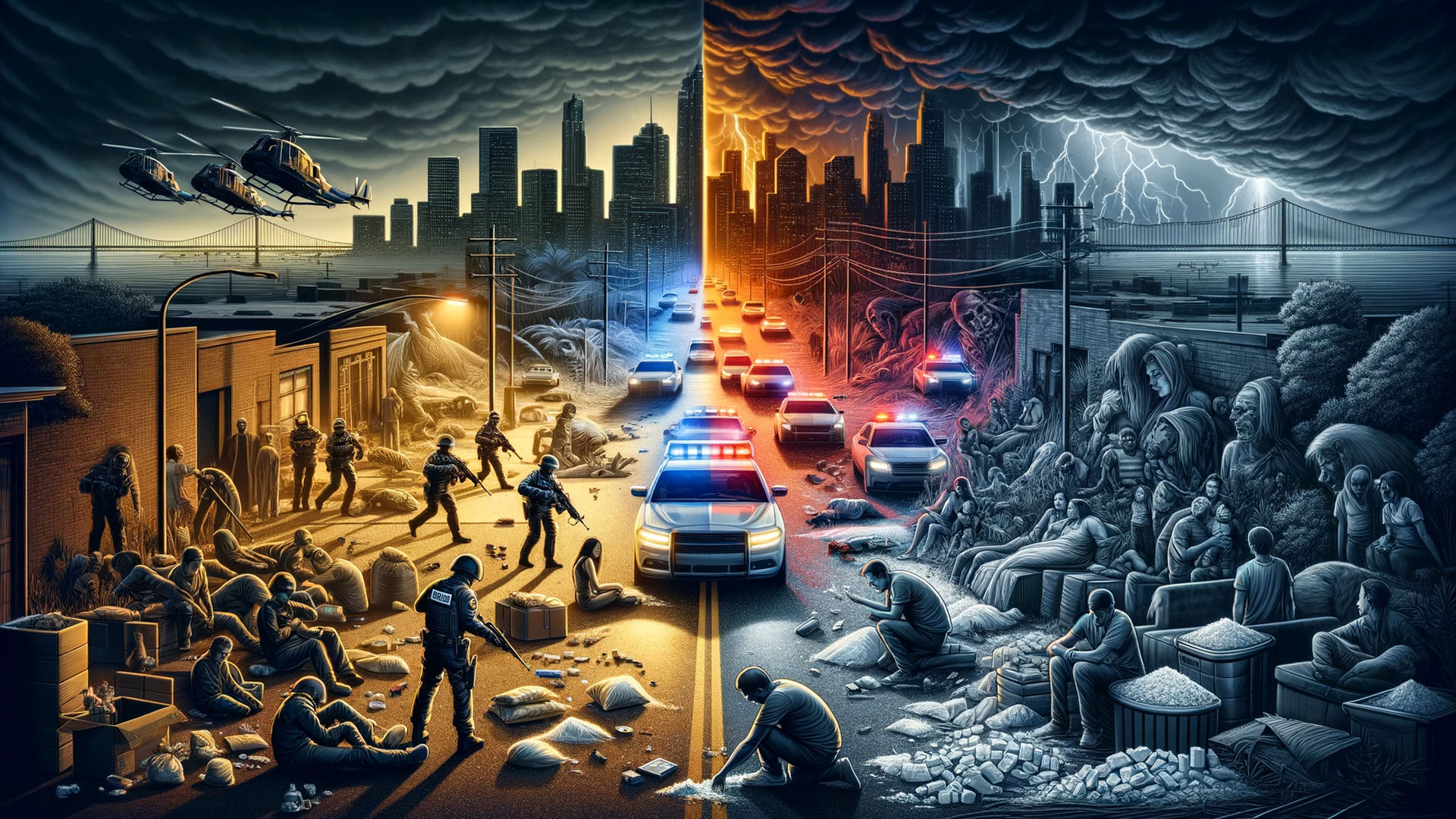
The discussion then shifts to the topic of cannabis, particularly in the context of recent liberal laws passed in Arizona and California. Gorman and Art explore the ongoing drug war, questioning who is winning and at what cost. Gorman expresses concern about the high number of Americans incarcerated for nonviolent drug crimes, particularly for marijuana use, and criticizes the government’s approach to drug policy.
Gorman highlights the absurdity of the legal consequences for marijuana use in different states, mentioning cases where individuals received disproportionately harsh sentences for minor marijuana offenses. He points out the inconsistency in state laws, with some states imposing severe penalties while others are more lenient.
Art and Peter Gorman discuss the case of Will Foster, who received a 93-year sentence for a minor marijuana offense. This leads to a broader conversation about the ineffectiveness and injustices of the drug war. Gorman criticizes the system where informants can reduce their own sentences by implicating others, often leading to disproportionate punishments for minor drug offenses.
The conversation shifts to politics, particularly the disappointment with President Bill Clinton’s handling of marijuana laws. Despite expectations that Clinton, a Democrat, would liberalize federal marijuana laws, he failed to do so. Gorman expresses frustration over Clinton’s lack of action, despite having admitted to trying marijuana himself. They discuss how political figures on both the right and left, including Newt Gingrich and Al Gore, have admitted to using marijuana, yet there’s still a lack of political will to change the laws.
The discussion then turns to the Vietnam War, with Art Bell sharing his perspective as a veteran. He criticizes the way the war was conducted, arguing that if a war is to be fought, it should be done with full commitment. Gorman agrees, reflecting on the public’s changing attitude towards the Vietnam War and how it parallels the evolving views on the drug war. They conclude that as public opinion shifts, especially with issues like medical marijuana, there’s hope for change in drug policies. Gorman hints at promising new research on marijuana and its effects on the brain, suggesting a potential shift in the government’s stance on marijuana classification and its medical use.
In this segment of “Coast To Coast AM,” Art Bell and Peter Gorman continue their discussion about marijuana laws and the broader implications of the drug war. Gorman shares a significant development: the DEA has admitted to having no scientific grounds for keeping marijuana in Schedule I, which classifies it as having a high potential for abuse and no medical use. This admission has led to the issue being referred back to Health and Human Services for reevaluation, potentially leading to a change in marijuana’s legal status.
Gorman highlights the entrenched nature of the drug war system, pointing out the vast amounts of money invested in it and the growth of the prison industry. He criticizes the hypocrisy of the system, noting the export of prison-made goods to countries like China while simultaneously condemning their use of prison labor.
The conversation then shifts to the topic of decriminalization and legalization of marijuana. Art Bell expresses his support for separating marijuana from other, harder drugs, emphasizing the importance of honesty in drug education. Gorman agrees, advocating for a truthful approach to discussing marijuana with children, emphasizing its appropriate use and timing.
They also discuss the challenges of dealing with harder drugs like cocaine and crack, acknowledging the severe addiction issues associated with them. Gorman suggests that existing laws are sufficient to address behaviors resulting from drug use, questioning the need for additional laws specifically targeting drug use. He argues for a more rational and humane approach to drug policy, one that recognizes the realities of drug use and addiction without resorting to excessive criminalization.
Art and Peter Gorman discuss the complexities of drug legalization and the potential consequences of making drugs like crack and heroin readily available. Gorman suggests looking at the medicalization of substances with high potential for abuse, similar to practices in Switzerland, where registered heroin users can obtain the drug from pharmacies. However, Art Bell raises concerns about the social stigma and potential for continued black market activity, as people might be reluctant to register as drug users due to privacy and reputation concerns.
Gorman acknowledges that despite the extensive criminal justice efforts, drugs are more available and cheaper than they were 30 years ago, indicating the failure of current policies. He shares his personal experience with cocaine, noting the dramatic decrease in its street price over the years, which he attributes to increased supply.
The conversation then shifts to the global implications of drug production and trade. Gorman discusses the economic dynamics in countries like Bolivia, Colombia, and Peru, where the production of coca leaf and the refinement of cocaine are significant. He explains how international trade policies and economic pressures have impacted these countries’ agricultural sectors, leading them to rely on coca production as a viable economic strategy.
Art and Gorman conclude that the falling price of cocaine is a clear indication of the failure of the drug war. They touch upon the corruption and complex geopolitical factors intertwined with the drug trade, suggesting that the current approach to drug policy is not only ineffective but also exacerbates the problems it aims to solve.
Gorman discusses the corruption in various governments, including the U.S., related to the drug trade. He touches on the geopolitical complexities involving countries like Bolivia, Peru, Colombia, and Afghanistan, highlighting how global politics and economic interests intertwine with the drug trade.
Art then updates listeners on his health, mentioning his recent bout with the flu and his wife’s asthmatic attack. He also provides an update on volcanic activity at Mount Etna in Sicily and a volcano in Central Java, Indonesia, drawing connections to the recent full moon and its potential influence on geological activity. This leads to a discussion about various environmental disasters and anomalies occurring globally.
Gorman, as an environmentalist, shares his insights on these issues. He talks about the worldwide appearance of deformed frogs, the thinning ozone layer, environmental disasters in the sea, and genetic changes in single-celled organisms in Antarctica. He emphasizes the significant impact human activities have had on the environment, citing examples like clear-cutting in the Northwest U.S. and its effects on flooding, as well as the destruction of coral reefs in the Andaman Islands due to deforestation. Gorman suggests that while some environmental changes might be natural, human actions have undoubtedly exacerbated many of these issues.
Art and Peter Gorman shift their focus from environmental issues to Gorman’s experiences in Peru and his views on indigenous cultures. Gorman talks about his upcoming sabbatical in Peru, where he plans to spend a year. He mentions the stress of his work, dealing with calls from people affected by the drug war, and his need for a break.
Gorman then discusses the complexities of reporting on drug-related issues in Peru, especially given his family connections in the country. He highlights the differences in government and societal structures between the U.S. and parts of South America, noting the limitations and dangers of speaking out against the government in these regions.
The conversation turns to Gorman’s reasons for traveling to South America, which stem from a lifelong wanderlust and a fascination with the Amazon rainforest. He recounts how a book about the Amazon sparked his interest in exploring the region.
Art Bell brings up the topic of the Yanomami people, an indigenous group in the Amazon. He references previous discussions on his show about the impact of external influences on indigenous cultures, including efforts to Christianize them. Gorman agrees with the view that such intrusions are misguided and harmful. He shares his experiences with the Matsés (or Mayoruna) people, noting their gradual changes due to contact with missionaries and traders.
Gorman reflects on the challenges of balancing respect for indigenous customs with personal and Western perspectives on issues like hunting practices. He emphasizes the importance of understanding and respecting the realities of life in the jungle, which can be brutal but are a part of the natural way of life for these communities.
Peter Gorman discusses his approach to interacting with indigenous peoples in the Amazon. He emphasizes his efforts to minimize his influence on these communities, often going to lengths such as creating fake maps and rivers to protect their locations from outsiders. Gorman reflects on the negative impacts of modernization on traditional lifestyles, citing examples from Mexico where farmers are lured to factory jobs but end up worse off financially and socially.
The conversation then shifts to the destruction of the rainforest. Gorman talks about the extensive burning of the Amazon rainforest, a problem exacerbated by development projects like road construction. He notes that many settlers who moved to the Amazon for land opportunities eventually returned to urban areas due to the harsh living conditions and poor infrastructure.
Art Bell raises concerns about the potential loss of medicinal discoveries due to rainforest destruction. Gorman responds by sharing stories of substances found in the rainforest that have shown promise in treating diseases like AIDS. He mentions a specific case where a scientist had to raise funds to prevent the destruction of a forest that was home to a plant with potential medicinal properties.
Gorman also discusses his personal experiences with indigenous medicine, particularly his encounter with a tree frog’s secretion used by the Matsés people for its medicinal properties. He describes how this substance was applied to his skin and the cultural significance of such practices.
Gorman recounts a personal experience with an indigenous practice involving a tree frog’s secretion in the Amazon. He describes how the substance was applied to his skin, leading to an intense physical reaction including a racing heart, vomiting, and heightened sensory perception. Gorman explains that this reaction was due to the frog’s secretion, which contains numerous proteins that interact with the human body, including a naturally occurring opioid.
Art Bell and Gorman discuss the potential of this substance as a powerful, non-addictive analgesic, possibly more potent than morphine. They speculate on the challenges of synthesizing such a compound and the implications for society if it were to become available. Gorman suggests that while it could be beneficial, it would likely be restricted to a small, elite group due to its rarity and the difficulty of obtaining it.
The conversation then shifts to the broader issue of drug availability and societal attitudes towards new substances. Gorman points out that regardless of legality, there will always be a black market for such substances. He also notes that if a drug fulfills a specific need, it could potentially create a new clientele, but a substance that doesn’t encourage repeated use would not have the same market appeal.
This hesitancy is attributed to the fear of investigation by the DEA, which monitors prescription patterns. As a result, many patients suffer needlessly. Gorman expresses hope that this situation is a temporary issue and that doctors will eventually be allowed to exercise their professional judgment without fear.
Art Bell then opens the phone lines for listeners to call in. Before taking calls, Gorman plugs a trip he is organizing to the Amazon, where he plans to take people to explore the jungle, observe wildlife, and learn about plant collection. He assures listeners that the trip will be safe, without risks like encountering giant anacondas.
The first caller, a 48-year-old woman, expresses difficulty in legally obtaining marijuana for medical purposes. Gorman advises her to look into medical marijuana buyers clubs in California, which can provide guidance on legally acquiring marijuana for medical use.
The next caller, James from Wisconsin, discusses the issue of local law enforcement’s excessive scrutiny and raids on individuals suspected of marijuana use. Gorman suggests that those feeling isolated or harassed should join or form activist groups like NORML (National Organization for the Reform of Marijuana Laws) to collectively address these issues and exert political power.
Another caller, Tina from Kentucky, inquires about the subscription cost for High Times magazine. Gorman, not having the exact details, directs her to his voicemail for more information. Art Bell mentions that he was referenced in High Times in an article about talk radio, leading to a brief discussion about the magazine’s coverage of various countercultural topics, including environmental issues.
The final caller in this segment, from California, asks about Gorman’s views on hallucinogens, noting the increasing potency of synthetic hallucinogens and the decreasing age of users. The caller also questions whether the government is involved in controlling drug trafficking for profit. Gorman responds by acknowledging the increase in potency of synthetic hallucinogens like LSD, while noting that natural hallucinogens like mushrooms and peyote have remained unchanged. He does not directly address the government’s role in drug trafficking.
A caller named Jason from Indiana shares his experience of quitting marijuana and noticing an improvement in his dream recall. Gorman suggests that substances like cannabis can affect sleep depth and dream recall, and he encourages taking breaks from habitual use.
Another caller, Bob from Ashland, Oregon, expresses his admiration for Art Bell and shares his positive experience attending the Cannabis Cup, an event associated with High Times magazine. He inquires about the process of setting up a Cannabis Buyers Club (CBC) in Southern Oregon. Gorman explains that while CBCs provide marijuana for medical purposes, anyone involved in distributing or growing marijuana for these clubs risks severe legal consequences, including federal conspiracy and intent to distribute charges.
The conversation then shifts to a discussion about a large-scale marijuana operation in Vancouver, BC, run by Mark Emery. Art Bell notes that local law enforcement seems tolerant of the operation, focusing their resources elsewhere. Gorman provides background on Emery, highlighting his history of challenging laws and his recent legal troubles. He explains that while Emery’s cafe allows marijuana smoking, it doesn’t sell marijuana directly but offers seeds and hydroponics equipment. Gorman points out that despite the relative tolerance in Canada, Emery still faces legal risks.
One caller, Bob from Oregon, inquires about setting up a Cannabis Buyers Club (CBC) in Southern Oregon. Gorman explains the legal risks associated with CBCs, including potential federal conspiracy and intent to distribute charges. He advises against opening one due to the high risk of legal repercussions.
Another caller discusses the legalization of marijuana in Alaska during the 1970s, which was later reversed due to federal pressure. This leads to a broader discussion about the varying attitudes towards marijuana legalization in different regions.
A caller from Houston shares his opinions on the Vietnam War and marijuana, questioning Gorman’s assertion that marijuana is not a drug. Gorman responds by discussing the technical definition of a drug and mentions clandestine operations raising endangered frogs in the U.S. for their medicinal properties.
A caller from Wisconsin questions the funding sources of the Partnership for Drug-Free America. Gorman reveals that, historically, the organization was funded by pharmaceutical, tobacco, and alcohol companies, highlighting the irony of drug producers sponsoring anti-drug campaigns.
A caller from Sacramento asks about the status of marijuana clubs in Northern California and the federal government’s stance on them. Gorman explains that there has been confusion about the legitimacy of these clubs and how they are monitored. He mentions that the federal government has filed civil suits to close some clubs but is not actively arresting people. Gorman believes that while some clubs might be shut down to test legal boundaries, there is a reluctance to provoke a state versus federal law conflict, given the public support for these clubs in California.
Another caller, from Chattanooga, Tennessee, attempts to ask a question but is disconnected due to poor cellular reception. A caller from Depoe Bay, Oregon, comments on the issue of crime related to drugs, suggesting that reducing crime should be a priority, whether through legalization or other means.
A caller from Fairbanks, Alaska, inquires about the legal situation regarding marijuana in Alaska, mentioning recent busts of marijuana growers and the lack of arrests. Gorman responds by discussing the complex legal landscape surrounding marijuana in various states and the challenges of navigating these differing laws.
A caller from Alaska inquires about the legal status of marijuana in the state, given its history of decriminalization and subsequent recriminalization. Gorman explains the current legal ambiguity in Alaska, where personal possession remains a gray area due to overlapping state and federal laws.
Another caller, from Oregon, asks about a South American pipe used for consuming a potent snuff made from active leaves and tobacco. Gorman confirms the existence of such a practice, explaining that it’s used for spiritual purposes and to commune with different aspects of oneself. He believes in the spiritual life of all living things and suggests that natural substances can facilitate communication with these spirits.
A caller from Illinois questions the likelihood of marijuana legalization in the near future. Gorman emphasizes the need for a critical mass of public support to influence politicians. He is uncertain about the timeline for legalization, acknowledging that while it seems close, it could still be far off.
A caller from Massachusetts asks about the state’s stance on marijuana legalization and whether marijuana could help someone clinically depressed and prescribed Prozac. Gorman, not being a doctor, refrains from giving medical advice but explains that while marijuana remains illegal in Massachusetts, MassCann is actively working to educate people and advocate for change. He also addresses a question about prescription drugs, noting that High Times does not review them but does cover related news stories.
A caller from Honolulu brings up an A&E program about ancient mummies found with traces of tobacco, cocaine, and hashish. Gorman and Bell agree that people have likely used mind-altering substances throughout history.
A caller from Houston questions why High Times is not widely available in supermarkets and expresses concern about subscriber privacy. Gorman explains that the magazine’s distribution is limited due to its content and assures that subscriber information is confidential. He also mentions that the magazine is delivered in plain packaging to protect subscribers’ privacy.
Another caller from San Diego asks about ayahuasca, a traditional South American hallucinogenic brew. Gorman shares his experiences with ayahuasca, describing it as both a physical purgative and a means to access other planes of existence. He emphasizes its potential for astral projection and spiritual exploration.
Art Bell wraps up the conversation with Peter Gorman, thanking him for his insights and sharing contact information for listeners interested in joining Gorman’s trip to Peru. Gorman mentions a documentary project he will be working on during his time in the Amazon, involving the documentation of indigenous practices and the impact of jungle loss.
The show then shifts to Art Bell discussing the flu pandemic affecting many parts of the country, including his own recent experience with the flu and his wife’s serious asthma attack as a result of the illness. Bell emphasizes the severity of this flu strain and the impact it’s having on people’s health, including hospitalizations and reported deaths in Southern California.
Bell also talks about the importance of taking care of oneself during flu outbreaks and the challenges of managing a high fever. He expresses concern for his wife’s health, given her asthma condition, and the need for careful monitoring in such situations.
Art shares his recent experience with a severe flu, describing how it affected him and his wife, Ramona, who is asthmatically challenged. He emphasizes the seriousness of this flu strain and its impact on people’s health.
A listener, identifying as a small-town cop in California, shares his perspective on the legalization of drugs. He expresses skepticism about legalizing drugs, citing his experiences with people under the influence of substances like methamphetamine. He acknowledges the legal changes in California regarding marijuana but points out the conflict between state and federal laws.
Another listener, a doctor, writes in to support the use of necessary drugs for patient care, even if it means defending one’s legal position. This doctor sympathizes with Ramona’s health situation and hopes for her quick recovery.
The show also touches on unusual weather patterns, including a freak snowstorm in the Middle East and freezing rain in Canada, contributing to the idea of a “quickening” of global changes.
A caller from Oklahoma City suggests a treatment for asthma involving a mixture of helium and oxygen, hoping it might help Ramona. Art Bell appreciates the suggestion and shares his concerns about Ramona’s health during the flu outbreak.
The segment concludes with a brief mention of international news, including Iraq’s resistance to UN weapons inspections and a hostage situation at the Tokyo Stock Exchange.
Art continues with open lines, taking calls from listeners on a variety of topics.
- Satellite Incident and Area 51 Call: A caller from Utah, Seth, inquires about a previous show where a satellite went down during a call from someone claiming to be from Area 51. Bell explains that the incident remains unexplained, with the satellite company reporting a loss of Earth link. Seth also mentions a conversation with a roommate about advanced aircraft, possibly mistaken for UFOs.
- Mount Etna Eruption: Another caller discusses the eruption of Mount Etna, which Bell confirms, mentioning that live cam shots of the eruption are available on his website. The caller also brings up a website tracking volcanic activity worldwide, including a warning for residents near Merapi Volcano in Indonesia.
- War on Drugs: Vince from Chicago comments on the war on drugs, expressing concerns about it leading to a police state and a growing prison industry. He echoes some of Peter Gorman’s earlier sentiments about the ineffectiveness of the war on drugs and its impact on creating a large number of prisoners for minor drug offenses.
- Hostage Situation in Japan: Art Bell updates listeners on a resolved hostage situation in Japan, where a disgruntled leftist claimed other countries were stealing Japan’s money. He reflects on Japan’s trading practices with the U.S. and the potential motivations behind such actions.
- Discussion on Whistleblowers: A caller from Kansas City discusses the idea of whistleblowers coming forward with secret information. Bell acknowledges the risks they face, including legal repercussions, and expresses a wish for more people to share insider knowledge on his show.
- Football Commentary: A caller from San Francisco discusses the recent football game between the 49ers and the Packers, attributing the 49ers’ loss partly to coaching decisions. The conversation touches on the dynamics of football coaching and the anticipation for the next season.
- Mammoth Lakes Volcanic Activity: Another caller brings up a local news report on potential volcanic eruptions at Mammoth Lakes, California. The caller notes that this topic was discussed on Bell’s show months earlier, highlighting how the show often leads the media in covering such issues.
- UFO Crash Investigation: A caller from Aberdeen, Pacific Northwest, who identifies as a law enforcement officer and a state section director for MUFON, shares his investigation of a UFO crash in Grays Harbor County in 1979. He recounts interviewing witnesses and encountering resistance from official sources, highlighting the secrecy and revisionism often associated with UFO incidents.
- Upcoming Show Guests: Art Bell previews upcoming guests on the show, including Francis Emma Harwood, who is running for office, and Gerald Celente from the Trends Research Institute. He emphasizes the importance of their insights into environmental issues and societal trends.
- Volcanic Activity in Sicily: A caller from Saint Pete, Florida, discusses his experience with volcanic activity in Sicily, particularly around Mount Etna. He describes efforts to divert lava flows and the impact of the volcano on the local environment.
- Website Access to Volcano Cam: Art Bell shares a story about his website’s live cam access to Mount Etna being shut off, presumably due to overwhelming traffic from U.S. visitors. He assures listeners that they captured photographs of the volcanic activity, which are available on the website.
- Call from a Researcher: A caller from Madison, Wisconsin, who has been traveling for research, discusses efforts to remove wolves from the endangered and threatened list in Northern Minnesota. The conversation touches on wildlife management and hunting practices.
- Discussion on Football: Callers discuss the upcoming football game between the Green Bay Packers and the Denver Broncos, sharing predictions and opinions on the teams and players.
- Comments on Previous Show Guest: A caller from Illinois discusses a previous show with guest Robert Oden and expresses disappointment over the lack of specific information shared by Oden regarding his claims about the CIA.